Acquitted of murder, still convicted: Epps trial reveals racial gap in self-defense law

By Eric Arnold
Contributing Writer
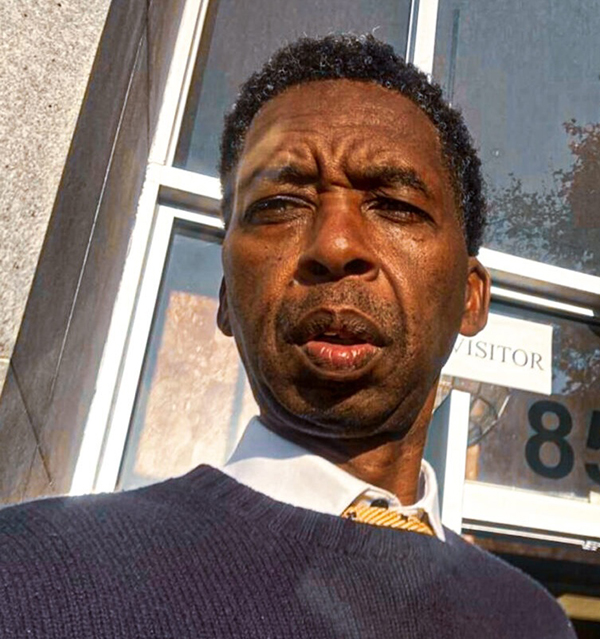
SAN FRANCISCO — Kevin Epps shot and killed Marcus Polk inside his home in 2016, saying he did so to defend himself. California’s Castle Doctrine, which allows homeowners and residents to use reasonable — including deadly — force against intruders, was supposed to protect people in that situation.
It didn’t protect Epps.
In November 2025, a jury acquitted the San Francisco-based award-winning journalist and filmmaker of first-degree murder, but convicted him of voluntary manslaughter. His fate will be decided in sentencing April 8, with prosecutors opposing probation and seeking more than 11 years in prison.
Some observers view the case not as an isolated incident of selective prosecution, but a verdict on how the criminal justice system is slanted against Black male defendants.
“We see recurrent cases wherein Black homeowners and residents are prosecuted when they defend their homes,” said Harvard professor Caroline Light, who researches the racial history of self-defense law.
Self-defense laws like the Castle Doctrine, she argued, have never operated as irrespective of race as they’re written: “When we see the cases actually adjudicated, what we see is the stretching of the boundaries of Castle to accommodate the violence of certain types of people. Think George Zimmerman. Think Kyle Rittenhouse.”
Light called the decision of Epps’ Judge Brian Ferrall to modify jury instructions regarding the Castle Doctrine consistent with a pattern of selective application that she has documented across American courts — what she describes as judges “putting their thumbs on the scales one way or the other.”
The people who most need self-defense protections, she said, are the ones least likely to receive them: domestic abuse victims, Black homeowners and Black residents in no-knock warrant situations: “These are the people who are going to be prosecuted most frequently,” Light added.
Some of Epps’ supporters have accused the San Francisco District Attorney’s Office of selective prosecution, saying the case reflects a more aggressive prosecutorial approach by D.A. Brooke Jenkins since the 2022 recall of her reform-minded predecessor Chesa Boudin.
Attorney Walter Riley says this shift is real. The D.A.’s new approach, he says, has resulted in cases being pursued even when the evidence may not support the charges. Epps’ case, initially dropped due to insufficient evidence, was reopened based on a digital animation commissioned by the prosecution that was later withdrawn.
“That’s the nature of bias, racism, overcharging and improper charging in this country,” said Riley, the father of rapper-turned-filmmaker Boots Riley.
The attorney became active in the civil rights movement in North Carolina during the 1950s, when Jim Crow laws were still in effect. In his view, the core issues of unequal justice since then have remained constant. “What happens in the criminal justice system is definitely a civil rights issue,” he added.
Riley rejects softer framings of the problem like the term “implicit bias.”
“It is not implicit when Black folks are being criminalized at a greater rate than anyone else,” he said. “It’s not implicit when crimes are developed that particularly criminalize the conduct of Black people.”
The intersection of civil rights and criminal justice “are absolutely not separate,” Riley added. “Justice Sotomayor, to paraphrase her, has said that the nature of the criminal justice system is an issue that we have to deal with in terms of the way we deal with racial biases.”
These inequities extend beyond the courtroom.
San Francisco Public Defender Mano Raju said his office operates on roughly $39 million less annually than the D.A.’s office, which also has access to San Francisco Police Department resources, police experts and a crime lab.
“A lot of the D.A.’s experts, for example, in gang cases, they’re police officers or they have access to the crime lab,” he explained. “If we want an expert, we have to hire it out of our expert budget fund, which is limited. But more importantly, they have more investigators, they have more clerical staff, they have more attorneys and they have a police department that’s 15 times our budget.”

“There’s not anywhere close to parity,” he added. “The scales of justice are definitely not balanced in our system.”
Those resource gaps translate into pressure on defendants. Raju says clients who lose confidence in the system — whether from over-crowded dockets, racial bias in jury pools, or the sheer cost of fighting charges — often take plea deals for crimes they didn’t commit. “When clients don’t have confidence, they will plead to things they didn’t do,” he added.
Prosecutorial misconduct worsens the problem, he says, and “is actually way more common than the public generally knows” — including prosecutors delaying or withholding exculpatory or guilt-clearing evidence; this contributes to wrongful convictions and clients taking plea deals.
In these cases, said Raju, the public defender’s office will attempt to take the appropriate action, asking for a mistrial or a jury stipulation in some cases, but ”unfortunately, there aren’t enough times where judges actually hold prosecutors accountable for their conduct.”
Overcharging defendants of color is a “common phenomenon,” he continued, and prosecutors don’t always play fair.
“There are times where prosecutors are feeling an urge to win at any cost, as opposed to seeking justice,” Raju said. “And when that happens, wrong outcomes occur,” including improper convictions and jail time.
Racial disparities play a role in this “in every way. First of all, we don’t have the diversity you’d want in the legal profession yet,” he explained, and “it’s usually the case that our clients do not have a jury of their peers. And when we do go to trial, we often have to overcome a presumption of guilt. … When clients don’t have confidence, they will plead to things they didn’t do.”
Epps’ attorneys have laid the groundwork for a potential appeal, but Raju warned that even successful appeals carry their own costs.
“Often, that result comes after a period of separation. … Those costs of separation are no less severe just because someone happens to be accused of a crime,” he said. “Justice delayed is justice denied.”
Eric Arnold writes for American Community Media.