By Antonio Ray Harvey
Contributing Writer
SACRAMENTO — Between 2020 and 2024, Long Beach experienced a minimal but incremental decrease in chronic homelessness that was interrupted by the Los Angeles County wildfires in early January 2025, according to a point-in-time count conducted by the city’s government.
After making notable progress on increasing affordable housing, adopting “Housing First” models, and providing wraparound supportive services, Rex Richardson, the mayor of Long Beach, and city government officials across the state say their efforts could be jeopardized by funding cuts in the governor’s latest budget.
In late March, Richardson and a bipartisan group of mayors representing California’s 13 largest cities traveled to Sacramento to urge state leaders to replenish and sustain funding for the Homeless Housing, Assistance and Prevention program.
“In the city of Long Beach, we increased our shelter capacity in the last three years by 84%, nearly doubling the amount of shelter,” Richardson said at a news conference held at the State Capitol Swing Space. “This is one incredible strategy of how we move people out of tents, unmanaged encampments, and into shelter.”
Richardson added that before he took office in 2023, the unhoused crisis in the Long Beach region had grown “to a scale that was almost unmanageable.”
Now that the region is showing signs of improvement, Richardson says that it is not the time to bridle progress.
“Now is not the time to change our focus and shift our focus,” Richardson continued. “Now is the time to focus together, collaborate, and double down so that we can continue to see progress that California and the residents of our cities deserve.”
The Homeless Housing, Assistance and Prevention program is scheduled to be reduced to $500 million for the 2026-27 fiscal year. The decrease represents a 50% cut from previous funding levels, which typically reached $1 billion annually in the state budget.
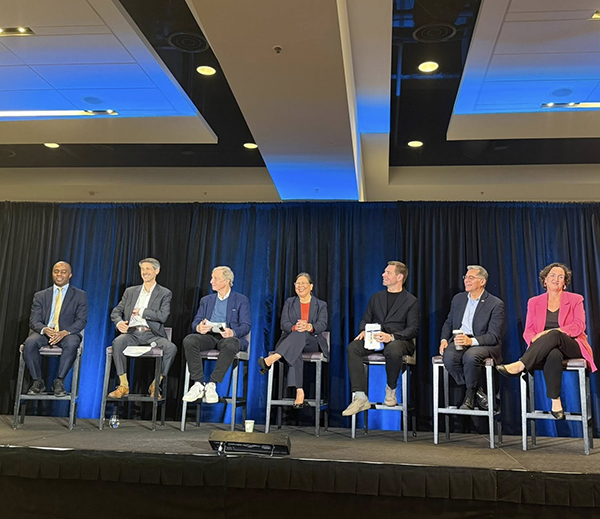
Led by Riverside Mayor Patricia Lock Dawson, the mayoral coalition included Kevin McCarty (Sacramento), Todd Gloria (San Diego), Ashleigh Aitken (Anaheim), Barbara Lee (Oakland), Christina Fugazi (Stockton), Matt Mahan (San Jose), and Larry Agran (Irvine).
Mayors are urging state leaders in both the Legislature and the executive branch to restore homelessness funding to $1 billion and make that level a permanent annual commitment.
The state reported a 9% drop in unsheltered homelessness in 2025, a figure Newsom has cited as evidence of progress.
“These cuts put critical programs and real progress at risk, sending a message that reducing homelessness is no longer a priority for the state,” Lock-Dawson said. “So, without action by the Legislature, our 13 cities will see a loss of 6,000 shelter beds and 41,000 Californians at risk of returning to homelessness. Let’s be clear, HHAP works, and it’s been working.”
All of the mayors shared stories about the challenges they are facing and the progress being made in their cities to tackle the unhoused crisis that is driven, in part, by a combination of rising rents, income loss, and evictions, which are exacerbated by behavioral health challenges.
The Los Angeles Homeless Services Authority’s revised homeless count last October revealed a 4.1% decrease in the number of homeless people for Los Angeles County from 2024 to 2025.
According to the report, Black or African American individuals represent 32% of the homeless population in Los Angeles County, compared to 8% of the county’s overall population, underscoring a significant racial disparity.
While state data show a 9% reduction in overall unsheltered homelessness in 2025, racial disparities still remain high, especially in Black communities in all major California cities.
The Los Angeles Almanac reported that in the city of Long Beach, 1,224 Black or African American individuals (34%) were counted as homeless in 2025, compared with 1,112 (32.9%) in 2024, 1,220 (32.5%) in 2023, and 1,124 (34.1%) in 2022.
“We need to know who our partners are at the moment,” Richardson said of combating homelessness in the state. “Too many families are counting on us to make sure that we don’t give up on them. It is important that our governor and state Legislature stay consistent.”
Between the years 2022 and 2024, Long Beach addressed homelessness by declaring a state of emergency, investing over $135 million, and transitioning from temporary to permanent housing, Richardson said.
Richardson said key efforts included adding over 85 emergency beds, launching over 230 new affordable units, deploying mobile health units, and utilizing state-funded SAFE teams for encampment resolution. The action resulted in 725 people being moved into permanent housing during 2023.
Long Beach has made significant progress in addressing homelessness, Richardson said, but the January 2025 wildfires created immediate setbacks that stalled the city’s efforts. About 167 people were displaced by the fires. The city reported a 6.5% increase in homelessness, with 5% directly linked to wildfire displacement and the remaining 1.5% attributed to other factors.
In Northern California, Black or African American residents make up about 22% of Oakland’s population of roughly 440,646. However, they account for 52.5% of the city’s total homeless population, 47.9% of those who are unsheltered, and 59% of individuals experiencing homelessness for the first time.
A considerable portion of the homeless population in Oakland is African American men. The high rate is often attributed to displacement, eviction, and the lingering economic effects of foreclosure crises.
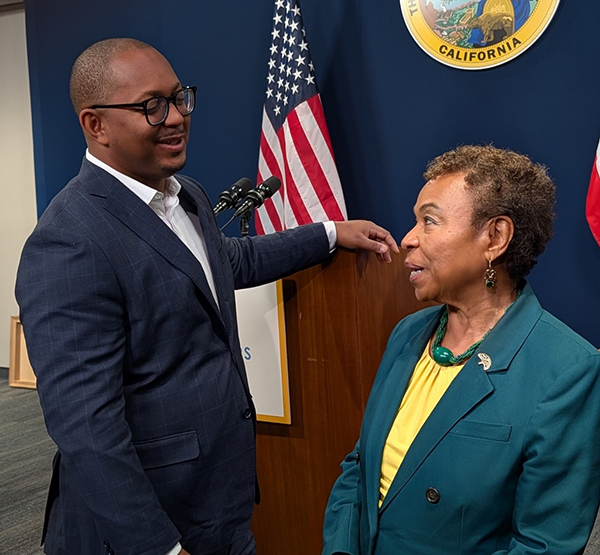
Last August, Lee announced the opening of the Office of Homelessness Solutions to centralize and streamline the city’s response to its homelessness crisis. The office is spread across different departments, including encampment management, emergency shelters, and permanent housing.
Lee, who won the special election for the seat in April 2025, said a decrease in the state’s funding could dramatically cut the city’s effort to reduce unsheltered homelessness in Oakland by 50% over the next five years.
“Fifty percent is not enough for me, personally, but achieving that in Oakland requires a racial equity approach at every single level of government through our programs that prevent homelessness and create more housing opportunities,” Lee said. “I can’t accomplish any of this without HHAP funding.”
Antonio Ray Harvey |writes for California Black Media.