By Darlene Donloe
Contributing Writer
SOUTH LOS ANGELES — Every five days, a woman loses her life to pregnancy-related complications in California, according to the 2025 Birthing Care Pathways report.
For Black women, the risk is alarmingly high — nearly three times more likely to die than white women.
That stark reality sets the stage for the “Born To Thrive” Black Maternal Health Panel, hosted by the First Ladies Health Initiative at First AME Church April 11.
The event is part of Black Maternal Health Week, a national observance held each year from April 11 to April 17, with the aim to support education, advocacy and strengthen Black mothers’ voices nationwide.
The First Ladies Health Initiative, led by Executive Director Marquisé Alston-Allison, is a faith-based nonprofit organization committed to closing the health equity gap in underserved communities through innovative partnerships with churches and First Ladies groups nationwide.
The 90-minute community conversation will bring together experts, advocates, and community leaders to tackle the systemic gaps in access, quality of care, and support driving these disparities. Social determinants of health include factors like unstable housing, transportation access, food insecurity, substance use, violence and economic inequality.
“These disparities are not about individual choices, but about systemic gaps in access, quality of care, and support,” Alston-Allison said.
In Los Angeles, the situation is equally dire, with Black mothers facing significant barriers to quality care.
The pregnancy-related mortality and morbidity crisis is disproportionately impacting Black, American Indian/Alaska Native, and Pacific Islander pregnant and postpartum individuals.
Each year in the United States, Black women are dying during pregnancy or after pregnancy. More than 80% of pregnancy-related deaths are preventable, according to the Centers for Disease Control and Prevention.
In Los Angeles, initiatives like L.A. County’s African American Infant and Maternal Mortality Prevention Initiative are working to address these inequalities.
“They focus on bringing together health care systems, community organizations, and local leaders to address these disparities in a real, coordinated way,” Alston-Allison said. “This panel builds on that same approach. It’s about connecting women to resources like doulas, postpartum support, and culturally relevant education, while creating space for honest conversations about what needs to change. Ultimately, the goal is to make sure women are informed, supported, and not navigating this journey alone.”
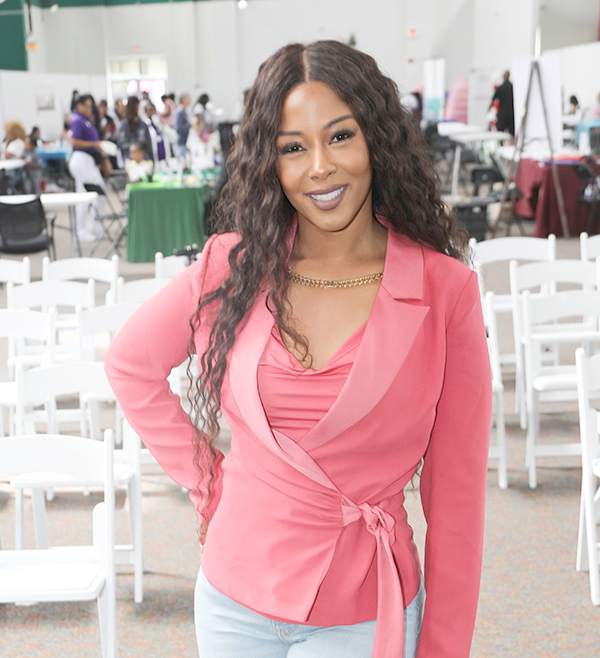
The panel, hosted by actress Vanessa Estelle Williams, will explore critical topics, including structural racism in maternal health care and the vital role of doulas and midwives in improving birth outcomes.
It’s been documented that doulas have a positive impact on a pregnant woman’s life. Studies show that Black mothers, in particular, have better birthing outcomes when they’re supported by one.
Regarding the above-mentioned structural racism in maternal health care, a recent study by the National Bureau of Economic Research found that issues of racism and bias persist in health care.
Unconscious racial bias in the medical field, as well as a lack of adequate resources in Black communities, are said to be driving forces behind America’s Black maternal health crisis. The risk for Black women is still present no matter their level of wealth, education or fame.
“Structural racism shows up in maternal health care in ways that are both visible and invisible,” Alston-Allison said.
For Alston-Allison, the issue has become deeply personal.

“My husband and I have been talking about starting a family,” she said. “This work is no longer just something I lead professionally; it is something I am actively preparing to navigate in my own life.”
Her words are a reminder of the human cost of the statistics.
“That is why conversations like this matter so much,” she said. “Every woman deserves to step into motherhood feeling informed, supported, and safe, and closing that gap requires both awareness and action.”
The “Born To Thrive” Black Maternal Health Panel aims to empower attendees with knowledge and resources to support Black mothers and families.
“Every woman deserves to step into motherhood feeling informed, supported, and safe,” Alston-Allison said.
She hopes that attendees leave empowered, knowing they can make a difference in Black maternal health.
“We want them to understand the warning signs, to feel more confident asking questions, and to support the women around them,” she said. “And beyond that, just helping spread the information matters. The more people know, the more lives we can protect.”
The Born to Thrive: Black Maternal Health Panel will be held from noon to 1:30 p.m. at First AME Church of Los Angeles, 2270 S. Harvard Blvd. RSVP at FirstLadiesHealth.com.
Darlene Donloe is a freelance reporter for Wave Newspapers who covers South Los Angeles. She can be reached at ddonloe@gmail.com.