By Darlene Superville
Contributing Writer
SACRAMENTO (AP) — The Angels Island Immigration Station and the Tule Lake Segregation Center, both in Northern California, are among the among 11 sites on this year’s annual list of America’s most endangered historic places.
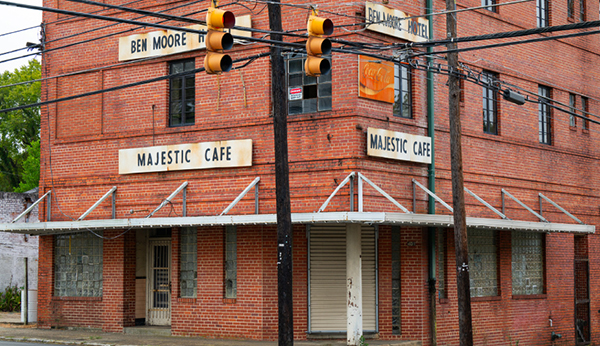
The list also includes an endangered hotel in Montgomery Alabama that once housed civil rights icons Martin Luther King Jr. and Ralph Abernathy and entertainment giants like Billie Holiday, B.B. King, Little Richard and a young Tina Turner.
The 2026 list, released this week by the National Trust for Historic Preservation, marks America’s 250th anniversary with the foundational principle that everyone is created equal as the theme, said Carol Quillen, president and CEO of the nonprofit organization. The 11 sites offer examples of how, over time, Americans have fought against injustice and for equality, she said.
“We wanted to think about those ideas, especially this notion that all human beings are created equal and find places, sometimes unsung places … that not all Americans routinely think about,” Quillen said.
“We want to save these places not just because the bricks and mortar is important but because the stories these places hold are important,” she added.
For the first time since the list debuted in 1988, each site on the 2026 list will receive a one-time $25,000 grant to help highlight their connections to the principle that all people are created equal and address the threats they face.

The sites are spread across the United States, from California to New York and many places in between. The California sites include:
- The Angel Island Immigration Station, near San Francisco, the largest immigration port on the West Coast between 1910 and 1940, particularly for immigrants from Asia and the Pacific. Hundreds of thousands were processed, detained and/or interrogated there because of their race.
The station currently is threatened by physical, environmental, political and economic factors. Additional funding is needed for structural repairs and programming to increase awareness.
- The Tule Lake Segregation Center, located in Modoc County along the Californian-Oregon border, was initially called the Tule Lake Relocation Center but later became a segregation center where Japanese Americans who were thought to be disloyal to the U.S. were imprisoned.
The site, originally established as a camp, is now a national monument managed by the National Park Service. Only 37 acres of the 1,100-acre site is protected. Most of it is at risk of permanent alteration from a proposed nearby construction project.
The other nine sites are:
- The Ben Moore Hotel in Montgomery, Alabama: The hotel was a refuge for Black people living under laws that enforced racial separation in the South. Built in 1945, it would become the site of historic meetings between Black and white populations during the dawn of the Civil Rights era.
- Swansea Friends Meeting House in Somerset, Massachusetts: Recognized as the oldest surviving Quaker meeting house in the state, it was built in 1701 to serve as a refuge by a congregation fleeing religious persecution and looking for a safe place to worship.
- Detroit Association of Women’s Clubs in Michigan: Founded in 1921, the association was one of the first Black organizations in Detroit to own their headquarters building, which was purchased in 1941.
- Greater Chaco Cultural Landscape serving New Mexico, Colorado, Arizona, Utah: The landscape is an ancestral homeland sustained for over a 1,000 years by the Pueblo and Hopi people, but is threatened by changes to federal land policy.
- Women’s Rights National Historical Park in Seneca Falls, New York: The park tells the story of the first Women’s Rights Convention, held in Seneca Falls, in July 1848.
- Stonewall National Monument in New York: The first and only U.S. national monument dedicated to LGBT history was the subject of Trump administration actions that saw the rainbow Pride flag removed from its flagpole earlier this year before it was restored.
- The President’s House Site in Philadelphia: The administration abruptly removed exhibits on the lives of nine people enslaved at the site in the 1790s under George Washington, the first U.S. president, who lived there when Philadelphia served as the nation’s capital.
- Hanging Rock Revolutionary War Battlefield in Heath Springs, South Carolina: The Battle of Hanging Rock was a key battle in the Southern Campaigns of the Revolutionary War and is considered a Patriot victory that helped boost morale and weaken British control in the state.
- El Corazon Sagrado de la Iglesia de Jesus in Ruidosa, Texas: The more than century-old adobe church served as a refuge and place of worship for Mexican and Mexican American farming communities on both sides of the U.S.-Mexico border along the Rio Grande River.
Darlene Superville writes for the Associated Press.