Wave Wire Services
BOYLE HEIGHTS — Small businesses and private nonprofit organizations affected by the massive warehouse fire in June are eligible for low-interest federal disaster loans.
Gov. Gavin Newsom announced Aug. 18 that the U.S. Small Business Administration approved California’s request for a disaster declaration, making the loans available to eligible businesses and nonprofits affected by the fire.
“The Boyle Heights community has endured tremendous disruption, and we moved quickly to bring every available resource to bear,” Newsom said in a statement. “These loans will help local businesses and nonprofits meet essential costs, retain workers, and move forward as the community recovers.”
The SBA issued the disaster declaration following an Aug. 10 request from the Governor’s Office of Emergency Services.
“Recovery depends on getting practical assistance to communities as quickly as possible,” Cal OES Director Caroline Thomas Jacobs said. “Cal OES requested this declaration so affected businesses and nonprofits can access additional support to meet essential costs and continue serving the Boyle Heights community.
“We will continue working with Los Angeles and our federal partners to connect eligible organizations with the resources they need to recover,” Jacobs added.
Loans are available for up to $2 million, with interest rates as low as 4% for businesses and 3.625% for private nonprofits, and terms of up to 30 years. Interest does not accrue and payments are not due until 12 months after the first loan disbursement. The SBA determines eligibility and sets loan amounts and terms based on each applicant’s financial condition.
Meanwhile, hundreds of people living near the Lineage Logistics warehouse were treated at mobile clinics for fire-related maladies, including smoke inhalation and toxic exposure, according to a report released Aug, 18.
The report from St. John’s Community Health, which dispatched three mobile clinics to the area after the fire erupted, found that 469 of 1,306 patients — roughly 36% — seen at the clinics were dealing with fire-related exposure issues, such as respiratory infections, eye disorders, persistent cough and asthma exacerbation.
According to the report, 26.6% of patients were diagnosed with toxic smoke exposure, while 24.5% were diagnosed with hazardous substance exposure.
“Dozens of patients (were) prescribed anxiety and/or sleep medication to treat acute stress post-fire, which was related to: environmental exposure, sleep disruption and insomnia, housing instability, lease termination requests, relocation concerns, ongoing uncertainty regarding environmental safety, and psychosocial distress associated with displacement and recovery,” according to the report.
St. John’s officials said the data was collected from patients who visited the mobile clinics between June 17, when the fire erupted, through July 31.
“Close to 40% of people we provided health care to had serious, acute, and devastating health problems,” Jim Mangia, president and CEO of St. John’s, said. “We know that acute health conditions, particularly those caused by intensive environmental exposure, lead to long-term chronic and deleterious health impacts that disable and damage the health of our communities.”
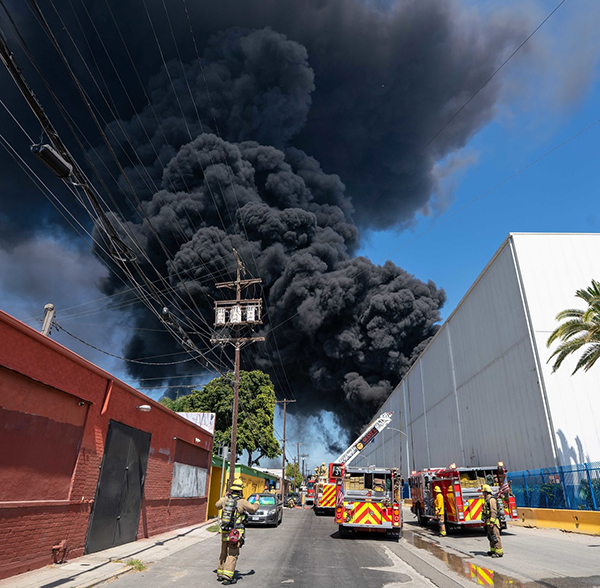
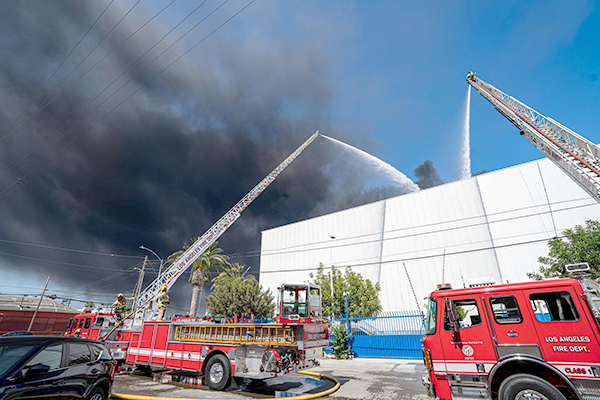
Cleanup efforts are continuing at the Lineage Logistics food-storage warehouse following the massive June 17 fire, with the stench of rotting food and pest problems disrupting the surrounding neighborhood, according to reports.
Lineage Logistics, the company that runs the cold-storage facility, had not completed the food cleanup by a deadline cited by Los Angeles officials, although the company insisted the 45-day deadline set by Mayor Karen Bass does not expire until later this week.

Lineage officials issued a statement Aug. 18 saying the removal of bulk food waste from the warehouse was nearly complete, with completion expected “in the coming days.”
“The final stretch of food waste removal is the most complex and we continue to prioritize both speed and safety,” the company statement said.
“What remains is loose food product lodged within a six-story rack system spanning 40 miles of shelving — much in areas where heavy equipment cannot reach. Workers in full protective gear are climbing into racks more than six stories high to manually push product down. Others clear it bay by bay from the floor.”
Company officials said they have already begun the next phase of the cleanup, which involves “proactive decontamination and cleaning in parallel with removing the remaining loose debris, including power washing, disinfecting, detailing, and deodorizing.”
“Our focus remains on fully remediating the site to eliminate odor impacts on the surrounding community,” according to Lineage.
Bass has been critical of Lineage during the cleanup process, accusing the company of failing to deliver on its promise to expedite the effort.
“Lineage is a multibillion-dollar company with the resources to meet the 45-day deadline I set,” Bass said in a statement last week. “They have indicated that they will not meet it (Aug. 14). Meanwhile, the people of Boyle Heights and East Los Angeles continue to live with the consequences. Families are still dealing with horrific odors and the constant uncertainty of when this nightmare will end.”