By Antonio Ray Harvey
Contributing Writer
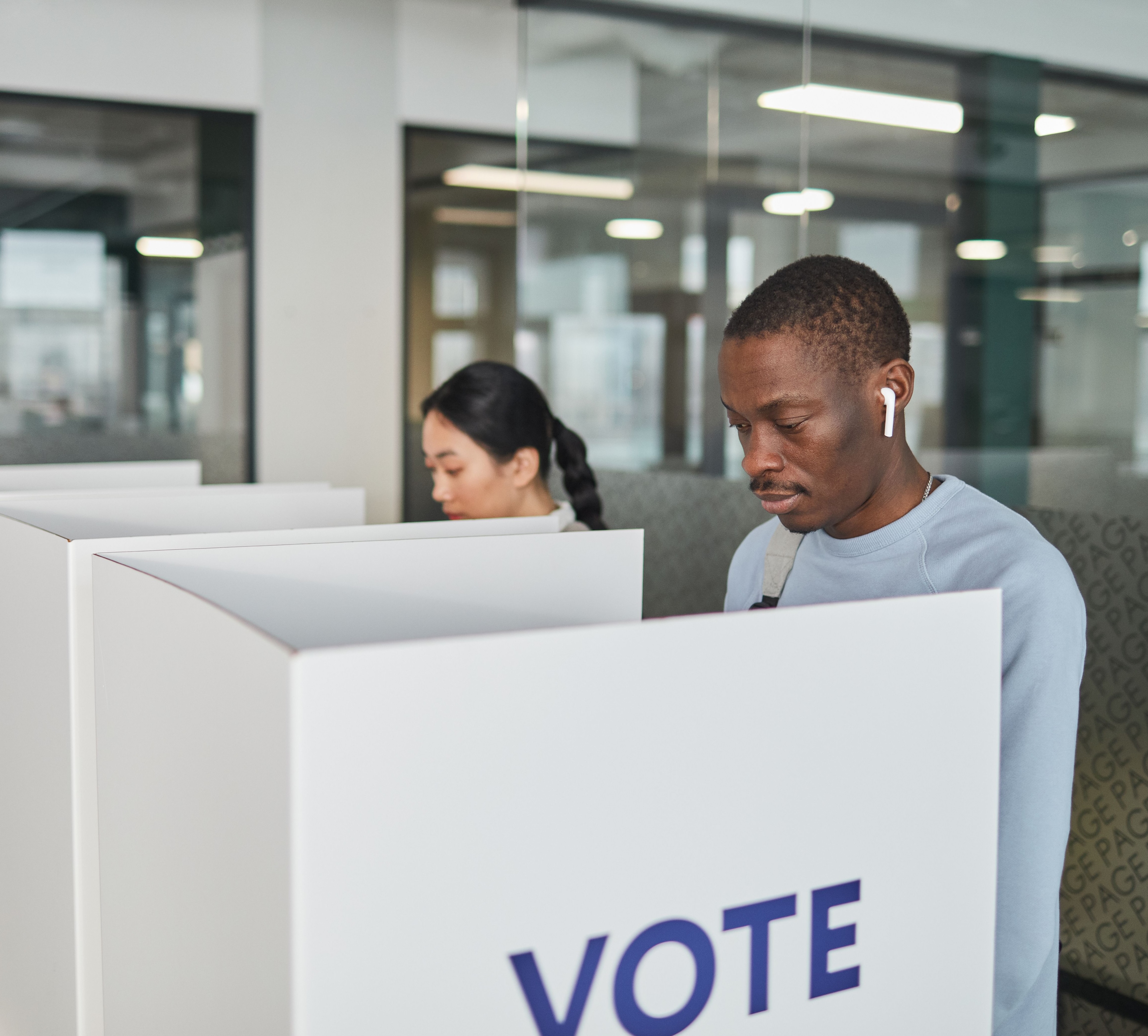
SACRAMENTO — A generational shift helped shape voter behavior in the Nov. 3 general election, according to pollsters who have been examining the Nov. 3 election results.
At an election post-mortem sponsored by Capitol Weekly, Shakari Byerly, managing partner of Evitarus, and other pollsters discussed the election’s Democratic gains, changing voter demographics and the role of polling. Byerly said younger voters were making their concerns known at the ballot box.
“What we saw nationally, as well as here in California in candidate races, is a generation shift,” Byerly said at the event, held at the UC Student and Policy Center. “So, looking at what we saw in Texas, particularly with the governor-elect, Gina Hinojosa, there’s a real generational change there. What we are seeing in the Los Angeles (mayoral race), there’s a generational change there.”
Hinojosa, a Democrat, won the Texas governor’s race. In California, the Los Angeles mayoral contest also drew attention from the pollsters.
Founded in 2008, Evitarus is a Los Angeles-based public opinion research firm that conducts surveys, focus groups and interviews. The company describes itself as California’s only Black- and Latina-led full-service public opinion research firm.
More than 20 speakers took part in six panels at the Capitol Weekly event, covering topics including the Democratic “blue wave,” fuel costs, President Donald Trump’s approval ratings and Proposition 50, which redrew California’s congressional districts.
The luncheon keynote, “The Polls,” featured Byerly, Mark Baldassare of the Public Policy Institute of California, Mark DiCamillo of the Berkeley Institute of Governmental Studies and Paul Mitchell of Political Data Inc. Ashley Zavala of KCRA 3 moderated.
Panelists also discussed pre-election polling on Propositions 40, 41 and 42, measures involving state tax policy. Proposition 40 proposed a one-time wealth tax; Propositions 41 and 42 included provisions that could block conflicting measures if they received more votes.
Byerly said voters across California raised concerns about housing, health care, food costs and immigration enforcement. She said Evitarus spoke with voters statewide in five languages and across different ethnic, cultural, gender and age groups.
“What we hear was that accountability was really important,” she said.
The panelists discussed the accuracy of election polling, the spread of fake polls and prediction markets, changes in survey methods and shifting voter demographics. Byerly cautioned that polls are snapshots of voter sentiment, not guarantees of election outcomes.
“Polls are not a crystal ball,” she said.
California’s election results were still unofficial as the post-election canvass continued.
County election officials have up to 30 days after election day to complete their tallying, auditing and certification work. The secretary of state is scheduled to certify statewide results Dec. 11.
A Nov. 17 analysis by the Public Policy Institute of California put turnout at 50.1% of eligible voters and said the 2026 midterm was on track to be among the state’s strongest in 50 years.
Separately, the California Voter Foundation estimated that about 99% of ballots had been counted by that date.
Baldassare agreed that younger voters were responding to economic pressures and looking for change.
“Younger voters in California and nationwide have real challenges to just keep up,” he said. “It’s very different than it was 30 years ago when you could make it on your own.”
Antonio Ray Harvey writes for California Black Media.