By Antonio Ray Harvey
Contributing Writer
SACRAMENTO — The California Association of Black Lawyers held its annual Legislative Days at the State Capitol earlier this month to engage in direct advocacy with state policymakers and elevate issues that specifically impact Black communities in California.
The two-day event, held March 9 and 10, was organized in collaboration with the National Coalition of 100 Black Women and the California Lawyers Association.
Tamara Michael, president of the California Black Lawyers Association, said the gathering was more impactful than she had imagined.
“My heart is so full of how these days went,” said Michael, a Bay Area attorney and corporate counsel for Penguin Solutions. “One of the things that we continue to do is find ways to collaborate and connect with our legislature. We know that when we all come together in a meaningful way, we’re able to bring about change. We want to build on that momentum.”
The association represents more than 6,000 members, including African American attorneys, judges, law professors and law students throughout the state. The organization focuses on advocating for legal issues, increasing the number of Black judges and promoting equality within the legal profession.
According to organizers, the Legislative Days event serves as a platform for attorneys, judges, law students and community leaders to solidify their collective voice and influence the state’s legal and legislative landscape.
Association members were able to discuss specific bills prioritized by the California Legislative Black Caucus, such as Assembly Bill 673, authored by Assemblyman Corey Jackson, D-Moreno Valley.
That legislation, which has the backing of the association, establishes the Unaccompanied Youth Support Grant Program, a pilot program designed to support homeless youth who are not in foster care.
If passed, AB 673 would provide competitive five-year grants to local educational agencies, including school districts and charter schools — to support 16 and 17-year-old “unaccompanied homeless youth.”
The term unaccompanied homeless youth refers to homeless children not in the physical custody of a parent or guardian, as defined in the federal McKinney-Vento Homeless Assistance Act.
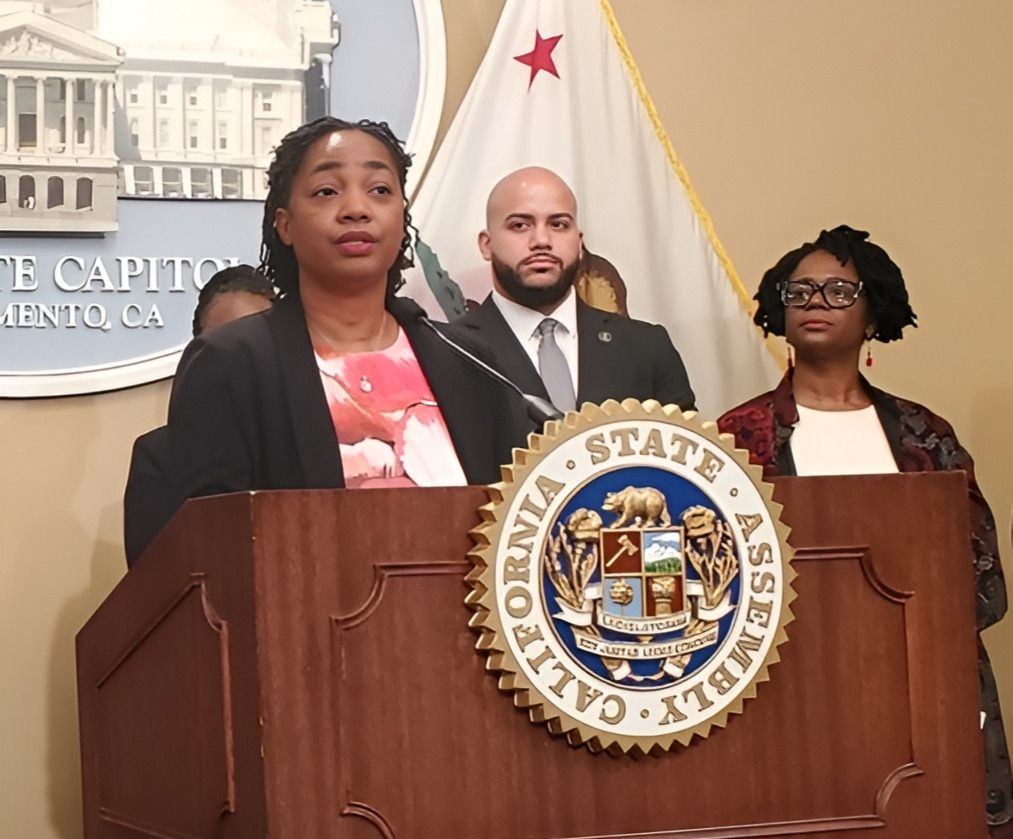
After the conclusion of the two-day event, the association and National Coalition of 100 Black Women hosted a reception at the California Lawyers Association’s office near the State Capitol, where members announced their support and a brief overview of AB 2014, authored by Assemblywoman Sade Elhawary, D-South Los Angeles. The bill aims to prevent gender-based stereotypes from unfairly influencing criminal proceedings.
AB 2014 requires a court to balance the “probative value” (of evidence) against the danger of “undue prejudice” when a party seeks to admit evidence that might trigger gender-based stereotypes.
“When it comes to legislation that we’re doing around criminal justice reform, one of our core pillars in our office is looking at what we can to ensure that we are more thoughtful around restorative justice,” Elhawary said. “I am so grateful that [the association] is able to support [AB 2014] and I’m excited about our alignment.”
The California Association of Black Lawyers also was a key supporter of AB 7, introduced by Assemblyman Isaac Bryan, D-Culver City. AB 7 was legislation designed to allow California colleges and universities to give admissions preference to applicants who are descendants of enslaved people.
AB 7 passed the state Legislature last September, but the bill was vetoed a month later by Gov. Gavin Newsom, who stated the bill was “unnecessary” because California’s public and private colleges and universities “already have the authority to determine whether to provide such admissions preferences.”
Bryan said AB 7 was the only one among 13 bills he authored during the last legislative session that Newsom did not sign.
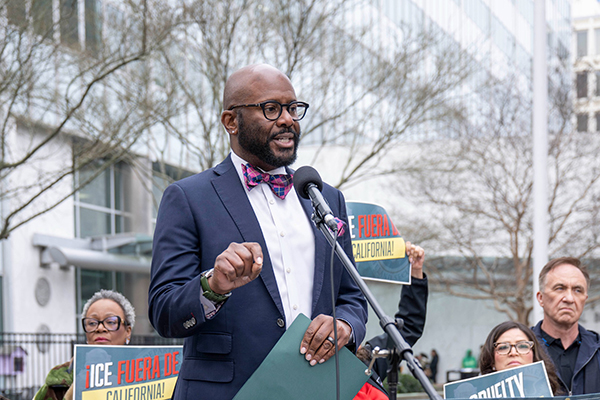
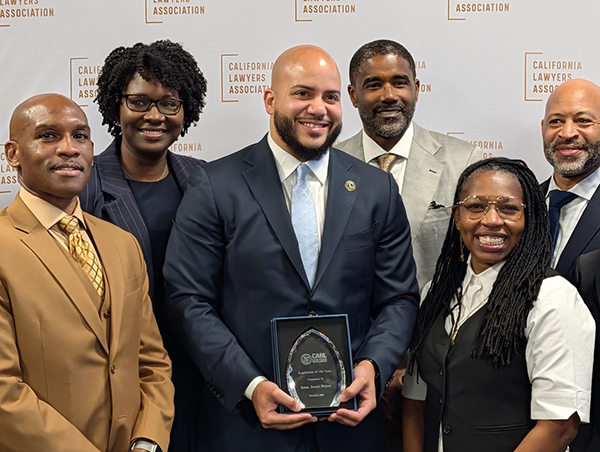
During the reception, the association presented Bryan with the Legislator of the Year Award.
“People tell me. ‘Man, you went 12 for 13. That’s pretty good.’ I said yeah, but I wanted that one. CABL wanted that one,” Bryan said. “We did the work. We deserve that one. CABL testified so strongly, this organization stood in the pocket so strongly with us that we did not have a single voice in opposition on the (Assembly) floor.”
The concept of the California Association of Black Lawyers emerged at the 1976 National Bar Association convention, where legal professionals recognized the need for a statewide organization representing Black attorneys in California. The organization was formally established in April 1977 during a meeting in Los Angeles.
Leaders say their partnership with the California Legislative Black Caucus focuses on advancing legislative priorities, promoting restorative justice and strengthening the pipeline of Black leaders in law and policy.
“When we [CABL and CLBC] stand shoulder to shoulder, we can get anything we need to the governor’s desk,” Bryan said. “Now we’ve got to get what we need signed from him and the next governor, which means our power is growing.”
The association will hold its 49th annual conference from April 9–12 at the Oakland Marriott under the theme “Reclaiming Our Shine.”
Antonio Ray Harvey is a reporter for California Black Media.