Wave Staff and Wire Reports
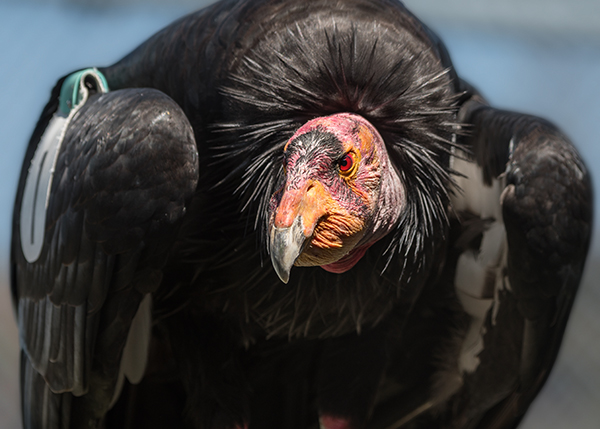
LOS ANGELES — The Los Angeles Zoo is marking the 60th year of Topa Topa, a California condor that resides at the zoo and whose role in a landmark recovery effort has helped restore the species from near extinction.
Topa Topa arrived at the zoo in 1967 after being found weak andmalnourished in Ventura County and later became the first California condor to live in a zoo, according to officials.
He went on to become a founding member of the U.S. Fish and Wildlife Service’s California Condor Recovery Program, helping establish a breeding population in human care aimed at saving the species.
Zoo officials said Topa Topa has contributed to the production of roughly 300 condors, with about 100 still participating in the recovery program and 94 flying free in the wild today.
“Topa Topa’s longevity at the Los Angeles Zoo is a testament to the high level of care and wellbeing provided by the Zoo’s animal care and health teams,” Los Angeles Zoo CEO and Director Denise Verret said in a statement. “He represents so much more than a species; he is a symbol of the California condor’s experience from decline to triumph.
“His origin story, his recovery, and his unmatched contribution to the California Condor Recovery Program makes Topa Topa a hallmark of conservation success.”
After initially being rehabilitated and released into the wild, Topa Topa was returned permanently to the zoo when it became clear he could not survive on his own, officials said.
In 1978, he became the first California condor exhibited to the public, helping raise awareness about the species’ decline.
By 1982, with the wild population reduced to just 22 birds, federal officials launched an emergency recovery effort involving captive breeding, with the L.A. Zoo and San Diego Zoo serving as key partners, officials said.
Topa Topa later became a cornerstone of that effort, producing his first chicks in 1993 and continuing to contribute to the program for decades.
“When I think of the California Condor Recovery Program, Topa Topa is one of the first things that comes to mind,” said Rose Legato, curator of birds at the L.A. Zoo. “The plight of the California condor really began to resonate with the public around the same time Topa Topa was brought to the Zoo in the 1960s.

“It’s beautiful to see how much he has contributed to the recovery of the species and how far we’ve come.”
The California condor is the largest land bird in North America, with wings spanning nine-and-a-half feet. The species is classified as critically endangered by the International Union for Conservation of Nature.
Adult condors stand at around three feet and weigh 17 to 25 pounds. They can soar to heights of 15,000 feet and travel up to 150 miles a day. Like vultures and other scavengers, condors are part of nature’s cleaning crew, feeding on the carcasses of large terrestrial mammals, including deer and cattle, as well as marine mammals such as whales and seals.
“The Zoo’s animal care team worked very hard in those early days to understand the birds’ behaviors. It wasn’t an easy road,” said Dominick Dorsa II, director of animal care at the L.A. Zoo. “It was a massive challenge and an incredible responsibility, and those early keepers excelled.
“They worked to create a hospitable environment for the birds to breed and live comfortably with little to no human interaction — keeping them as wild as possible. It took many years to prepare Topa Topa to become a breeding bird in this recovery program, but the outcome was far more exciting than initially expected as he would soon become the program’s biggest asset.”
The California condor population has grown to more than 600 birds, though threats such as lead poisoning and disease continue to pose risks, officials said.
Topa Topa remains behind the scenes at the zoo’s California Condor Recovery Center, where he continues to play a role in breeding efforts aimed at sustaining the species’ recovery.