By Stephen Oduntan
Contributing Writer
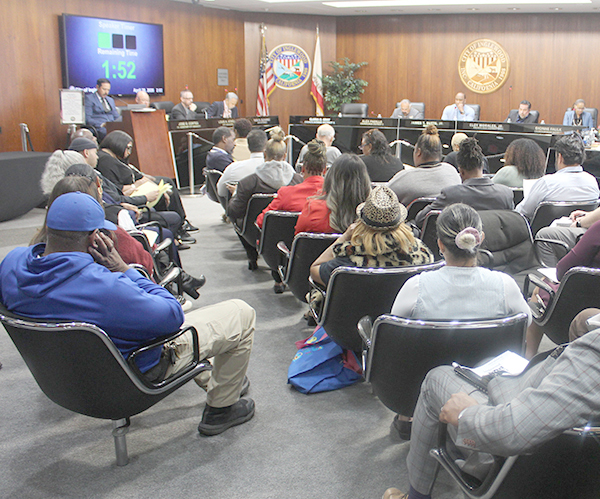
INGLEWOOD — The City Council approved a multimillion-dollar public safety technology package April 28 that includes body-worn cameras for police officers, marking a significant shift for a department that has long operated without them.
“We have to continue to move to the future,” Mayor James T. Butts Jr., a former police chief, said during the meeting.
The package — which also includes drones, expanded surveillance systems and license plate readers — is expected to be rolled out in phases, with some components implemented within two to three months and others by the end of the year.
“Public trust is built on transparency and accountability,” one council member said, adding that those concerns should be considered as the city moves forward with the technology.
Police officials said the system is designed to improve response capabilities and centralize data collection, allowing officers and investigators to access information in real time.
Police Chief Mark Fronterotta told the council the department spent months researching vendors before selecting what he described as “the best equipment” available, with a system designed to integrate officer interactions, dispatch records and video footage into a centralized platform.
“As the city prepares to support major international and national events, including the FIFA World Cup 2026, Super Bowl 2027, and the 2028 Summer Olympics and Paralympic Games, the demand for enhanced public safety infrastructure will increase significantly,” Butts and Fronterotta wrote in a message to council members urging them to approve the measures, funded largely through a state grant.
“The city is expected to experience a substantial influx of visitors associated with these events, requiring advanced and integrated systems to ensure maximum public safety, operational readiness, and effective security coordination,” they wrote. “This increase in activity across the region will place heightened demands on public safety resources and coordination. Continued investment in an updated, integrated infrastructure reflects the city’s strategic commitment to maintaining a safe community, enhancing real-time operational capabilities, and ensuring readiness for both current and future public safety needs.”
The approval comes as the city faces growing public scrutiny following the death of Bryan Bostic, 37, who died after an encounter with police on March 10.
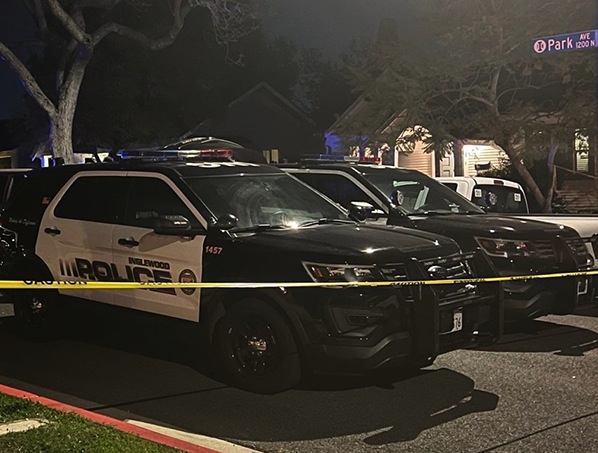
Bostic was taken into custody near Hillcrest Boulevard and Nutwood Avenue and later transported to a police station, where he was pronounced dead. Authorities have not publicly explained what led to the stop or the cause of death.
During the meeting, council members raised questions about how the new system would be implemented and whether it would include safeguards to ensure accountability.
Police officials said policies governing body camera use and other systems would be publicly available, while noting that departments must operate within legal and constitutional guidelines.
Butts said multiple investigations are underway and cautioned against drawing conclusions before official findings are released.
“No one wants to know more than I and the council do what was the cause of death,” he said. “It’s our responsibility to wait and not make premature comments.”
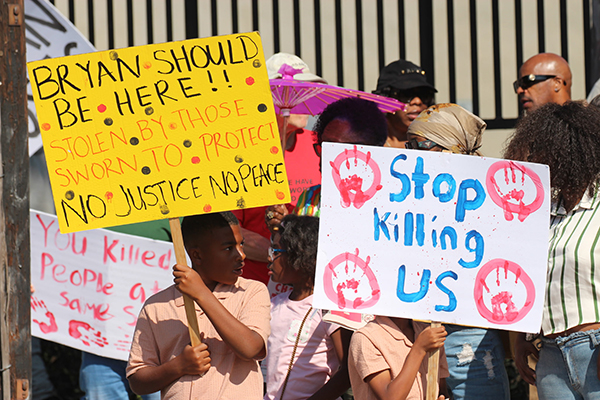
Public comment reflected ongoing frustration from residents and family members seeking more information about Bostic’s death.
Several speakers called for the release of reports, video evidence and the names of officers involved, while others questioned whether the new technology would address concerns about accountability.
Dawanna Wells, Bostic’s aunt, said the family is still waiting for basic answers.
“They keep talking about toxicology,” she said. “But what does that have to do with the excessive force?”

Wells said the family’s focus remains on what happened during the encounter itself.
Bryan Bostic’s cousin, Brother Mohammed, also criticized the city’s response, saying officials focused on future investments rather than accountability.
“They’re talking about everything except how officers will be held accountable,” he said.
Another one of Bostic’s aunts, Marie Darden, told NBC4: “Inglewood is not safe. Inglewood is not a place to be.
“Many tourists are out here. Billions of dollars are being generated, and still no safety for the community. And I just think somebody needs to give me, our family, some type of answers at this time.”
Butts told Channel 4 the council’s vote means the city is “overhauling the entire computer matrix of the Inglewood Police Department.”
“We are putting in a new system that is going to integrate with our cameras that we have out in the field,” he said. “It’s going to be integrated with our computer dispatch system, and it will come with a body-worn camera system that is integrated into that system.’”
Officials said the rollout of body cameras and other technology will continue over the coming months, with training and policy development occurring alongside implementation.
For Bostic’s family, the timeline offers little comfort.
“We just want answers,” Wells said.
Stephen Oduntan is a freelance writer for Wave Newspapers. City News Service also contributed to this story.