By Janice Hayes Kyser
Contributing Writer
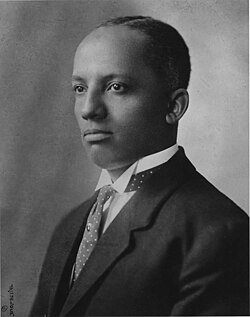
As the observance of Black history marks its 100th birthday, scholars and community leaders say Carter G. Woodson, the father of the Black history movement, would be elated that his week-long observance has grown to a month-long celebration.
“I’d like to think that first and foremost Dr. Woodson would be excited and supportive of the expanded commitment and commemoration of Black history,” said M. Keith Claybrook, Jr., associate professor of Africana Studies at Cal State Long Beach.
Karsonya “Kaye: Whitehead, president of the Association for the Study of African American Life, founded by Woodson, believes in addition to being pleased that the country’s celebrating 50 years of Negro History Week and 50 years of Black History Month, the historian and educator might also be a bit disappointed.
“I think he’d be happy we are still doing the work to uplift our history and a bit disappointed that we have to keep doing it,” said Whitehead, professor of communication and African and African American Studies at Loyola University
Maryland. “At some point it has to be written into the history books and celebrated without a proclamation.”
While Claybrook agreed, he said Woodson’s example encourages him to stay in the fight.
“I believe Dr. Woodson would encourage us to continue to study our history, to do quality research, to go beyond the festivals and social gatherings to share the information that informs us about who we are, where and who we come from and where we are going,” Claybrook said.
In addition to founding the celebration of Black history, Woodson is known for his seminal work, “The Miseducation of the Negro,” published in 1933. The influential book argued that African Americans were being taught to depend on white society.
Woodson was only the second African American to receive a Ph.D. from Harvard University. Civil rights activist, historian and author, W.E.B. Dubois was the first.
As the son of formerly enslaved parents, Woodson was keenly aware of the connection between history and humanity.
“If a race has no history, if it has no worthwhile tradition, it becomes a negligible factor in the thought of the world, and it stands in danger of being exterminated.” Woodson wrote.
Woodson founded Association for the Study of African American Life in 1915 in Chicago. Today, the organization, based in Washington, D.C., with branches across the country. including in Los Angeles, serves to promote, research, preserve and disseminate information about Black life, history and culture by conducting community forums and providing resources and curriculum.
In 1926, the association launched Negro History Week to coincide with the February birthdays of two individuals Woodson felt were integral to African American freedom — Abraham Lincoln and Frederick Douglass.
His intent was to integrate Black history into all aspects of society including education, public libraries, local churches and communities across the nation.
And that’s exactly what happened as churches amplified it, civic organizations built programs to support it and the civil rights movement propelled it.
In 1976 under former President Gerald Ford the United States formally expanded the week-long celebration into Black History Month.
Janice Hayes Kyser is a freelance reporter for Wave Newspapers.