By Edward Henderson
Contributing Writer
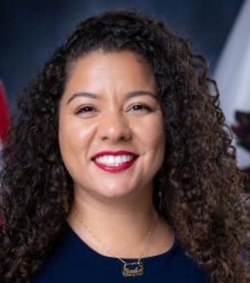
LOS ANGELES Assemblywoman Sade Elhawary — an educator, organizer, and lifelong advocate for social justice — represents California’s 57th Assembly District, representing communities in Los Angeles like Exposition Park, South L.A., and downtown.
A daughter of Egyptian and Guatemalan immigrants, she grew up in Los Angeles and spent more than a decade at Community Coalition, where she was mentored by L.A. Mayor Karen Bass and City Council President Marqueece Harris-Dawson and helped to train the next generation of youth leaders.
This is one in a series of articles by California Black Media consisting of interviews with California newsmakers about key issues in 2025 and what lies ahead in 2026.
Elhawary helped found the Nelson Mandela School for Social Justice, shaping its curriculum and first graduating class, and has dedicated her career to improving outcomes for women and young people of color while strengthening Black–brown solidarity. A UCLA graduate with a master’s degree from the Harvard Graduate School of Education, she now lives in South Los Angeles with her foster daughter, Makailah.
California Black Media spoke with Elhawary about her accomplishments and challenges this year and her vision for 2026.
CBM: What stands out as your most important achievement this year?
SE: I’ve never been in office before, so as a first-year legislator my big goal was to learn what it takes to be successful and to have a real impact on the community. I spent a lot of time building coalitions and bringing people together, especially community members and service providers who are closest to the problems and closest to the solutions.
That strategy of building an outside-inside approach is what I’m most proud of. As an activist, that’s how we pushed the envelope and built power. Now, being one of the decision-makers people know they can work with to push hard is exciting.
CBM: How has your leadership contributed to improving the lives of Black Californians?
SE: The first thing is ensuring representation and real conversations about how issues at every level impact the Black community.
Nationally, with [diversity, equity and inclusion] cuts and federal shifts, we also need to uplift the fact that there are Black immigrants — Black Latino immigrants and non-Latino Black immigrants. Those perspectives are often overlooked.
In California, I worked on legislation around foster youth. I’m a foster mom — my daughter is Black — so I understand how many Black children are impacted by the foster system. This bill strengthens the Foster Youth Bill of Rights and improves the transition process when youth move between homes.
CBM: What was your greatest frustration this year?
SE: Someone once told me that in Sacramento the difference between your friends and your enemies is that your enemies stab you in the back and your friends stab you in the front. It’s frustrating because this is the type of politics people dislike. There are things that happen behind closed doors that aren’t transparent, which makes people think politicians are only out for themselves.
It’s frustrating when people focus on getting ahead personally, politically or professionally instead of thinking about how our communities can get ahead.
CBM: What inspired you most this year?
SE: One of the most inspiring things this year was our Impact to Action and Impact in Action events. People impacted by the justice system helped plan a resource fair and reunion in the district, then came to Sacramento to rally and advocate for some of our bills.
It was beautiful to see system-impacted folks lead the planning for something that directly affects them and the community. And bringing people from South Central to Sacramento — many for the first time — and watching them engage in the legislative process was incredibly powerful.
CBM: What is one lesson you’ve learned this year that will inform your decision-making next year?
SE: A major lesson I learned is that we can build together. We can organize together. Early on, I saw how siloed people were, but I helped bring senators and Assembly members together for real conversations about the budget — moving beyond fighting over cuts and instead discussing revenue and shared priorities.
I didn’t realize at first that this kind of cross-house organizing was part of my role but seeing how excited people were to collaborate taught me how powerful coalition building can be.
CBN: In one word, what is the biggest challenge Black Californians are facing?
SE: Reparations.
CBM: What is the goal you want to achieve most in 2026?
SE: I want to help move the needle and shift the narrative around revenue — like taxing the rich and helping communities understand what it takes to fight for that. I also want to shift public understanding of public safety, so we’re not stuck in a tough-on-crime era.
The big goal is communication strategy: getting people to change their minds, educating them, and increasing civic engagement in ways that help, not harm, our communities.
Edward Henderson is a reporter for California Black Media.