Contributing Writer
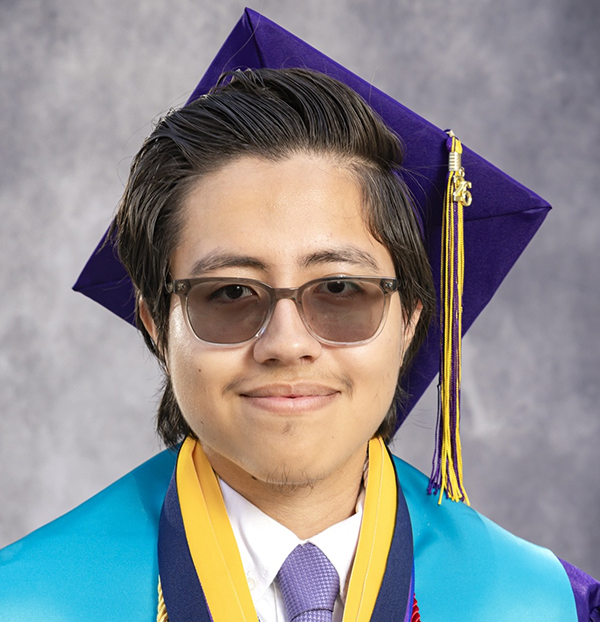
SAN FRANCISCO — Vincent Lee estimates sending out 100-200 job applications since graduating from San Francisco State University last year. Having grown up in Los Angeles, he dreamed of working in television, majoring in broadcast and electronic communication arts.
But for job seekers like Lee, today’s market can sometimes feel like a house of mirrors where what looks like an opening one moment turns out to be another dead end.
“It’s super rough,” Lee said. He noted how a lot of the job openings he encountered were actually fake — so called “ghost jobs” — where recruiters post openings for non-existent roles.
Practitioners say such posts allow companies to collect resumes for future positions. They also create the illusion that a company is expanding. For job seekers, they are one more source of frustration in what is already an emotionally fraught moment.
According to Lee, when he did start landing interviews, the experience was equally discouraging. He recounts one interview where, after logging onto a scheduled Zoom call, the prospective employers got three questions in before telling him, “Your role is actually going internal, so we don’t need to have this interview anymore.”
Lee says the Zoom call ended as abruptly as it started.
“They just turned it off,” he said.
California ranks among states with the worst job markets in the country. The unemployment rate hit 5.6% in December, compared to 4.3% nationally. Only Washington, D.C. ranked higher at 6.7%.
Much of the blame has fallen on artificial intelligence and the wave of layoffs that have come in its wake. But analysts say the entry level market specifically has been contracting for some time and that AI simply accelerated the trend.
Nationwide the picture is just as murky. The labor market added 178,000 jobs in March, according to the Bureau of Labor Statistics. But that’s the only encouraging news in months — losses in February were higher than initially reported, with 133,000 jobs lost. Employers added just about 9,700 jobs a month in 2025, the weakest hiring outside a recession since 2002.
Layoffs across tech, journalism and the public sector have added to the anxiety. Businesses have also been reluctant to bring on new workers partly because of uncertainty arising from President Donald Trump’s trade and immigration policies.
Nicole Szeto graduated from San Francisco State last August with a major in marketing and a minor in visual communications. Despite having built large followings running fan pages on Instagram, Twitter, and Tik Tok — from Shawn Mendes to various K-Pop star accounts — she says she still feels the pressure of being unemployed.
She described a recent interview she had with a local marketing company.
“They were like, you’re in the K-pop club,” she said, after showing some of her social media pages. “And I was like, yeah, and they’re like, um, OK? And then they assumed that I was Korean. I was considering saying no if they offered me the job. It was that bad.”
While she didn’t ultimately get an offer, Szeto (who is Chinese American) says she remains undeterred. She is continuing to build up her online presence and has even started mentoring friends on doing the same thing. Their hope is eventually getting press access to shows and interviewing musicians.
Leaning into her experience, she also started a TikTok page to publicly document her rejections, applications, and personal finances.
“Everything about being unemployed that you’re scared of, I’m probably doing it,” she said. “Someone actually commented and was like, ‘Hey, my company is looking for a social media intern if you’re looking for that.’ She sent me the link for it.”
For Szeto, it was a revelation. “I was like wait, is this another way of networking?”
Arya Zarrinkelk has spent more than 13 years coaching arts and media students — fashion, photography, film, and graphic design — across the Bay Area. He says the dread students describe today sounds familiar.
“A lot of things students are telling me they feel now are very similar to what I was experiencing when I first started in 2013,” he said, a time when the country was just beginning to drag itself out of the 2008 financial crisis.
Still, Zarrinkelk says much of the anxiety young job seekers feel is driven more by public discourse than by the reality of work.
“The narrative in the mainstream media has never been one of ease,” he said. “It’s always been like, ‘You better watch out for these things happening.’ Honestly, 95% of the time … it’s never a question of if you’re going to get a job. It’s usually a question of when you’re gonna get a job, right?”
For Salvador Victoria, a career counselor at Skyline College in San Bruno, the question is less about whether a student will find a job or not and more about whether they’ll be able to afford living in the Bay Area.
“When I was graduating high school, it was the great recession. Housing mortgages collapsing, bailouts, this and that,” he said, adding that despite the dim employment prospects, “It wasn’t even on my radar that much. … I was just excited to be doing something new and just having some independence.”

The students he sees today, in contrast, have families to support, rents to pay, pressures that as a young man he didn’t have to confront.
“There’s no easy answer” for a lot of these students, he acknowledged.
And while the AI boom has stoked fears of a looming employment — or, in some cases, literal — apocalypse, some of the young people interviewed for this story seemed surprisingly optimistic.
Diego Paniagua, 21, is a junior majoring in business management at San Francisco State University — a field he chose because he loves sports, coaching, and mentoring.
Paniagua currently has two jobs: interning for San Francisco’s Carnival festival, and a peer advising role, helping fellow students with their resumes and applying to jobs.
He says he’s a little worried about the growing presence of AI. In addition to his own job prospects, he points out that resumes don’t initially get read by people anymore — an automated system scans resumes for buzzwords that ‘match’ the applicant. So he finds himself advising students on how to appeal to the AI, rather than a human — a problem for someone whose passion is people.
“I trust in my personal skills, I trust the journey that I’m taking now, and I just kind of trust that things will fall into place, whether that’s AI or not AI,” he said. “I think a lot of my work will be done through interpersonal communication.”
Paniagua loves to plan and organize events, skills he believes rely on leadership quality and creativity more than simple efficiency.
“I think we’ll soon realize that AI can’t replace humans,” he said. “Humans are what drive performance, what drive engagement, what drive people to come into a business. Humans are ultimately needed, so don’t lose all hope and faith.”
Lee eventually did find a job setting up projectors at a hotel. He’s still focused on achieving his dream of working in TV. In the meantime, he films when he can and hopes to continue to pursue the career that he is passionate about.
“Sometimes you have to take detours to get there,” he said.
Chris Alam, a California local news fellow with the UC Berkeley Graduate School of Journalism, writes for American Community Media.