Wave Staff and Wire Reports
LAS VEGAS — A 30-year-old Compton gang war is being rehashed some 270 miles away in a Las Vegas courtroom where Duane “Keffe D” Davis is on trial for orchestrating the murder of rap legend Tupac Shakur.
The trial began Aug. 17 after a week for jury selection. At the heart of the prosecution’s case against is a gang war between the Mob Piru Bloods and the rival South Side Compton Crips.
The prosecution contends that Shakur was killed in retaliation for a beating given to Davis’ nephew, Orlando “Baby Lane” Anderson, a few hours earlier at the MGM Grand after a Mike Tyson fight.
Jurors were shown the casino surveillance video Aug. 18 of a group of people beating and kicking someone on the ground.
The video then showed Shakur and his entourage moving quickly through the crowded building in the minutes after the beating.
A few hours later, Shakur, riding in a black BMW with hip-hop mogul Marion “Suge” Knight, was gunned down by shots fired from a white Cadillac that had Davis, Anderson and two other men inside. Davis is not accused of pulling the trigger.
After many technical and procedural witnesses Aug. 18, James McDonald brought both hostility and humor to the stand when he testified unwillingly under a court order.
McDonald, like Knight, had been affiliated with the Mob Piru Bloods gang, and worked security for Knight at his Club 662, where Shakur and Knight had been headed when they were fired on. Davis was a member of the rival South Side Compton Crips.
Asked by Chief Deputy District Attorney Binu Palal if he was aware of why Anderson was beaten, he wouldn’t say.
“I’m aware of a lot of things,” McDonald said, “things that was going on, people ain’t talked about them in 30 years. Today ain’t one of them.”
He said, “Me or anybody else bringing up the dead is wrong.”
McDonald said he wanted to avoid answering questions that will hurt Davis, even saying the questions Sanft asked were not in his client’s best interest.
He directly addressed the defendant. “What you’re going through, brother, is what you’re going through,” McDonald said, adding “I didn’t want to be a part of it.” Davis had no visible reaction.
But McDonald also brought several moments of levity.
Asked if there were specific fights or disputes he could remember regarding the gang rivalry, McDonald said, “Are you serious?!” and laughter broke out in the courtroom.
After the testimony concluded, McDonald said prosecutors wanted him to say that he saw Davis and others pull up to Club 662 that night and why Anderson was beaten up at the MGM Grand.
“I’m not gonna send another Black man to prison,” McDonald told reporters.
Reggie Wright Jr., a former Compton police officer who owned a security company that was contracted by Knight’s Death Row Records, detailed the way tension had grown between the label and Sean “Diddy” Combs’ Bad Boy Records leading up to the Shakur shooting.
He said he had doubled Shakur’s security guards after he released the video for “Hit ‘Em Up,” one of the most vicious diss tracks in the history of hip-hop, aimed at Bad Boy’s Notorious B.I.G., who was killed six months later. The night Shakur was shot, however, he had only one security guard.
Wright said Shakur was on his way to perform at a charity event at Club 662. Shakur was on probation for California weapons and assault convictions.
After the shooting, Wright went to University Medical Center where Shakur was taken, and said a crowd was gathering there. He called his father, who worked in the Compton Police Department’s gang division, to tell him about the brawl and shooting, and warned him that trouble could be coming there.
Wright testified that he received Shakur’s ashes after he was cremated, and saw that they got to Shakur’s family.
Wright has long been among those rumored to be involved in Shakur’s killing.
Palal asked him if he had anything to do with it.
“Absolutely not,” Wright replied.
During opening statements Aug. 17, Chief Deputy District Attorney Binu Palal told jurors that Davis “did not pull the trigger. But he did plan the shooting in retaliation of the beating of his nephew.”
Palal said Davis spoke often about the night Shakur died in television interviews and also wrote a book about it.
He said as early as 1998, the defendant talked to the FBI and admitted he had been in Las Vegas the night of the shooting. He spoke again in 1999 to the FBI and said again he was in Las Vegas at that time but denied responsibility.
In 2009, he admitted to his role in the killing in an interview with Las Vegas police, Palal said.

“And now 30 years later, we’re going to ask you to finally hold Duane Davis accountable,” Palal said.
He also showed jurors the 2019 memoir that Davis co-wrote, “Compton Street Legend,” that the prosecution will use and that the defense fought to keep out of the trial, along with several of the defendant’s interviews.
Davis watched the presentation wearing a blue suit and tie sitting next to his attorney.
“The state has just told you what they believe is the evidence in this case,” Sanft said to jurors in his opening. “What they are telling you, they are representing as fact, when it’s really fiction.”
Sanft said Davis wasn’t previously charged for the 1996 killing because law enforcement knew that he was “full of crap.”
“There’s no facts,” he said, to back up what Davis said in his book.
The defense attorney also pointed to missing documents in the original investigation and distrust between Los Angeles and Las Vegas police departments. He pointed out that the Compton Police Department was shut down in September 2000 due to corruption.
He called one detective’s work “biased,” “sloppy” and “incomplete.” He said retired Detective Clifford Mogg read portions of Davis’ book into the record as if it were fact but said Mogg didn’t verify claims in it.
Palal outlined the origins of the gang feud. He said Knight employed Mob Piru gang members at the Death Row Records and Shakur, while not in a gang himself, was associated with Mob Piru. Davis was a prominent member of South Side Compton Crips.
Within 24 hours of the shooting, Davis and the rest of the group were back in Compton, driving home like nothing happened, Palal said.
But in the weeks after the killing, a war erupted in Compton in which three people were killed and multiple people including an 11-year-old girl were shot, Palal said, because “the streets knew the South Side Crips were responsible for this murder.” But those who knew what happened didn’t come forward with information. “In this world silence means survival,” Palal said.
The long-unsolved drive-by shooting gripped the hip-hop community, partly because no one was charged until Davis was indicted in 2023.
The other three men riding in the Cadillac have all died in the years since.
“When he says he’s the only person who can tell what happened, he’s right,” Palal said.
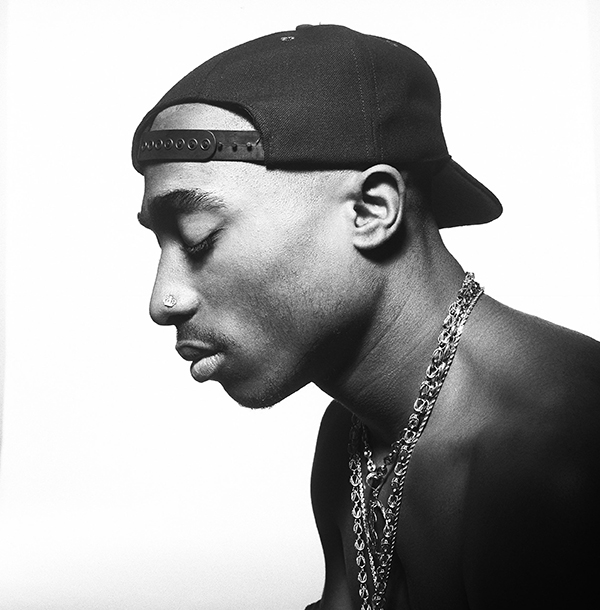
Shakur remains a cultural icon and is considered one of the most influential and versatile rappers of all time, despite dying at 25. He was nominated for six Grammy Awards and was inducted into the Rock & Roll Hall of Fame in 2017.
Associated Press writers Jessica Hill, Rebecca Boone and Andrew Dalton contributed to this story.