By Antonio Ray Harvey
Contributing Writer
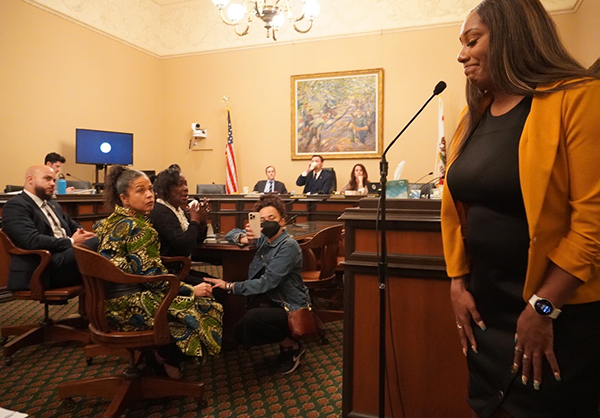
SACRAMENTO — Members of the California Legislative Black Caucus, through their voices and votes, supported Assembly Bill 2156, which proposed renaming César Chávez Day to Farm Workers Day.
Gov. Gavin Newsom signed the bill into law on March 26, allowing it to take effect immediately before the March 31 observance.
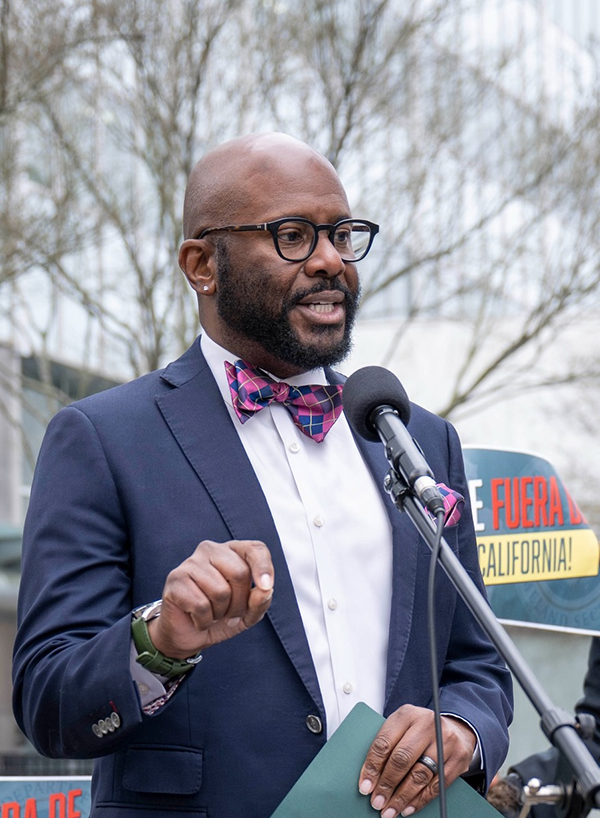
Assemblyman Mike Gipson, D-Gardena, says pivoting from honoring a single figure to celebrating the broader labor movement recognizes the dignity and contributions of tens of thousands of agricultural workers.
“My remarks are specific in making sure that, one, we acknowledge the work of the farm workers has done here in the state of California because they need to be recognized,” Gipson told California Black Media. “It gives me great pride to respect and stand with farm workers, not only here in California, but all across the United States of America, because they are responsible for putting food on our tables.”
The advocacy for the measure was part of a bipartisan, unanimous, and speedy legislative response following allegations of sexual abuse against United Farm Workers co-founder Chávez. The claims, which surfaced publicly in recent weeks, also referenced that Chávez assaulted Dolores Huerta, the union’s co-founder and longtime civil rights advocate.
The bill, authored by Assembly Speaker Robert Rivas, D-Salinas, recognizes the collective farmworker labor movement rather than a single individual, following a detailed investigation of Chávez by the New York Times.
“These allegations are devastating — for survivors, for women whose voices have long been diminished, and for advocates who have dedicated their lives to building movements larger than themselves,” wrote Assemblywoman Mia Bonta, D-Alameda.
“No one should ever be subjected to sexual abuse, assault, or nonconsensual actions,” Bonta added. “I am proud to stand with this iconic matriarch of the farmworker and labor movement. Her lifelong commitment to justice is evident even now, as she continues to speak truth to power.”
Newsom had initially expressed openness to the name change on March 18 but had not committed to the action. His support became apparent after talking to reporters at the State Capitol on March 24 as the state Legislature moved rapidly to pass the bill.
The bill passed the Assembly with a 70-0 vote and the Senate with a 37-0 vote, indicating widespread bipartisan support in both houses, including all 12 members of the Legislative Black Caucus in both houses.
Gipson noted that he has ties to the Latino community, particularly through one of his grandchildren. He frequently honors the large communities of Mexican ancestry within his 65th Assembly District, which includes areas like Wilmington and Carson.
The California farmworker movement in the 1960s and 1970s was a nonviolent campaign to secure union recognition, fair wages, better working conditions, and dignity for agricultural workers. The UFW used strikes, boycotts and marches to fight poverty and exploitation, resulting in landmark collective bargaining rights.
“It’s bigger than one person. It was a movement,” Gipson said. “Not only was it a cultural movement, but it was a movement that represented California as well, for being the biggest agricultural state in the country as well. It deserves to have a day such as March 31 as Farmworkers Day.”
César Chávez Day, celebrated on the labor leader’s birthday, was officially proclaimed a U.S. federal commemorative holiday by President Barack Obama in 2014. The day is intended to promote service, social justice, and education regarding his efforts to improve the lives of laborers.
The holiday honored the life, legacy, and nonviolent activism of the labor leader who fought for the rights of migrant farm workers. California was the first state to create the holiday in 2000.
The Rev. Martin Luther King Jr., supported the farmworkers movement by endorsing César Chávez’s nonviolent strategies, offering public solidarity, and linking labor rights to the broader civil rights fight.
State Sen. Suzette Valadares, R-Santa Clarita, along with other Republican lawmakers, moved to make this change official, arguing for a focus on the “collective strength” of the agricultural workforce.
“As the daughter and granddaughter of farmworkers, this is deeply personal,” Valadares said. “The legacy of farmworkers belongs to families like mine across California — not to any one individual. Renaming this day is about honoring the people who do the work, while being honest about our history.”
State Senate leader Monique Limón, D-Santa Barbara, emphasized that renaming the holiday is a stand in support of the valor of the victims while continuing to honor the true essence of California’s workforce.
The Legislature and state agencies plan on addressing how Chávez’s legacy will be handled in schools, the renaming of buildings and libraries, and the removal of his names on parks and public statues.
“There will be ongoing conversations to grapple with on the additional policy changes that need to happen,” Limón said. “We also want to do it well. It’s going to be up to the Legislature to think about how to move this.”
Antonio Ray Harvey writes for California Black Media.