By Darlene Donloe
SOUTH LOS ANGELES — In the heart of the hood, a revolutionary museum is redefining the narrative of American history.
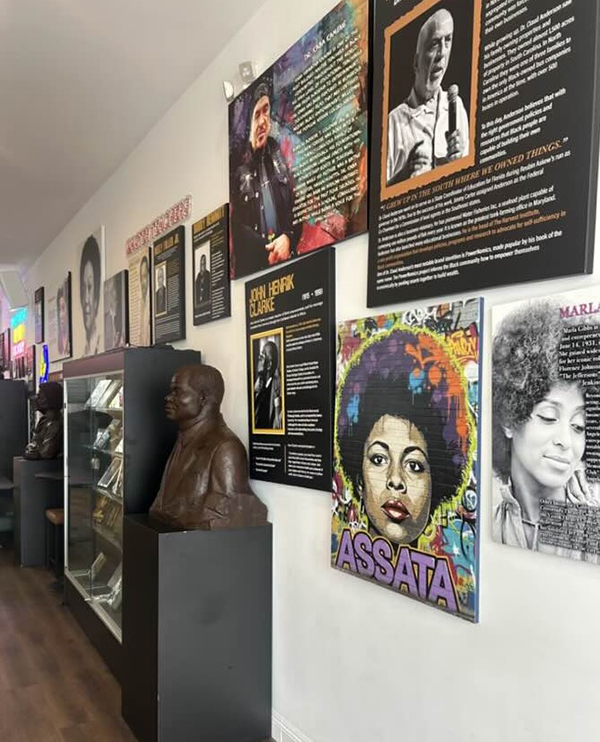
The Hidden History Museum, at 2131 W. Jefferson Blvd., just west of Arlington Avenue, is more than just a repository of artifacts — it’s a bold declaration of Black excellence, a celebration of the unsung heroes who forged America’s path.
The groundbreaking institution, launched in February 2023 by historian Tariq Nasheed, immerses visitors in the untold stories of Black trailblazers, freedom fighters and cultural icons who shaped the fabric of the nation.
Nasheed, a director and producer best known for his popular five-part ‘Hidden Colors’ documentary film series, said he opened the museum because he decided “Los Angeles needed a venue that focused on stories that hadn’t been told.”
“Another reason I wanted to open the museum in L.A. was the memory of Nipsey Hussle,” said Nasheed, who is currently working on “Hidden Color 6.” “He always had the mindset that the marathon must keep going. So, that gave me the idea to put a museum in the South L.A. area. A lot of people were coming to South L.A. using his death site as a tourist attraction and as a memorial, but that was very dangerous because there were reports of people getting harmed going into that neighborhood.”
To launch the museum, Nasheed, a married father of five, said he raised $1 million on Indiegogo before putting in another million for renovations and securing the building.
“We got the museum open, and everyone is enjoying it,” said Nasheed, who also produced the documentary, “American Maroon.”
“I think going to museums brings knowledge,” said Desiree Parham, an assistant at the Hidden History Museum. “You can always learn something new. I am a person who loves learning about my culture and getting more knowledge about my people. This museum highlights a lot of different things that can provoke thoughts and maybe get you to do research or have a different perspective on different topics in Black history.”
From the civil rights movement to Black Pride and Black Lives Matter, the museum’s collection is a testament to the power of Black history.
The museum is divided into various sections that include Black inventors, Black Americana, the Maroons, the Seminoles, the Haitian Revolution, minstrel shows, freedom fighters, items from the Jim Crow era, Biddy Mason (former slave, turned nurse, midwife and real estate entrepreneur), a West Coast hip hop history section focusing on early hip hop in Los Angeles, and more.
Rasheed is most proud of several busts on display, including those of Biddy Mason, John Henrik Clarke, a historian and professor; and Dr. Frances Cress Welsing, a noted psychiatrist.
The museum’s impact extends beyond its walls. With partnerships with other institutions and a robust education program, the Hidden History Museum is becoming an integral part of the community.
“One month a year is not enough,” said Nasheed, originally from Detroit. “We need more remembrance and education of our African American culture.”
The museum’s goal is clear: to honor the hard work of Black individuals who paved the way for a brighter future.
As the creator of the Hidden History Museum, Nasheed said he is very proud that the success of the museum is due to a Black grassroots effort.
“I want people to understand because a lot of times when we get institutions, like museums or art exhibits, it’s funded from the top down,” Nasheed said. “The Hidden History Museum is literally all grassroots. Everything came from the grassroots. It came from small donations. It came from everyday people, contributing regularly. It’s a 100% community-oriented institution. And I’m very proud of that.”
Plans are underway to include technology, virtual reality, and augmented reality in the exhibits.
“We want the museum to be interactive for our visitors,” Nasheed said. “Everyone is doing that now. We also want to start having local artists showcase their work. That’s going to happen soon.”
Nasheed’s conviction is clear: “This museum isn’t just a destination — it’s a movement,” he said. “Everyone needs to experience it.
“Everybody benefits from foundational Black American history because it’s so vast,” he added. “We are foundational Black Americans. We’ve been here from the very beginning, and we are the oldest consecutive ethnic group in the United States. So we’ve had our hands in the creation of almost everything in this country. Black history is American history.”
The museum is open from 11 a.m. to 4 p.m. Phone: 323 840-3029.
Darlene Donloe is a freelance reporter for Wave Newspapers who covers South Los Angeles. She can be reached at ddonloe@gmail.com.