Wave Wire Services
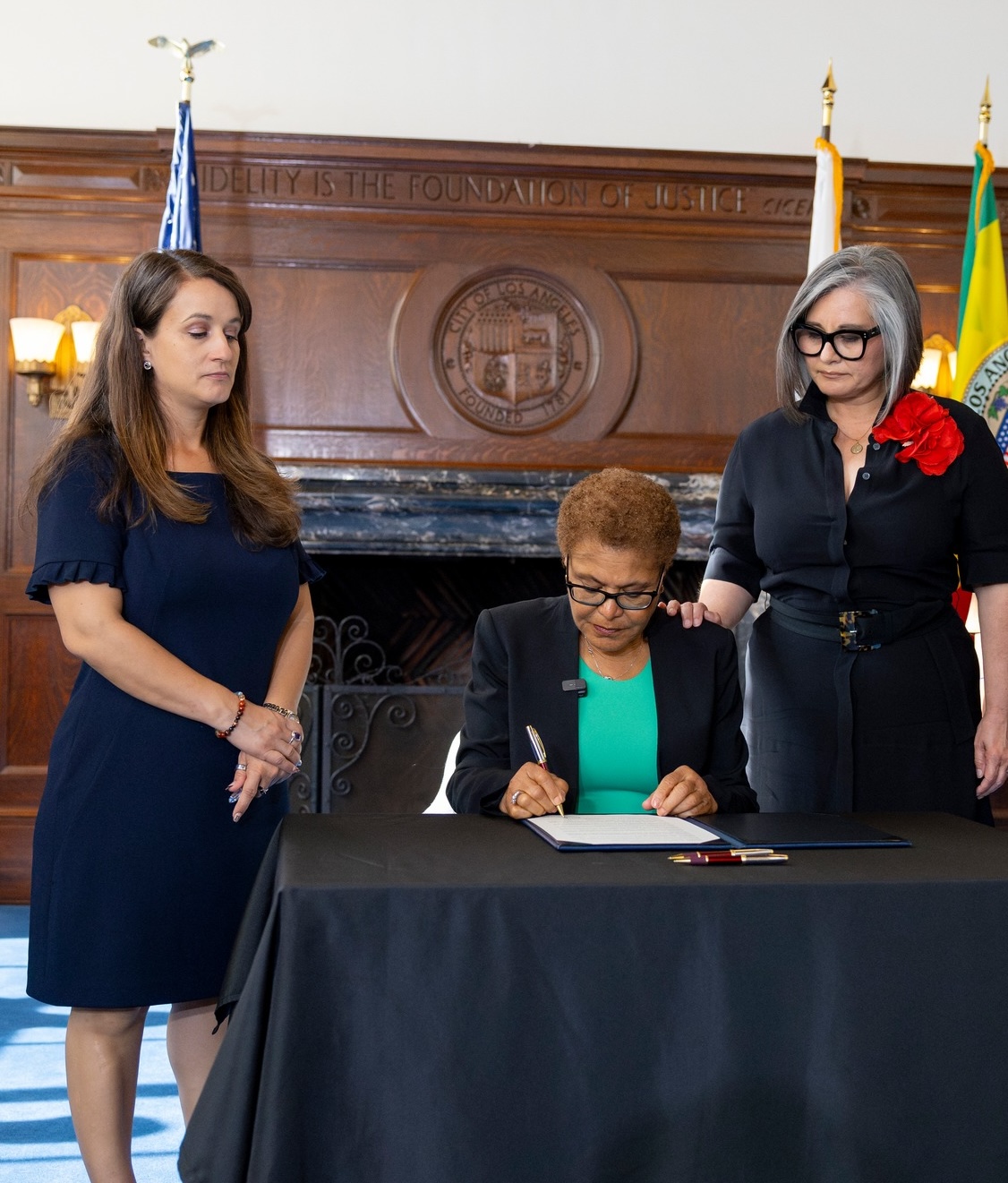
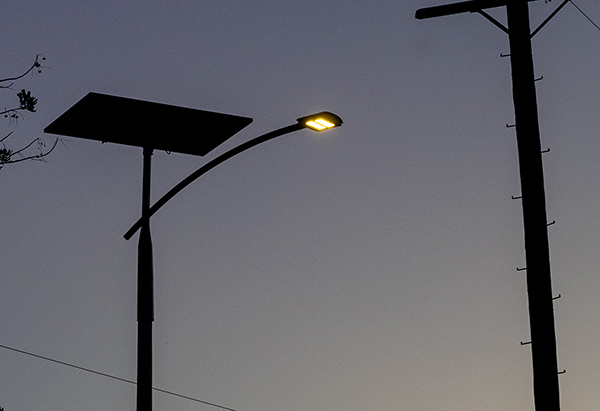
LOS ANGELES — Mayor Karen Bass signed a new executive order March 25 codifying a partnership between the Los Angeles Department of Water and Power and the Bureau of Street Lighting to install 60,000 solar-powered street lights over the next two years.
During a news conference, Bass said the initiative will bolster public safety, reduce the backlog of street light repairs, combat copper wire theft and reduce the city’s reliance on fossil fuel. The program is expected to address the more than 32,000 street light service requests by modernizing or repairing them.
“These are the basics that shape how we feel about our city, and whether our city is safe,” Bass said in a statement. “The street light backlog that piled up before I took office is unacceptable. We’re addressing it and making it safer for people to walk their dogs, come home from work, and park their cars at night.
“Instead of continuing to patch together antiquated street light technology, we’re using solar to make our lights more reliable, resistant to theft, and cleaner to operate,” Bass added.
Solar street lights do not utilize copper wire and should be less vulnerable to theft, more cost-effective over time, and help reduce emissions, according to the mayor’s office.
The agreement between the DWP and the Bureau of Street Lighting will invest hundreds of millions of dollars, through a phased approach, to assess and install 60,000 street lights across the city during the next two years.
Los Angeles has already installed hundreds of solar street lights in neighborhoods such as Watts, Historic Filipinotown, Granada Hills and Van Nuys.
Councilwoman Monica Rodriguez joined Bass for the announcement.
“This initiative takes meaningful action to fix thousands of our city’s broken lights and restore visibility where it’s been missing for far too long, while moving us toward more secure, solar-powered street lights that are less vulnerable to theft,” Rodriguez said.
The previous day, the City Council approved a $65 million investment with the aim of installing solar-power street lights throughout the city. That initiative was led by council members Katy Yaroslavsky and Eunisses Hernandez.
Yaroslavsky, chair of the Budget and Finance Committee, in a statement said that she’s asked by her constituents “when the lights are going to come back on?”
“Angelenos expect reliable city services, and right now the city is falling short,” Yaroslavsky said in a statement. “This investment allows us to move faster on repairs while addressing the root cause of repeat outages. By shifting to solar, we reduce the risk of theft, improve reliability, and deliver basic services more effectively,”
The city maintains more than 220,000 street lights, with roughly one in 10 currently out of service, according to Yaroslavsky’s office. Repair delays can stretch for months or longer leaving streets in the dark.
The $65 million will support an initial surge of installations citywide with the goal of converting at least 500 street lights per council district.
The Bureau of Street Lighting will work with the city administrative officer to develop an implementation plan, including timelines, staffing and a long-term funding strategy to expand solar conversions across the city.
Yaroslavsky said her effort is separate but complementary to the mayor’s executive directive.
The council also authorized a request by the bureau to begin a process for increasing assessment fees for property owners to cover the costs of street light maintenance.
Bureau officials estimated the fee hike would bring in $125 million to help restore lights across the city that have been impacted by copper wire theft and to replace aging infrastructure.
The assessment fee has not been increased since 1996. It would impact home owners across the city with street lights outside their property — encompassing some 584,000 parcels and 225,000 street lights, according to a report from the bureau.
The Bureau of Street Lighting is expected to mail notices of the assessment ballot proceedings to affected property owners, as required by Proposition 218. Passed in 1996, the measure mandates voter approval for all local taxes, and provides voters an opportunity to repeal or reject taxes.
The ordinance established June 2 as the hearing date for the City Council to decide whether to approve the assessment fee increase.