By Selen Ozturk
Contributing Writer
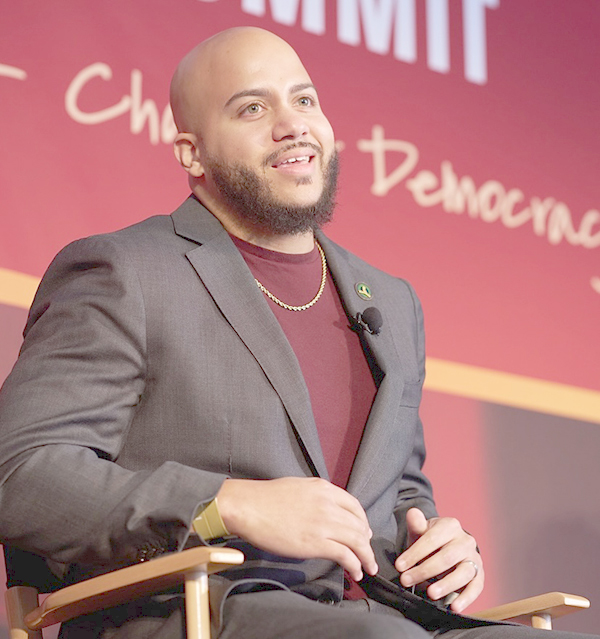
SAN FRANCISCO — Jonathan Paz, a candidate for Congress from Waltham, Massachusetts, worked for Flock Safety from 2024 to mid-2025 as part of the government affairs team.
“I represented them in city councils, in public hearings and to elected officials” said Paz, speaking on a Sept. 10 panel on local resistance to federal surveillance held by American Community Media at the World Affairs Council.
This is part two of a two-part series exploring the government’s expanding use of surveillance technology as part of its immigration enforcement operations.
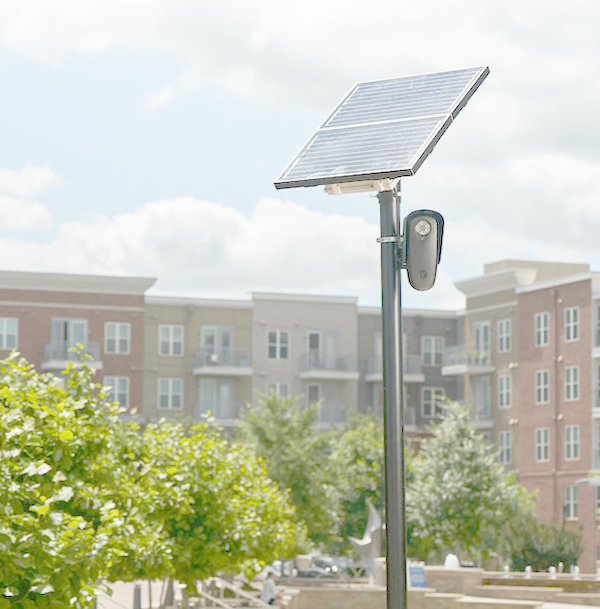
Flock Safety, known for its widespread automated license plate recognition (ALPR) cameras, has been facing massive national backlash for privacy concerns.
Paz said he initially joined the company believing that its cameras would “help find missing kids, recover stolen vehicles and even solve hit-and-runs” — but he soon saw a larger aim to embed Flock technology in municipal budgets.
“The reality is it’s all baloney,” he said.
What triggered his departure was the realization that for tech companies like Flock, “their main role is to surveil the public and they basically work around public and legal scrutiny.”
Automated license plate recognition cameras are sold to cities as public-safety tools, but can also be used to track and arrest people, be they immigrants or political targets, raising concerns about civilian privacy rights including the Fourth Amendment.
There are more than 120,000 Flock cameras nationwide conducting roughly 20 billion scans monthly across 49 states — but internal and independent police audits have suggested that less than 1% of raw data “hits” lead to an actual law enforcement action.
Nearly 40% of roughly 18,000 U.S. law enforcement agencies have contracts with Flock, according to the company.
Assurances that data would remain local are rarely held up, Paz said.
“These companies are almost immune not only to local legal scrutiny; they’re also immune to statewide scrutiny, because federally speaking, the Fourth Amendment is mythical. It’s basically dead.”
His former team aimed to secure council votes even against civil opposition, briefing sympathetic members ahead of meetings so “the public will wasn’t going to be represented that night,” he explained.
In his own city of Waltham, 12 cameras went up overnight with no public hearing, he said.
After leaving Flock, Paz co-founded a rapid-response network in Massachusetts and helped build a database identifying Immigration and Customs Enforcement agents’ vehicles.
“You should already assume DHS has access to these ALPR networks … you should assume that they have geospatial awareness of who’s coming in and who’s coming out,” Paz said. “The law is not going to protect you. … The people save the people.”
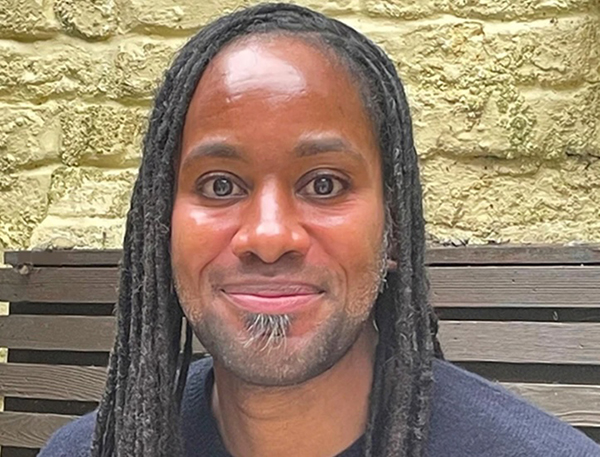
Brian Hofer, executive director of Oakland nonprofit Secure Justice, has worked on surveillance oversight in nearly 100 U.S. jurisdictions over 12 years.
At least 184 contracts nationwide have been canceled since August, according to the organization’s tracker, with terminations rising from about four a day in August to roughly eight a day in September.
“I’m actually unbelievably inspired by the outpouring of opposition to Flock all across the country,” he said. “I’ve never seen anything like that. It is stunning.”
As of August, about 46% of Americans oppose ALPRs being used in their community — up 13 points from the previous year — with 17% not sure.
“It’s never just a license plate number,” Hofer said. “It knows who you’re driving with.”
Flock’s vehicle “fingerprint” feature can also identify cars by color, make or bumper sticker without a plate number, and the system maps which vehicles regularly travel together.
Oakland alone logged 638 million plate scans last year and more than 210,000 third-party data searches a month, Hofer said.
“For immigrants, it’s like you’re driving and you think you’re in a sanctuary city or a sanctuary state like California — they’re sending your data out the back door,” Hofer said.
He argued that litigation and public pressure are more effective checks than policies alone.
“The only two strategies I really see working right now are flooding the courts and flooding the council chambers,” he added.
“No matter how perfect the policy, the current federal government has no bounds to the lawless terror,” said Kimberley Woo, community organizer with the California-based Services, Immigrant Rights and Education Network (SIREN).
She described her own story of immigration surveillance. Two extended family members who had waited more than 20 years for green cards were detained at their final residency interview; one was deported, and the other chose to self-deport rather than be separated.
The fear has since “rippled to the rest of my family,” she said, describing relatives who feared applying to eligible programs or green card renewals “because they fear that our data will be weaponized. … The scariest part of mass surveillance is we don’t know how our data is tracked, accessed or shared.”
SIREN — with the Council on American-Islamic Relations, the ACLU of Northern California and the Electronic Frontier Foundation — sued San Jose last November over its database of nearly 500 ALPR cameras and millions of annually stored location records.

Last February, SIREN also helped organize more than 20 local organizations through a campaign that led the Mountain View’s City Council to unanimously end its Flock contract and forgo replacement vendors.
Woo said the anti-ALPR coalition has since spread to jurisdictions throughout Santa Clara County including San Jose, Gilroy, Palo Alto, Saratoga and Los Altos, with organizers using public-records requests, audits, rallies and public education campaigns.
“This is a time when we need California to lead again on civil rights and constitutional issues,” said Abdi Soltani, executive director of the ACLU of Northern California, pointing to the state constitution’s explicit right to privacy against unreasonable searches and seizures — a crucial legal protection as federal Fourth Amendment safeguards weaken in practice.
“Every person deserves the freedom of movement, the right to move about their community without the government tracking every movement across cities and within cities,” he continued. “It really rubs against the American sentiment of liberty to have this much government power over our daily lives. It’s a bipartisan issue.”
Social media posts critical of Flock skyrocketed between July and August alone, according to Washington Post data, with right-wing accounts posting about mass surveillance over three times more on average than left-wing accounts.
“The targeting of immigrants for deportation and detention through this aggregation of data really lands hard on a vulnerable community,” Soltani added.
While Flock says federal data-sharing is disabled by default and local communities control their own data policies, these restrictions can be bypassed by 1:1 sharing agreements or “side door” searches conducted by law enforcement on behalf of federal immigration enforcement agencies.
A public-records investigation by 404 Media revealed more than 4,000 lookups by local or state police searching Flock networks using terms like “immigration,” “ICE,” or “ICE+ERO” — the latter an acronym for ICE’s Enforcement and Removal Operations division.
Lena Graber, a senior staff attorney at the Immigrant Legal Resource Center, noted that ICE does not need current surveillance technology for many arrests. Agents still arrest people at immigration courts, check-ins and workplaces, while more than half of ICE arrests nationwide occur after another law enforcement agency transgers someone into federal custody.
Sanctuary laws limiting local police cooperation with ICE remain a strong factor. California, home to roughly 25% of the nation’s immigrants, accounted for 8% of ICE arrests last summer even amid statewide spikes, while immigrants were roughly four times more likely to be arrested in Texas, which holds over two-and-a-half times as many detainees.
“Sanctuary policies do work,” Graber said. “That’s part of why the Trump administration hates them so much.”
Surveillance technology is nevertheless expanding ICE’s ability to identify targets.
Combining government databases, “buying records from data brokers and scraping social media allows ICE to develop even more leads on who is an immigrant and who might be deportable,” Graber said.
“Surveillance is not a technology story; it’s a political story,” Graber added. “Autocrats use surveillance to suppress dissent, and the more corrupt and unjust your government, the more you rely on surveillance to maintain power and to suppress the opposition.”
Selen Izturk writes for American Community Media.