Wave Wire Services
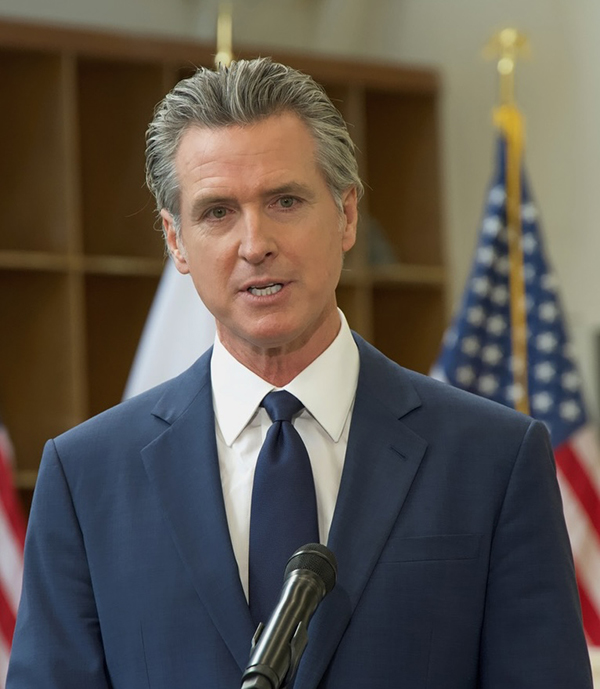
LOS ANGELES — Outgoing Gov. Gavin Newsom announced Nov. 5 he will commute the sentences of all 548 people on California’s death row to life in prison without the possibility of parole.
“I take this action because I firmly believe that state-sanctioned killing is incompatible with California’s values, undermines the foundations of our legal system and diminishes each of us,” Newsom wrote in an open letter to California residents. “I know we cannot execute people in our imperfect legal system and remain true to our core values, first among them justice and human decency.”
California has not executed anyone since Jan. 17, 2006.
Newsom, a long-time opponent of the death penalty, issued an executive order in 2019 placing a moratorium on executions in the state.
“The people sentenced to death in California caused indescribable suffering to victims, their families, communities and our state as a whole,” Newsom wrote in his message. “The harm they inflicted persists across generations.
“Many Californians feel that those who commit brutal crimes deserve to die. But as governor, I have concluded the state cannot morally kill them. I do, however, pray that this action will finally separate the memories of the victims of these crimes from the fate of those who harmed them. We can now let these offenders die in obscurity while we forever remember and honor their victims.”
Newsom, who will step down as governor on Jan. 4 due to term limits — giving way to newly elected Gov. Xavier Becerra — acknowledged that hisaction will not abolish the death penalty in California, only commute the sentences of those who are currently on death row.
“The power to repeal the death penalty rests with the Legislature and voters,” he wrote. “The discretion to seek, impose and uphold death sentences in individual cases remains, as ever, in the hands of prosecutors, juries and courts. But the Constitution also gave every governor clemency authority, and that power exists for moments when the law as applied cannot be squared with justice. For me, this is that moment.
“California’s Constitution requires the Supreme Court’s review of clemency grants to those twice-convicted of a felony. My decision to commute all death sentences therefore compels the involvement of the chief justice and associate justices in a unique inter-branch constitutional process,” Newsom continued. While I am confident this act of categorical clemency is consistent with California law, I acknowledge that my decision to exercise my constitutional clemency authority requires the justices to participate in a weighty decision they did not choose to take up and with which they may personally disagree. I profoundly appreciate the integrity and expertise the court brings to the task of clemency review.”
Leaders of the American Civil Liberties Union were quick to hail Newsom’s decision.
“These commutations reflect what justice demands: an end to a racist, error-prone and inhumane punishment that has burdened California for far too long,” ACLU Executive Director Anthony Romero said in a statement. “By taking this step, Gov. Newsom has affirmed that the death penalty has no place in California and he showed real courage by confronting racialized injustice head-on.
“The evidence against the death penalty has been overwhelming for decades. As the ACLU and allies have documented in courts across the country, a person’s risk of execution is predictable, but for all the wrong reasons: race, geography and politics,” Romero added.
“Such profound, systemic injustice demands a systemic response. Today, California comes closer to closing the chapter on a cruel and morally and legally corrupt practice and sets a powerful example for others to follow.”
Chandra Bhatnagar, executive director of the ACLU of Southern California said, “From its inception, California has imposed the death penalty in a racially discriminatory manner, creating a two-tiered system of justice. With this historic act of clemency, the state can turn the page — rejecting a broken, biased system and embracing a more just and equitable future for all.”
Orange County District Attorney Todd Spitzer, however, criticized Newsom’s decision, calling it “mercy for the wolves … while inflicting the ultimate act of cruelty on the sheep.”
“You cannot have crime without punishment, and in those instances in which the crimes committed are so heinous that death is the only appropriate punishment, I, as the elected district attorney of Orange County, have, and will, continue to pursue the death penalty,” Spitzer said. “The death penalty has been repeatedly upheld by California voters and we as prosecutors represent the people of California and the greater good. Clearly, Governor Newsom does not.
“The pursuit of justice does not bend to political whims, and I am heartbroken for the hundreds of families who must now grapple with the devastation of knowing that the monsters who harmed their loved ones are one step closer to being back out on our streets.”
Los Angeles County District Attorney Nathan Hochman also said his office will continue to pursue the death penalty in appropriate cases.
“Until the law is changed, my office will continue to evaluate every death penalty-eligible case with the rigor, care and restraint these decisions demand,” he said. “As always, we will be guided by the facts, the law and the evidence. If the Legislature or the voters remove the death penalty, we will follow that law just as faithfully.
“My thoughts today are with the families of victims, who deserve a justice system that honors the law as it is written and pursues it with fairness and due process,” Hochman said.
First Assistant U.S. Attorney in Los Angeles Bill Essayli criticized Newsom’s decision.
“So much for ‘democracy,’” Essayli wrote on X. “California voters have repeatedly voted to uphold the death penalty. This is a major blow to Californians and the families of victims murdered in horrific circumstances.”
Also opposing the decision was the Association for Los Angeles Deputy Sheriffs, the union representing Los Angeles County sheriff’s deputies.
“In 2016, California voters rejected an effort to abolish the death penalty and reaffirmed their support for capital punishment,” a union statement said. “The governor’s sweeping decision to commute hundreds of death sentences disregards the expressed will of the voters, trivializes decisions of citizen juries and reopens painful wounds for families who have already endured the most unimaginable of losses.”
But Los Angeles County Public Defender Ricardo Garcia hailed the decision.
“Public defenders called for universal clemency because we see firsthand how unjust our criminal legal system is, and nowhere is that injustice more final than on death row,” Garcia said. “The death penalty is cruel, irreversible, and stained by systemic racism. It falls hardest on people of color and the poor, and has condemned innocent people.
“Los Angeles County has sentenced more people to death than any other county in the state, at great cost to taxpayers and with no benefit to public safety,” he added.
“Clemency is not leniency,” he said. “This decision moves California closer to a justice system that values human dignity and recognizes that the power to punish must never come at the expense of the pursuit of justice.”
Steve Herr, the father of Sam Herr, who was killed by death row inmate Daniel Wozniak in Costa Mesa, told City News Service, “I was aghast at what Newsom had done. What he did was keep opening up those wounds. What he did was also keep overruling the wish of the people of California.”
Herr said he was disappointed when Newsom put an end to death row previously, as it allowed more amenities for Wozniak, who was convicted of killing Sam Herr and Juri Kibuishi in May 2010.
He has computer use, he has TV and associates with other guys. He pretty much has everything,” Herr said. “He’s living a life of luxury.”
Herr said he visits his son’s grave every week.
“So how do you think I feel? Extreme anger wouldn’t address it enough,” Herr said.
Defense attorney Scott Sanders, who represented Wozniak at trial, said the relatives of the convicted also go through the pain of delays in the process.
“I talked to a family member watching this process for more than a decade,” when Wozniak was sentenced to death, Sanders said. “It’s difficult to completely communicate how painful it is to wait year after year after year to see what happens, the ups and downs of the judicial decisions.”
Sanders also acknowledged the pain of the victims’ families as well.
But for the attorneys and death penalty opponents “who have fought for this, it’s an incredible moment,” Sanders said. “We’ve never had anything quite like this.”
Sanders also said one of the benefits, given the shortage of attorneys who specialize in the area of law handling the death penalty appeals — which explains why there have been long delays for some inmates — means those attorneys can now work on other cases where they are needed.
“Some of these folks are off-the-charts exceptional, so the chance to do work where they’re needed is really incredible,” Sanders said.
Sanders disputed Spitzer’s assertion that some of the convicts could ever get out.
“None of these people are getting out,” Sanders said. “This is not a pathway to freedom. … They’re not getting paroled. That’s just scare tactics.”
There are about 160 death row inmates from Los Angeles County.