THE HUTCHINSON REPORT: Black men sleeping on sidewalks is all-too common

By Earl Ofari Hutchinson
Contributing Columnist
A few years back it was not an uncommon sight to see Black men sleeping on a Los Angeles sidewalk. Back then, their sidewalk bed was on or near Skid Row in or around downtown.
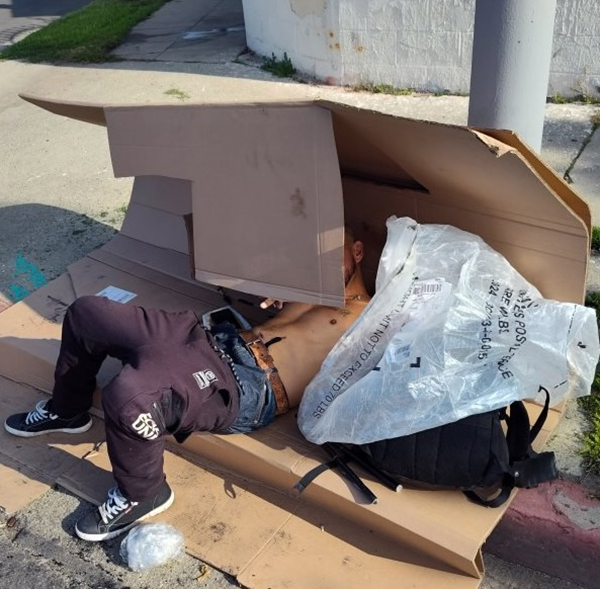
That was then. Now it’s not an uncommon sight to see Black men sprawled out or just plain encamped on a cold, bare sidewalk in just about any part of Los Angeles. That sight is so common in South Los Angeles that it no longer draws anything other than a passing glance — if that.
The reasons for the surge in sidewalk sleeping by Black men have been repeatedly cited and are familiar: Lack of jobs, lack of education, lack of mental, drug and alcohol services, abundance of systemic racial and economic bias, and definitely an overabundance of uncompassionate caring and indifference.
The finger of blame locally is pointed squarely at Los Angeles officials for not doing enough to combat the surge in sidewalk sleeping. This writer took to the sidewalks recently and challenged city officials to declare a state of emergency on the proliferation of Black men on sidewalks and then implement measures that could range from creating a special task force to establishing special home shelters for the sidewalk sleepers.
This writer is under no illusion that this is an easy task. It is a task city officials would find tough to implement if they met my challenge.
The first obstacle are laws. In June 2024, the U.S. Supreme Court virtually gave cities and counties the license to sweep the streets of homeless men and women without providing places for them to live or services to keep them off the streets. The court ruled that cities could fine sidewalk sleepers and at the same time were under no obligation to find housing for them.
That also gave city officials the license to ban clusters of street encampments without providing any housing placement substitute.
The Supreme Court went even further and rejected the notion that it was “cruel and unusual punishment” to punish people for sleeping on the sidewalks. The reaction from homeless support advocates was swift and angry.
“Where do people experiencing homelessness go if every community decides to punish them for their homelessness?” said Diane Yentel, president of the National Low Income Housing Coalition.
The “where do they go “question has been the perennial question asked every time cities make periodic sweeps of homeless encampments. The sweeps amount to little more than rearranging the deck chairs on the Titanic. It is simply shifting them from one part of the city to another, maybe placing a few in temporary shelters, while leaving the rest right back where they started, plopped down on yet another sidewalk.
That was bad enough, But now there’s the new wrinkle. The men who, not just nightly, but day and night, have taken up near permanent residence on a sidewalk. Though residents have mostly reacted with glances and shrugs, the growing number of these men present a clear and present safety, heath and welfare hazard to nearby residents and business owners. They are more than an eyesore. They evoke fear and anxiety of the potential hazard their presence brings to residential neighborhoods.
That fear is heightened by the fact that the overwhelming majority of these men are African American. And they are for the most part young.
Many admittedly do have chronic mental and physical challenges, which are a major reason why they landed on the streets and that presents an even greater challenge for city and county officials trying to come up with a workable plan to remove them from the sidewalks, but do so in a safe and humane way.
City officials have spent tens of millions of dollars on the removal of encampments. They have spent tens of millions more on building, renting, leasing temporary and transitional housing for the homeless. They have spent tens of millions more in ramping up drug, alcohol, and mental health treatment and counseling for homeless individuals. These are crucial and much needed ongoing measures to combat the homeless crisis in the city.
However, these measures fall flat in addressing the new norm of Black men who make their homes on the bare sidewalk concrete. Sacramento District Attorney Thien Ho pointed to the almost Catch 22 dilemma that city and county officials face in dealing with this problem.
“I never want to criminalize homelessness, but I want to be able to encourage people to accept services and shelter,” Ho said about the sharp rise in homeless sidewalk sleepers in Sacramento.
The good news is that L.A. city officials have not taken the suggestive steps the 2024 Supreme Court ruling green lighted. They have chosen not to criminalize the men on the sidewalks. Those men need help and support, not a jail cell. This writer will continue to challenge L.A. city officials to declare a state of emergency on their plight and give them the help they need.
Earl Ofari Hutchinson is an author and political analyst. “His latest book is “Why Are There So Many Hungry People in America?” (Middle Passage Press)