
By Darlene Donloe
Contributing Writer
LOS ANGELES — The I Have A Dream Foundation is transforming lives through education by providing individualized support to young people from under-resourced communities from kindergarten through college.
With a track record of success, the foundation has served more than 11,400 individuals across 20 programs, guaranteeing tuition and support through post-secondary education.
The organization’s holistic approach includes academic support, social-emotional development, and college preparation, empowering upcoming scholars to break the cycle of intergenerational poverty.
The foundation claims to be the only educational organization in LA that guarantees tuition and support through post-secondary education.
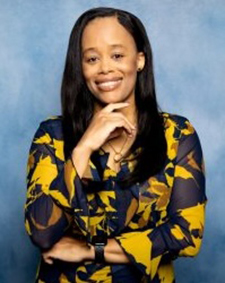
Leading the organization as its executive director is Chaznae N. Walker, a proud South Central native and Whittier College alum, who has been with the foundation for 19 years.
Walker says she is “On a mission to transform lives.” She’s leading the charge to break the cycle of intergenerational poverty, one young person at a time.
Walker’s vision is clear: a world where every child has equal access to educational and career opportunities, igniting their innate potential.
Her team provides comprehensive support, from in-school tutoring to year-round academic and social-emotional guidance.
I recently spoke with Walker, 41, a married mother of three, about the I Have A Dream Foundation and her role as executive director.
DD: Tell me about the foundation in your own words.
CW: Well, in my own words, I had to lay the groundwork to ensure students from historically under-resourced communities don’t just have access to higher education but actually thrive in it. We commit to them for 12 plus years, from early learning as early as first grade through college and into their careers. At our core, our work is about closing the education gap with these communities with consistency and care from a committed team, including our board members, staff, community partners and volunteers.
DD: When you became the executive director, what did you want to do?
CW: No handbook left for me. With the support of the board and team, I have been given the opportunity to strengthen what is already working.
DD: Why do you care about kids?
CW: They remind me of who I once was. Those are babies. I care about the community. Children are a big part. They don’t choose the circumstances they are born into.
DD: Tell me about Dreamer Scholars, which has led to a 98% high school graduation rate.
CW: That was from my first two cohorts. I’m extremely proud of that. We are unique in our offerings, you know, offering that comprehensive long-term support. We provide academic guidance, mentorship, social-emotional support, life skills, parent engagement, civic engagement and stability for our Dreamer Scholars through year-round wrap-around support. So it’s like the holistic model that includes a daily after-school program. We have a four-week summer program. We take our students on college field trips twice a year. In Inglewood, many of them wanted to go to a historically Black college, so we made that happen. And because of that, I have two Spelman and two Morehouse and one Clark Atlanta graduate. I also have a student who earned her master’s degree in nursing from Emory University.
DD: How many employees are at the foundation?
CW: We have eight employees. We are small, but we support our kids and their families. We are a village. We partner with Title I schools to advocate for our kids. We’re working with more than 300 kids. They are first- and second-graders in Inglewood, and they may go on to attend college, join the military, or enter the workforce. We have first and second-graders in Inglewood. We offer a post-secondary program for students in college, the military or the workforce. They are from areas like Boyle Heights, Inglewood, Watts and Pasadena.
DD: What are you most proud of in your career at the foundation?
CW: It always comes back to the students. Those who have graduated have started their own families. Alumni return to be dream speakers and workshop facilitators.
DD: What makes foundation’s long-term commitment to students, from elementary to post-secondary, unique in L.A.’s educational landscape?
CW: Many serve students at one point in their journey. We stay through multiple stages of life. We build relationships with them and their families, which makes the impact possible.
DD: With 20 programs and 11,500 individuals supported, what’s the secret to the foundation’s scalability and sustainability?
CW: Maintaining the relationships and partnerships. We’re all about the students.
DD: How does it work?
CW: Our staff is based at the school sites. The schools give us space at their sites. Our staff is there five days a week.
We have daily after-school activities at the schools. We have daily contact with the students. We’re there from 2 to 6 p.m.
DD: How does the foundation measure success? Is it just about college graduation rates or something broader?
CW: We are a college-going organization. College graduation is important, but not the whole story. We meet our kids where they are. Success is when they can thrive beyond the classroom.
DD: What’s the most surprising thing you’ve learned about the students the foundation serves over the years?
CW: It’s not surprising, but a number are resilient. They show determination and a lot of fight. They need opportunities and support. This is not a 9-5 [job] for me. This is my purpose, my life.
DD: With 19 years at the helm, what’s kept you passionate about the foundation’s mission?
CW: The kids — seeing myself in them. It’s something I wish I had.
DD: What’s been the biggest challenge, and how did you navigate it?
CW: Balancing growth with sustainability. Funding is a top priority.
DD: How do you see the foundation evolving in the next five-10 years under your leadership?
CW: I want to see a deeper impact. Hopefully, we will launch another cohort or two. We just sponsored a new class last year. Each cohort is 65 students. They receive an $8,000 scholarship, $2,000 a year for tuition, room and board, books, and materials.
DD: What advice would you give to other organizations looking to make similar commitments to students?
CW: Start with the students. They are what this work is all about. It requires commitment, care and understanding of the community, students and population you’re serving.
DD: You played collegiate basketball. What position did you play?
CW: Forward and center. I preferred center, being in the middle, being supported by my forwards.
DD: What did basketball teach you?
CW: Teamwork and how to work with a team. It helped because I’m a first-generation. Both parents went to college but didn’t finish. If I don’t give my all, I’m going to let my team down. I still feel that way.
DD: Did you want to go pro?
DW: When I was younger, I wanted to be a pro basketball player or lawyer. I watched too much ‘Law and Order.’ This is my first job out of college. I see myself in these babies. This is my passion. This is all I know. This is where I am supposed to be.
Darlene Donloe is a freelance reporter for Wave Newspapers who covers South Los Angeles. She can be reached at ddonloe@gmail.com.