By Sunita Sohrabji
Contributing Writer
SAN FRANICSCO — Even before it takes effect on Sept. 18, the Trump administration’s reimplementation of its public charge rule has caused thousands to drop off critical federal safety net programs. These include Medicaid, the Children’s Health Insurance Plan and the Supplemental Nutrition Assistance Program.
The updated public charge rule was announced in late July. It gives greater leeway to immigration officials to consider a much broader range of factors when determining whether a green card applicant is likely to become primarily dependent on government support. Factors include the use of federal safety net benefits; age; health; family status; finances; education and skills.
The Trump administration implemented a narrower version of the rule during its 1st term. The Biden administration then essentially reversed the rule to only include whether a green card applicant would need cash benefits or long-term institutionalized care.
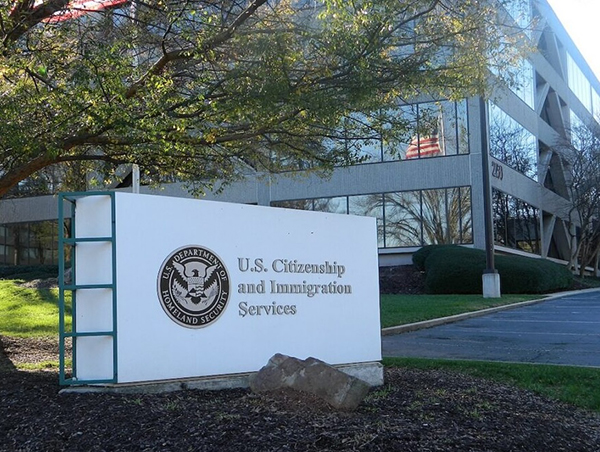
U.S. Citizenship and Immigration Services issued new guidance on the public charge rule Aug. 18, clarifying, in part, which green card applicants would be subjected to review.
Among those subject to review are: spouses, children, and parents of U.S. citizens; unmarried sons and daughters of U.S. citizens and their children; spouses, children, and unmarried sons and daughters of legal permanent residents; married sons and daughters of U.S. citizens and their spouses and children; brothers and sisters of U.S. citizens; fiancés of U.S. citizens; widows or widowers of U.S. citizens; priority workers; professionals with advanced degrees or aliens of exceptional ability; skilled workers, professionals, and other workers; investors and religious workers.
Among those exempt from review are: asylees and refugees; Afghan and Iraqi interpreters or Afghan and Iraqi nationals employed by or on behalf of the U.S. government; Cuban and Haitian entrants at adjustment of status under section 202 of the Immigration Reform and Control Act of 1986; applicants seeking adjustment under the Cuban Adjustment Act; Nicaraguans and other Central Americans who are adjusting status to lawful permanent resident; Haitians who are adjusting status to lawful permanent resident under the Haitian Refugee Immigration Fairness Act of 1998; special immigrant juveniles; applicants seeking temporary protected status; victims of human trafficking; victims of qualifying criminal activity and self-petitioners under the Violence Against Women Act.
USCIS clarified that public charge would not apply to applicants seeking to adjust status from a green card to U.S. citizenship. The rule will only apply to new applicants and will not be used retroactively.
“This rule hasn’t taken effect yet, but the fear of it and the impact to families and to the health of families around the country has just as much of an impact as the eventual number of applications that might be affected by this rule,” said Xiao Wang, co-founder and CEO of Boundless Immigration. “The last time this administration tried this — in 2019 — families pulled their kids out of food and health programs out of fear of impacting their green card applications,” he said at a recent American Community Media news briefing.
Public charge has been on the books since 1882, but was rarely implemented, noted Wang, until the first Trump administration. In 2019, the Trump administration broadened existing policy to include the use of Medicaid, food stamps, public housing and a variety of other factors to determine whether a green card applicant was eligible.
“So officers will now go back to weighing what they call the totality of your circumstance, case by case,” Wang said, adding they would weigh all evidence that points to self sufficiency. He noted that many applicants may have to file as many as 900 pages to prove their eligibility.
“And so what had happened last time is probably what will happen this time. Applications will get more complicated and get longer, and the adjudication and processing times will take longer because there’s more to read and more to consider,” Wang said.
In 2020, amid the first implementation of public charge, the Urban Institute found that one in five adults in immigrant families with children reported that they had avoided a public benefit that they qualified for or are eligible for because they feared that it would hurt their immigration status. Among low-income families, it was three out of 10.
“The fear is bigger than the rule,” Wang said.
About 2.3 million children have dropped out of Medicaid — MediCal in California — and CHIP in the 18 months since President Donald Trump took office for his second term, noted Joan Alker, executive director of the Center for Children and Families at the Georgetown McCourt School of Public Policy. This is due to a confluence of factors, said the research professor.
“They are scared because of the extraordinarily aggressive deportation agenda, which is affecting children and families,” Alker said. “They’re scared because for the first time ever, the Department of Health and Human Services has said that they will share data from Medicaid and CHIP with ICE.”
The new rule could increase the number of uninsured children by 25%, Alker said.
“This is a terribly crafted policy which will cause uncertainty and fear,” Alker wrote in a recent paper. “This in turn will cause significant harm to children and families, including citizen children. It will lead to a range of social and economic harms that are completely overlooked in the proposed rule,”
The fear of invoking the public charge rule is most acute in mixed status families, in which one parent has a green card or is a citizen, while the other does not, Alker said.
“When children don’t have health insurance, it’s harder for them to access care, particularly primary and preventive care, so that their issues can be addressed early,” she added. “Asthma is very common for school-aged children. Broken bones are very common. They may need stitches.
“Children need to be able to go to the doctor,” Alker said. “They need to be able to get their medications, or they’re going to wind up in the emergency room, which is expensive for our health care system, and it’s very expensive for the families.

“It can potentially bankrupt them,” she added, noting that children who have consistent access to health care are more likely to graduate from high school, earn higher wages, and pay more taxes as adults.
“So it’s a very smart investment of government dollars to make sure that children have access to Medicaid and CHIP,” Alker said.
“We know from the first Trump administration that public charge had a huge impact on children in mixed-status households,” said Dr. Giridhar Mallya, a public health physician and senior policy fellow at the Robert Wood Johnson Foundation. “More than 700,000 children in these families lost SNAP in just a two-year period. And overall, the first public charge rule probably led to the loss of SNAP for almost two million people.”
“Even before the public charge rule goes into effect, we’re seeing devastating impacts on the SNAP program,” Mallya said. “Based on national data from the Center on Budget and Policy Priorities, we have seen SNAP participation fall by 4.5 million people just in the last nine months, and that includes almost one and a half million children,”
SNAP is a critical lifeline for about 37 million people in this country, allowing those living near or below the federal poverty level to get access to food. About four in 10 participants of SNAP are children, Mallya said, noting that the program also serves seniors, people with disabilities, and adults who are working but still not able to make ends meet.
HR1, passed last summer by Congress, cut $1 trillion from the Medicaid program. It also reduced the SNAP budget by $186 billion over the next 10 years. The current average SNAP benefit currently works out to about $350 per month per family, Mallya said. By contrast, according to May 2026 data from the USDA, the average family of four spends $1,018 per month on groceries.
Both Alker and Mallya clarified that undocumented immigrants are not eligible for federal health and food safety net programs.
“This is a moral failure,” Mallya said. “Kids are growing every day. They are creating new synapses in their brain. If they don’t have enough food to fuel that, it will both have short-term impacts on their learning and development, but also long-term impacts on their cognitive development.
“We are the wealthiest nation in the world. We should be able to provide benefits like these freely to people who are qualified,” he said.
Sunita Sohrabji writes for American Community Media.