Wave Staff Report
WEST LOS ANGELES — As the nation marks Black Maternal Health Week April 11–17, renewed attention is being drawn to the alarming challenges Black women face during pregnancy — challenges often rooted in medical bias, social inequities and longstanding systemic barriers.
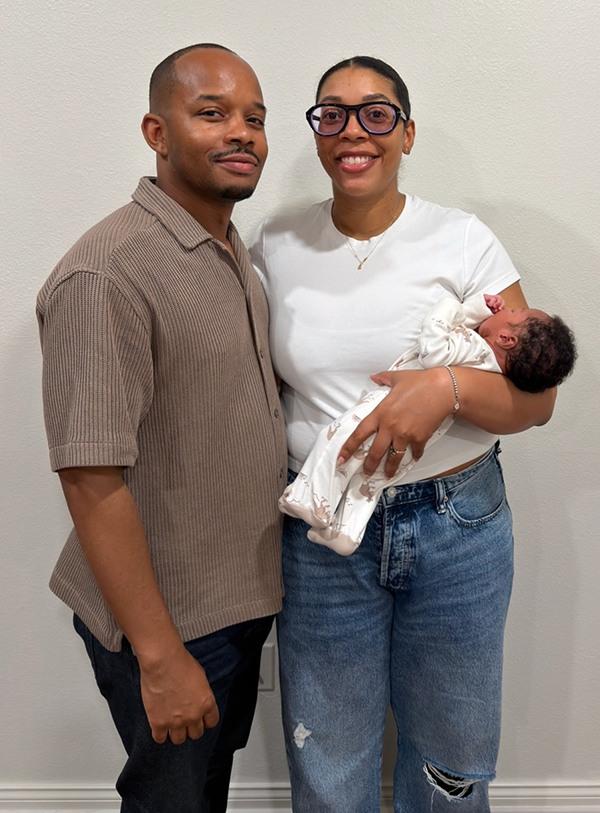
Michelle Williams-Hinds, 35, is one of those Black mothers who had concerns during her pregnancy before delivering a healthy baby boy last month at Kaiser Permanente West Los Angeles Medical Center.
“A lot of Black women are concerned about not being heard,” she said. “They hear stories about things that happened to other Black pregnant women at certain hospitals. They hear that the mom didn’t make it home, for example. Unfortunately, there are doctors who don’t focus on Black maternal health. They kind of forget about us.”
Williams-Hinds is not alone in feeling that way. Across the United States, Black women continue to experience disproportionately high risks during pregnancy and childbirth. Research shows stark disparities in Black maternal health, including:
- Higher mortality rates: Black women are two to three times more likely to die from pregnancy-related complications than white women, a gap that persists regardless of income or education.
- Economic barriers: Many Black women rely on Medicaid for prenatal and postpartum care. States with limited Medicaid coverage tend to have worse maternal health outcomes.
- Higher rates of complications: Black women are more likely to experience life-threatening conditions such as preeclampsia, postpartum hemorrhage and blood clots.
Dr. La Tanya Hines, an OB/GYN physician with Kaiser Permanente Baldwin Hills–Crenshaw, whose patient was Williams-Hinds, said these facts reflect a national crisis.
“Maternal deaths in the U.S. are higher than in any other high-income country, and Black women bear the greatest burden,” Hines said. “The CDC reports that Black women are nearly three times more likely to die from pregnancy-related causes than white women. That gap is unacceptable.”
Experts say meaningful progress requires coordinated action across policy, health care and community systems. Key strategies include:
- Community-based support: Local organizations that advocate for Black mothers play a critical role in improving access to resources and culturally informed care.
- Education and training: Medical schools and health systems are increasingly focused on addressing implicit bias and improving culturally competent care.
Williams-Hinds said her positive experience with Dr. Hines, who’s also Black, made her feel safe and her pregnancy and delivery were much more comforting.
“Dr. Hines understood and addressed my concerns, and made sure she advocated on my behalf,” Williams-Hinds said. “She gave me all the resources that I needed, and also explained to me what to expect before I delivered my baby. She was someone I could relate to and made me feel more at ease.”
Dr. Hines emphasized that improving outcomes among Black mothers requires more than clinical expertise, however.
“We need policy change, community support and systemic reform working together,” she said. “Black women deserve care that listens to them, respects them and protects their health.”
She added that creating a safe, supportive environment for Black mothers is essential.
“Every woman should feel comfortable asking questions and confident that her concerns will be taken seriously,” Hines said. “Better communication and cultural understanding are becoming more common in health care, and that shift benefits everyone.”
Williams-Hinds said she has a simple message to Black pregnant mothers:
“Make sure you advocate for yourself and find an OB/GYN doctor who’s going to advocate on your behalf,” she said. “Just ask a lot of questions and make sure you have a good support system and a good doctor who listens to you and tells you what could happen, what might happen and what should happen. You need somebody who supports you and is rooting for you, just like Dr. Hines did to me.”