By Solomon O. Smith
Contributing Writer
SACRAMENTO — As California continues counting ballots two weeks after the primary election, some political leaders are raising questions about election integrity. But election officials say the lengthy process reflects safeguards designed to ensure every eligible vote is counted accurately — not evidence of fraud.
California’s vote-counting process has come under renewed scrutiny after some Republican leaders questioned why election results take weeks to finalize. Election officials insist the timeline reflects safeguards meant to protect voters and ensure every eligible ballot is counted.
The criticism intensified following comments from President Donald Trump, who repeated the debunked claim that the 2020 presidential election was stolen and alleged, without evidence, that California was engaging in election fraud.
“They’re dropping fast because it’s a rigged election,” Trump said about California Republican votes. “They’re crooked. You’re crooked.”
Vice President J.D. Vance also raised concerns about the Los Angeles mayoral race, calling it “shady” during an interview with Jesse Watters.
Michael Sanchez, communications director for the Los Angeles County Registrar-Recorder/County Clerk’s Office, disputed those claims, saying California’s timeline reflects safeguards designed to ensure accurate and secure elections.
California law allows ballots postmarked by Election Day to be counted if they arrive within the state’s designated acceptance period. Election officials say that process, combined with extensive verification requirements, contributes to the time needed to finalize results.
“I would challenge the premise that the count is slow,” Sanchez wrote in an email to California Black Media. “Ballot counting itself is very fast. In fact, Los Angeles County processed and counted more ballots more quickly in this election than in any election.”
Sanchez said California’s election process includes “multiple layers of oversight, public observation, reconciliation, and auditing.”
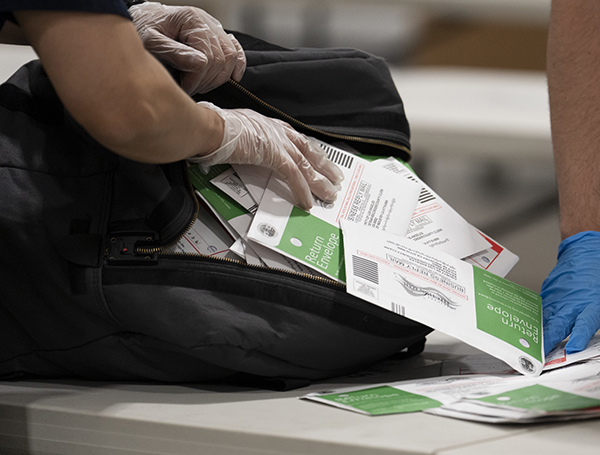
Counting ballots involves more than feeding them through a machine. Election workers verify signatures, review ballots with voter errors and contact voters whose ballots require correction through a process known as ballot curing.
According to the California Secretary of State’s Office, every ballot undergoes signature verification before it is counted. Ballots with signature discrepancies or other issues are flagged for further review by election workers.
Ballot curing allows voters to correct certain mistakes and verify their ballots so that otherwise valid votes are not rejected because of technical errors.
For many Black voters, whose communities have historically fought for equal access to the ballot box, confidence that every vote is counted remains critical. Civil rights advocates have long argued that safeguards such as signature verification and ballot curing help ensure voters are not disenfranchised because of technical mistakes.
According to Ballotpedia, 34 states allow some form of ballot curing, and 24 states permit voters to correct ballot issues after Election Day. While the process reduces the number of rejected ballots, it also extends the time needed to complete the count.
Under California law, election results must be certified within 30 days of Election Day. This year’s certification deadline is July 10.
California Secretary of State Shirley Weber has repeatedly defended the state’s election procedures against allegations of fraud and delays.
Speaking on DIA Live Studio hosted by state Sen. Akilah Weber Pierson (her daughter), Weber said repeated allegations of fraud risk undermining public trust in elections.
“We had one congressman say the longer they count the more we lose,” Weber said. “That means you were losing anyway because you didn’t get enough votes. So, they literally wanted us to stop voting at a certain date even if all those votes hadn’t been counted.”
Questions about election integrity have continued beyond the vote count itself.
Bill Essayli, first assistant U.S. attorney for the Central District of California, recently announced an investigation into election fraud, citing concerns about election safeguards.
“We believe that California does not have sufficient safeguards to make sure that only California citizens are voting,” Essayli said, referring to allegations that noncitizens are casting ballots.
Essayli also has promoted a civil lawsuit seeking access to voter information that he argues is necessary for election oversight. A federal court blocked the effort, citing voter privacy protections.
Meanwhile, Trump’s executive order titled “Ensuring Citizenship Verification And Integrity In Federal Elections” has drawn criticism from voting-rights advocates and election law experts, who argue that some of its provisions could affect access to mail voting and voter-registration information.
The nonpartisan Brennan Center for Justice has warned that the order could have significant consequences if implemented.
“If implemented, the executive order would inject chaos into our elections, block eligible American citizens from voting, undermine voter privacy, and expose election officials and others to criminal prosecution simply for doing their jobs,” a Brennan Center analysis stated.
As California works toward its July 10 certification deadline, election officials maintain that taking time to verify ballots is not a sign of a broken system but of one designed to balance security with access. The debate, they say, is less about whether votes should be counted quickly and more about ensuring every eligible vote counts.
Solomon O. Smith writes for California Black Media.