Wave Wire Services
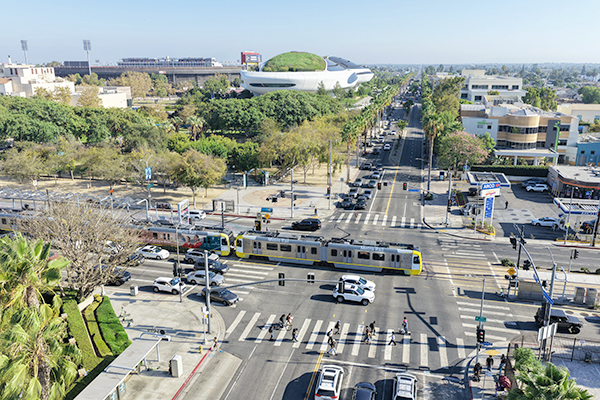
SOUTH LOS ANGELES — Transportation officials broke ground Oct. 21 on a $400 million, 12.4-mile rapid transit project along Vermont Avenue, promising faster service on Los Angeles County’s busiest bus route and improved connections to schools, hospitals and major transit lines.
The Vermont Transit Corridor Bus Rapid Transit Project is projected to serve 66,200 daily riders, with dedicated bus lanes and other improvements expected to reduce end-to-end travel times by as much as 24%, according to the Los Angeles County Metropolitan Transportation Authority.
The project will include 26 enhanced stations, dedicated bus lanes, traffic signal priority, off-board fare payment and boarding through all bus doors to reduce delays.
The project received a $149.9 million federal grant Sept. 1 through the Federal Transit Administration’s Capital Investment Grant Small Starts Program. The federal funding, combined with state funds and revenue from the voter-approved Measure M sales tax, has fully funded the project, officials said.
Passengers could begin benefiting from the improvements as sections of the dedicated bus lanes are completed, rather than waiting for the entire project to open, the MTA said.
“This is more than a bus route. As a former community organizer in South L.A., I know personally that this project is a transformational investment that will deliver reliable and affordable transportation for more than 38,000 hardworking people who use this bus every weekday,” Los Angeles Mayor Karen Bass said in a statement. “By connecting South L.A. with Los Feliz, we’re creating good-paying union jobs, building a greener, more sustainable city, and connecting people to local businesses, health care, world-class institutions, and real economic opportunity.”
Bass also serves as chair of the MTA Board of Director.
The Vermont transit corridor connects passengers to four rail lines — the B, C, D and E lines — and more than 13 east-west bus routes. Major destinations along the route include USC, Exposition Park, the Lucas Museum of Narrative Art, Los Angeles City College and Kaiser Permanente Sunset.
The MTA said the corridor also serves 88 schools and 375 faith-based institutions. More than 21% of current Vermont Avenue riders use the GoPass program, which provides free transit to K-12 and community college students.
“Every day, tens of thousands of Angelenos ride the bus on Vermont to get where they need to go, from work and school to cultural institutions to medical appointments,” Los Angeles County Supervisor and MTA Board member Holly Mitchell said. “Today, we are delivering those riders the transit experience they deserve — fast, reliable service with welcoming, comfortable stops. When riders can count on the bus coming on time and getting them where they need to go faster, they get time back to spend as they want instead of sitting in traffic or waiting for the next bus.”
The project also will bring new weather and shade shelters, improved lighting, real-time arrival displays, emergency call buttons and Americans with Disabilities Act-compliant curb ramps to the 26 stations, according to the MTA.

Other improvements include wider sidewalks, protected bicycle lanes and curb extensions intended to shorten pedestrian crossings and improve safety.
“For decades, our riders on Vermont Avenue have navigated crowded buses and congested streets to get to work, school, and health care,” MTA Board member Jacquelyn Dupont-Walker said in a statement. “Today, we are delivering real solutions that honor their time and dignity.”
The MTA estimates the project will support more than 4,800 construction jobs, generate $95 million in tax revenue and create approximately 260 permanent operations and maintenance jobs. The transit agency said the corridor currently carries about 11 million riders annually.
“We approached this project with urgency and listened closely to the community, making critical adjustments as we are cutting travel times, fortifying our bus network and building a world-class transit system ready to move L.A.,” MTA CEO Stephanie Wiggins said.
The MTA said it worked with 38 community and faith-based organizations beginning in 2021 and collected input from approximately 26,000 residents through surveys, workshops and multilingual outreach. That feedback helped shape station locations, lighting, cleanliness measures and other design features, according to the agency.