Wave Staff Report
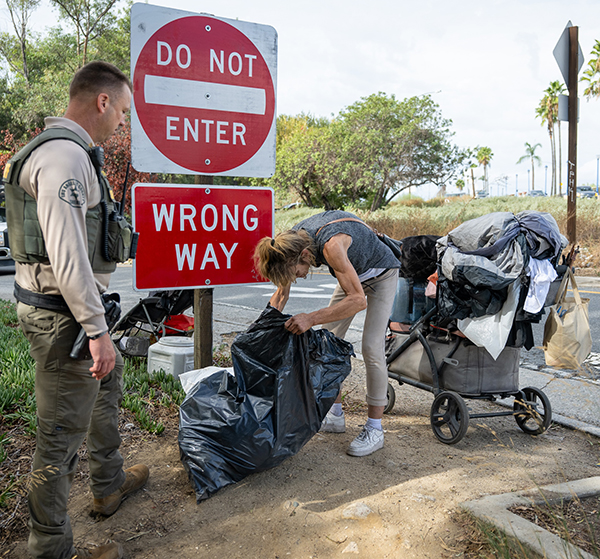
SOUTH GATE — Pathway Home, Los Angeles County’s signature homeless program, brought 14 people experiencing unsheltered homelessness along the concrete channels near where the Los Angeles and Rio Hondo rivers meet into interim housing Oct. 21.
Now safely indoors, the people are now receiving supportive services and other resources to help them transition out of homelessness and into permanent housing.
The latest operation was the county’s 79th Pathway Home encampment resolution. Since the program’s launch in August 2023, more than 2,300 county residents have moved off the streets, with nearly 900 permanently housed.
The operations also have contributed to the removal of more than 1,400 recreational vehicles from the streets. The program often reaches out to people living in remote areas along waterways, but the predicted El Niño storms make the effort even more urgent, a county spokesperson said.
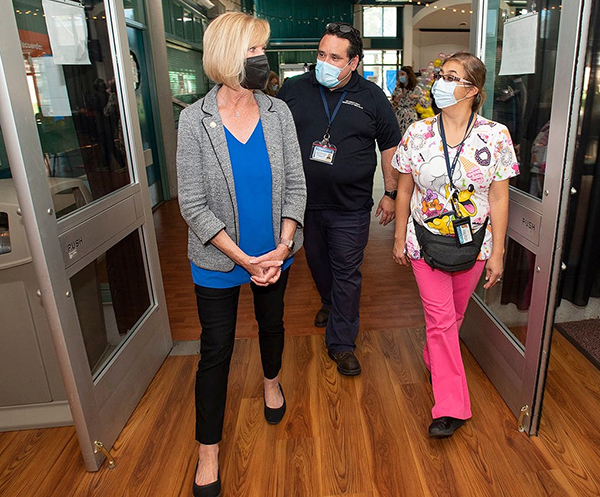
The county Department of Homeless Services and Housing collaborated with the office of Supervisor Janice Hahn to make the operation possible. Response teams from the Department of Homeless Services and Housing collaborated with Los Angeles Sheriff’s Department’s homeless outreach services team, and the service provider HOPICS worked for weeks to conduct outreach and build trust with unsheltered residents who accepted offers of interim housing. at the motels operating as interim housing locations.
“This is life-changing for the people who moved into housing through this Pathway Home operation,” said county Supervisor Hahn. “Some of them told us about violence they experienced while they were living on the streets, and how much they were looking forward to having a safe place to call home.
“These encampment resolutions are not only compassionate, but they are also the most effective tools we have in addressing homelessness,” Hahn added. “They make our communities safer — both for the neighbors who have been impacted by encampments, and for people coming inside.”
This operation was also made possible by support from the cities and police departments of South Gate, Bell Gardens, and Downey; CalTrans; California Highway Patrol; and Union Pacific Railroad. The Los Angeles County Departments of Public Works, Fire, Mental Health, and Animal Care and Control were also critical partners.
“Fourteen formerly unsheltered individuals are now safely inside and on a pathway to permanent housing, and that’s thanks to every community partner who supported this operation,” said Sarah Mahin, director of the Department of Homeless Services and Housing. “For too long, L.A. County residents living along the Rio Hondo confluence faced dangerous, inhumane conditions, which will soon become life-threatening as severe winter weather and flooding hit our region.

“I am grateful for the collaboration and tireless efforts from county staff and many agencies who helped get them out of harm’s way and connected to the care and dignity they deserve.”
The county conducts Pathway Home, its signature encampment resolution effort, in partnership with cities and unincorporated areas. The program provides a full-circle solution that brings people off the streets into immediately available interim housing accompanied by a comprehensive suite of supportive services, and, ultimately, into safe, permanent housing.
The Rio Hondo operation is part of the county’s multi-year initiative funded by a $51 million Encampment Resolution Fund grant to provide resources and housing to people living along the Los Angeles and San Gabriel Rivers and the state highways. Past operations occurred in the cities of Inglewood, Westchester, Downey, Norwalk, Bellflower, South Gate, and Santa Fe Springs, and in the unincorporated communities of West Athens and Willowbrook.
Pathway Home is partially funded by Measure A, a ½-cent sales tax approved by voters in November 2024 to repeal and replace Measure H. Funding also pays for removal of any non-operational RVs, trash, and other debris that accumulates at encampments. It also covers costs associated with securing interim housing sites, such as motels, and site security.