By PLURIA MARSHALL JR.
Wave Publisher
As Election Day fast approaches, one thing is critically important: Vote. Make your voice heard, whether you do so early or next Tuesday. Our communities cannot afford to sit on the sidelines while decisions are being made that will shape California’s future.
Having said that, many political observers are frustrated by what voters are increasingly being asked to decide.
We believe in California’s ballot initiative process. It gives everyday people a direct voice in shaping public policy. Yet voters are being asked to make complicated financial decisions involving billions of dollars, some with consequences that could stretch decades into the future.
That brings me to Proposition 40.
On its face, the proposal sounds like a no-brainer. Ask a few hundred of California’s wealthiest residents to pay a one-time 5% tax on their fortunes, with most of the proceeds going toward health care.
Who wouldn’t want billionaires to contribute more to the state where so many have built their wealth?
I understand the appeal. California faces serious health care funding challenges — and supporters argue that the money is urgently needed to protect services threatened by federal cuts.
But the fine print deserves deeper scrutiny.
Anyone familiar with payday lending understands how appealing immediate financial relief can be. The bills are due, money is tight and someone offers cash to get you through the month.
The relief is real. But so are the questions about what happens afterward.
Proposition 40 is not a payday loan. There is no interest payment or repayment schedule.
Still, the comparison raises an important question: Could California receive a substantial amount of money today while putting some of its future revenue at risk?
The state’s nonpartisan legislative analyst estimates that Proposition 40 could generate tens of billions of dollars over several years. However, the analysis also identifies possible ongoing reductions in income-tax revenue of less than $1 billion annually.
Those losses are not guaranteed — and the analysis does not conclude they would exceed the money collected. But uncertainty about future revenue matters when government must fund services year after year.
The concern grows when we look at the disagreement among those closest to the issue.
Health care stakeholders are divided. Some labor organizations support Proposition 40, while major groups representing doctors and hospitals oppose it. Gov. Gavin Newsom has also expressed opposition.

These differences deserve serious consideration, not dismissal as another political fight.
Many observers reject the suggestion that Californians must choose between protecting billionaires and protecting health care. The wealthy should pay their fair share, and the state’s health care needs are real. But those principles do not eliminate the responsibility to examine a proposal’s potential unintended consequences.
For Los Angeles families, public budgets are not abstract numbers. They support neighborhood schools, hospitals, senior services, public safety and programs that residents count on every day.
A one-time infusion of money is different from a sustainable funding strategy. We want California’s leaders to return to the drawing board and bring health care providers, labor, business leaders, fiscal experts, and community representatives into a serious discussion about long-term solutions.
The ballot initiative process is important, but voters should not be left believing that a problem this complicated has only two possible answers.
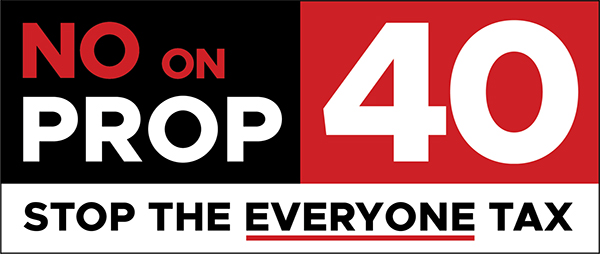
That’s why residents should vote NO on Proposition 40.
Bottom line: This is not about shielding billionaires from taxation. It reflects a deep-seated concern about the proposal’s structure, the uncertainty surrounding its longer-term effects, and the need for a more durable approach.
California’s health care challenges deserve a solution that considers both today’s urgent needs and tomorrow’s financial responsibilities.
I encourage Wave readers to examine the competing arguments, read the fiscal analysis, and participate in this election.
Whatever your position, make your voice heard. Voting matters — and so does understanding what happens after the ballots are counted.