
By Darlene Donloe
Contributing Writer
HOLLYWOOD — In 1997, a handful of women walked out of the American Film Institute’s Directing Workshop for Women and did what women in Hollywood have always had to do — they built their own room. They were graduates of the institute, trained, talented and still locked out of the jobs.
So they started swapping information. Who’s hiring? Who’s not? How to get a second meeting? How to survive the first one?
That informal circle became the Alliance of Women Directors.
Accomplished actress, director and professor emeritus at USC’s School of Cinematic Arts, Jennifer Warren, part of the initial collective, is the founder and co-chair of the alliance. She launched the organization in 1997, after experiencing firsthand the gender barriers women face moving from acting to directing.
Decades later, that circle is a nonprofit organization with 900 members — an inclusive collective of professional women and gender-expansive directors and allies who have decided parity will not be given. It will be organized.
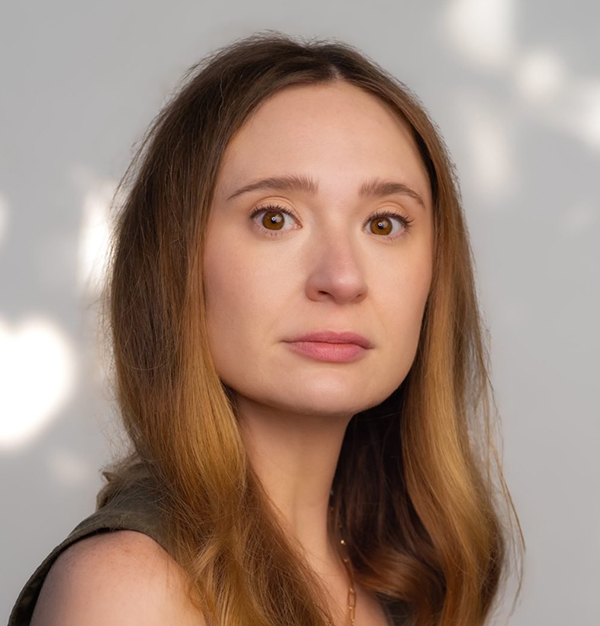
At the center is Kylie Eaton, 40, a married mother of a 3-year-old daughter, and graduate of the Film School at Chapman University in Orange.
She is a nonprofit leader dedicated to advancing equity and expanding career opportunities, and currently serves as executive director of the alliance, supporting women and gender-expansive directors in film, television, commercials and new media.
“We are relentless advocates for gender parity and we believe it is vital that stories are told from all perspectives because representation matters,” said Eaton, who did not arrive at the top from the outside.
Prior to becoming executive director, she served three terms on the alliance board, including as treasurer and co-chair, helping guide growth, strengthen governance and expand reach.
Since assuming leadership, Eaton has led strategic growth, expanded professional development and mentorship, strengthened partnerships with studios, networks and industry organizations, and significantly increased membership and fundraising.
That fundraising now includes the alliance’s 2026 CharityBuzz Auction, live virtually through December. Filmmakers can bid on one-of-a-kind access — career consultations, mentorship sessions, script and reel feedback, coffee meetings, set visits and shadowing opportunities with directors, showrunners, producers, executives, agents and managers working in film and television today. Every bid supports the alliance’s work advancing women and gender-expansive directors.
That is the builder’s work Eaton is know for — hands-on and practical — and it mirrors her work as a filmmaker. The alliance boasts substantially increasing the number of women and gender-expansive directors working.
Eaton said it’s accomplished by “working with our members and getting them trained.”
“There’s a couple of different ways that our members are trained,” Eaton said. “We do some virtual workshops because our membership is nationwide and we want to be accessible to women all over the country and all over the world because we have some international members.”
Eaton said the organization also “pairs members for shadowing opportunities, so they go onto real sets to shadow either on a TV set or an indie movie, shadowing the director through pre-production, production, post, and all facets of directing.”
Eaton said directors need to put new work on their reel every year and people can’t always afford that.
“This year we partnered with a stage and got free equipment and set our directors up so that they could work with writers and create scenes,” she said. “This fall, we’re doing a cinematography workshop.”
There’s also a hands-on component where directors can talk to technical directors and camera manufacturers and get their hands on cameras to see how different lenses look.
“We also have a yearly symposium and a mock general meeting where you go and meet an executive, not to pitch a project, you’re forming that relationship, Eaton said. “We had people do it live on stage with real executives and then get feedback. We’ve done blocking exercises live in front of 200 people.”
In addition to her nonprofit leadership, Eaton is an award-winning filmmaker whose work has screened at Oscar-qualifying festivals, debuted on Dust, an artificial intelligence agency; and earned recognition from WeScreenplay, Blackmagic Collective, ScreenCraft and Shore Scripts.
She began directing music videos and branded content for Capitol Records, Republic Records, Oliver Peoples and Beachbody, garnering more than 40 million views.
She has spoken at Sundance and HollyShorts, programmed and judged for Bushwick, WomenX and MOM Film Fest, and serves on the board of the BRIC Foundation.
That dual identity — working director, nonprofit strategist, and mother — defines how she leads the alliance. The organization’s commitment is threefold: support through craft enrichment, education and mentorship; developing relationships with industry partners; and partnering with like-minded organizations.
Its members range from recent graduates with a single acclaimed short to seasoned, award-winning veterans. Each has directed at least one long or short-form narrative film, TV episode, documentary, commercial or new media program recognized by the creative community.
To attack the gap, Eaton built infrastructure. She is founder of the alliance’s Rising Director Fellowship for emerging feature directors; Back to Set, its annual symposium; and its fiscal sponsorship program, which has enabled filmmakers to raise more than $2 million.
Asked why female directors should join her alliance, Eaton said, “We’ve been around for almost 30 years, and our mission is to advocate for women and gender expansive directors and film, TV, and new media.
“We do that through supporting our members with professional development, workshops, labs, panels, to create opportunities to learn more about craft and gain access to a wider network,” she added.
Reasons to join include mentorship, craft enrichment and networking.
“We also have ally membership, which is open to all genders in all professions,” Eaton said. “There are a lot of people who are in the film industry who want to meet more directors, producers, writers, actors, and different department heads that want to find new collaborators. We do a lot of mixers.”
Eaton said it’s no secret there is a lack of women directors.
“The most recent studies for 2025 show that only 8% of top films were directed by women, which is a backslide — as well as in TV,” Eaton said. “There has been a similar backslide, with only 22% of directors and 16% of directors in broadcast TV being women. And then if you start looking at women of color, it’s exponentially less.”
That backslide is why the alliance created the Black Directors Advancement Initiative. It is deliberately simple and personal: a one-to-one relationship between an industry mentor and a Black alliance director.
The mission: create relationships, promote development, facilitate successful interactions and help eliminate barriers that have systematically excluded Black directors.
“The initiative was born in 2020 out of a town hall that we held as an organization, and really after hearing the feedback from our Black director members,” Eaton said. “There are extra barriers that they face on top of being a woman.
“There is extra bias that they face every day and that’s tripled on set and so we formed this initiative to be able to offer some extra support,” she added. It’s really about equity. They’re just as talented as every other member. It’s just about getting access and meeting the right person who is going to take a chance on them.”
Industry mentors are paired by focus — episodic directing, general relationship building and career advice or shooting a feature — because those are precisely the choke points where Black women get stalled.
If no one will share information, share it yourselves. If no one will open the door, build a door. That was the lesson in 1997. It is still the lesson in 2026, with Eaton holding the door open for more than 900 directors who know parity is not a pipeline problem.
Darlene Donloe is a freelance reporter for Wave Newspapers who covers South Los Angeles. She can be reached at ddonloe@gmail.com.


