By Darlene Donloe
Contributing Writer
LOS ANGELES — From red carpets to the Olympics to the 2026 FIFA World Cup, Los Angeles has hosted the world’s biggest stages.
Now, after decades without one, Los Angeles gets its first-ever citywide international jazz festival Aug. 7-23, featuring 160 artists from 13 nations at venues across the city.
The inaugural Los Angeles Jazz Festival, presented by Airbnb, opens Aug. 7 in Leimert Park and closes Aug. 22-23 at Dockweiler Beach. The 17-day, Black-owned festival features Lalah Hathaway, Chief Adjuah, and musicians from the Fernando Pullum Community Arts Center, culminating in a two-day “Jazz on the Beach” finale.
Headliners include John Legend, Janelle Monáe, Raphael Saadiq, Charlie Wilson, Parliament Funkadelic featuring George Clinton, Poncho Sanchez and Big Freedia, with additional performances by Original Koffee, Free Nationals, Alfredo Rodriguez, Nubya Garcia, Joey Alexander, Ezra Collective, the LA Jazz Festival All-Star Band, LA Jazz Festival Foundation Youth All Stars, and more.
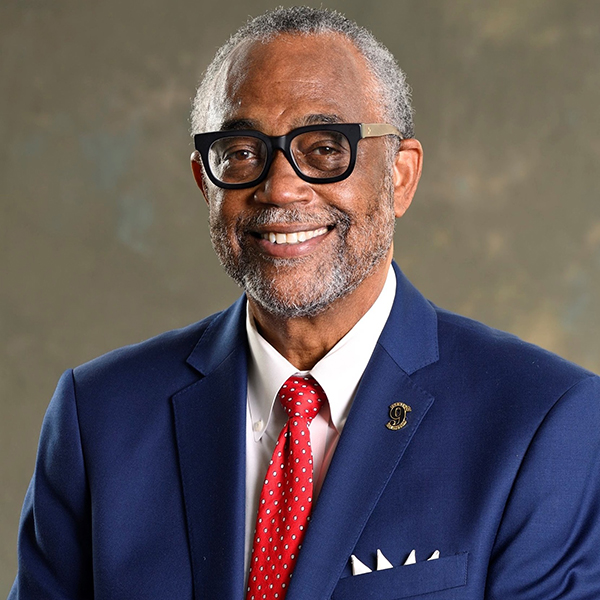
The history-making festival, which is expected to draw 250,000 people across Los Angeles County, is the brainchild of founder and CEO Martin Ludlow, a music promoter, labor activist and former Los Angeles city councilman.
“It’s about the power of music,” said Ludlow, who sees jazz as a pure African and African American art form. “The socialization at a jazz festival is unlike anything else I’ve witnessed. It’s multicultural, inclusive, and uplifting, not monolithic. Add the sound of the waves, and it’s a spectacular, win-win experience for everyone.”
At the announcement of the multi-week festival at Los Angeles City Hall, Mayor Karen Bass called it, “a powerful and beautiful act of cultural storytelling, rooted in the African diaspora that is so important to L.A.’s history.”
She also acknowledged Ludlow’s long road to bringing his vision to life.
“Martin, I’ve been on this 15-year journey with you,” she said. “This is the Los Angeles that will welcome the world. One of the best things we have to offer is all of our culture.”
Ludlow acknowledged he’s had a vision of this kind of festival for decades.
“I’ve been dreaming of this kind of event for a while,” he said. “It started when I was a young guy who had just arrived in L.A. At the time, the biggest tribute to jazz was at the Hollywood Bowl through a brand that was essentially a pornographic magazine. I wanted to figure out another way to express jazz and put its history on a different stage with a different sort of narrative wrapped around it.”
It would take more than a decade for Ludlow to finally produce the Los Angeles Jazz Festival, which, over 17 days, will include concerts, youth programming, late-night performances, cultural tours and an industry convening.
Ludlow said ticket prices will “be just as affordable as any local neighborhood festival.”
Part of the programming includes free coastal cultural tours that will examine coastal racial pushout, “the same way Congo Square communities gathered through struggle 150 years ago to create jazz.” Tours stop at Bruce’s Beach, seized by Manhattan Beach (which has since been returned to the descendants of the Bruce family), and the Inkwell, where segregation limited Black and Latino families to one stretch of sand.
“It’s cultural reclamation,” Ludlow said.
The festival, rooted in the African, African American, and Caribbean experience, culminates at Dockweiler Beach, reclaiming a shoreline once closed to Black and brown families.
“Dockweiler by itself makes you think about Jim Crow and racial pushout,” Ludlow said. “Locations where Black and brown families were denied access to public resources. This isn’t ancient history. This was up until the 1960s.”
Festival programming highlights include Jazz in the Park — 24 free outdoor concerts in parks citywide — and Jazz After Dark, late-night shows at L.A. venues honoring supper club history.
A free Caribbean Street Carnival hits Venice Aug. 21, leading to the finale at Dockweiler Beach. Four stages will feature New Orleans, Latin Jazz, Afro Beats, Caribbean and Cuban programming.
Ludlow was very deliberate in selecting locations for the jazz fest.
“We’ll have concerts in public parks across the region,” he said. “From Moreno Valley and Antelope Valley, to every L.A. City Council district, Compton and Inglewood. We’re bringing free shows with legendary Grammy-winning artists to neighborhood parks across L.A. — the kind of nightlife you feel in London, Paris and New York.”
Ludlow said there is a variety of programming because the goal is to lift the jazz ecosystem and celebrate the festivals that exist in L.A.
“We want to partner with them and encourage corporate America to get more deeply involved in elevating jazz in the city,” he said.
The goal, Ludlow said, is a festival that complements — not competes with — the world’s great jazz stages. He wants L.A. mentioned in the same breath as Montreux, Montreal, Copenhagen, Java, Cape Town and New Orleans jazz festivals.
“This isn’t to compete — it’s to lift up,” he said. “We want to celebrate a century of jazz in L.A. and the other great festivals here, from Leimert Park to Long Beach to Santa Monica. We want an international festival that honors everyone who put jazz on the map.”
The Los Angeles Jazz Festival programming also includes a jazz youth camp bringing together more than 2,000 students for workshops and master classes.
The festival is committed to both social justice and environmental responsibility, planned as one of the “greenest” mega festivals globally, with a commitment to ban all fossil fuels and run green technologies across the entire event.
During the run of the festival, Ludlow will host a State of Jazz Conference, which will unite global festival producers and California promoters.

“We’ll tackle the questions: how do we strengthen jazz, get it into schools, and give emerging artists the tools to succeed?” Ludlow said.
Ludlow’s ties to music go back to being first-chair trumpet at Oberlin High School. His standout memory: sharing the stage with Muddy Waters, Bobby “Blue” Bland, and later trumpet legend Maynard Ferguson.
“I couldn’t hang with Maynard past one note,” Ludlow said. “But when he was done playing, he handed me a brand new shiny silver engraved Maynard Ferguson trumpet. I still have it to this day.”
For that, and other reasons, music is special to Ludlow.
“I grew up in a social justice household,” he said. “My father was a minister, and my mother a union president. By age 5, I was on picket lines, watching Pete Seeger, Joan Baez, and Harry Belafonte use music for civil rights. That was my indoctrination into music.”
That campaign work was also Ludlow’s introduction to social justice. He worked with Rev. Jesse Jackson on his presidential runs in 1984 and 1988.
“I never looked back,” he said. “That, too, was a turning point.”
He later represented the 10th District on the Los Angeles City Council from 2003 to 2005.
Two decades later, he’s attempting what L.A. has never seen: a citywide festival of this scale.
Ludlow knows what’s at stake: proving the city can support jazz the way it supports every other major art form.
“This is pressure,” he said. “This is not easy. If I had a dollar for every person who told me ‘that’s too ambitious,’ ‘you’ll never get the permits,’ ‘it can’t be done,’ ‘you won’t book talent,’ ‘no title sponsor’ — I could fund this myself. Sometimes when I catch my breath, it feels like stark raving fear.”
Ludlow said the festival needs corporate, business, and labor partners to help bring the vision to life.
“We need financial support,” he said. “We can create thousands of jobs. This is a challenge, but we’ve met every challenge so far. I just don’t want to let people down. Now we just need to land the plane.”
For more information, visit lajazzfestival.com.
Darlene Donloe is a freelance reporter for Wave Newspapers who covers South Los Angeles. She can be reached at ddonloe@gmail.com.