By Stephen Oduntan
Contributing Writer
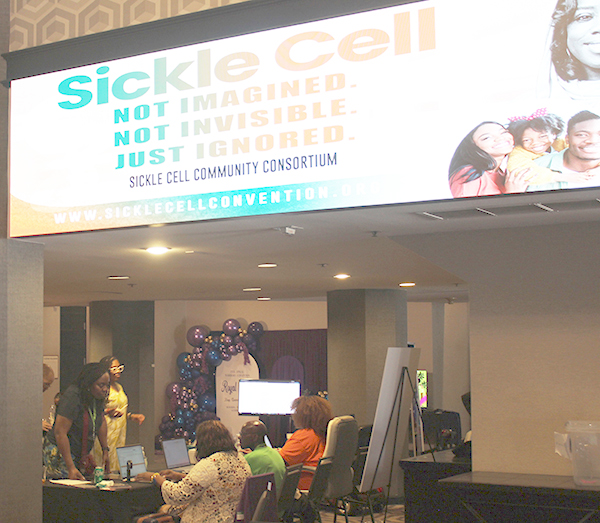
LOS ANGELES — Hundreds of patients, caregivers, physicians, researchers and advocates from across the United States and as far away as the United Kingdom gathered in Los Angeles for Warrior Con 2026, the four-day conference held July 23–26, where discussions about groundbreaking gene therapies were matched by candid conversations about the barriers people living with sickle cell disease continue to face.
Hosted by the Sickle Cell Community Consortium under the theme, “Legacy in Action: The Next Move,” the annual conference served as a forum where patients, caregivers, researchers and advocates shared the latest medical advances while addressing the everyday challenges of living with sickle cell disease. While gene-editing therapies have ushered in a new era of treatment and extended life expectancy for many patients, speakers said scientific progress has outpaced improvements in health care access, pain management and public understanding of the disease.
The conversations carried particular significance in California, where state leaders have invested millions of dollars in recent years to expand sickle cell care through research, clinical networks and patient support programs. Even so, advocates said people living with the disease continue to face significant barriers both inside and outside the health care system.
Dr. Joyce El, founder and CEO of the nonprofit Journeys by Grace, said California has made meaningful progress in supporting the sickle cell community but believes more work remains.
“California is making a lot of progress,” El said. “The state is really coming through to help support services, but there’s still a lot to be done.”
El said the conversation must extend beyond medical research to the everyday realities of living with sickle cell disease.
“People still have to live,” she said. “They still need services such as transportation, housing and food.”
She also stressed the importance of preparing young people for the transition from pediatric to adult care, saying many families are unprepared for the changes in medical providers, benefits and personal responsibility that begin at age 18.
Among the attendees was Vashti-Iona Beckford, who traveled from the United Kingdom to attend the conference.
Beckford, who carries the sickle cell trait, said Warrior Con offers more than medical information. It provides a sense of community for patients, caregivers and families who often feel isolated.
“A lot of information, a lot of knowledge, but also there’s a lot of community,” Beckford said. “It’s about us connecting with each other, understanding that we’re not isolated in our feelings.”
Beckford said people living with sickle cell disease face many of the same misconceptions in both the United States and the United Kingdom.
“A lot of people don’t understand how someone could be in pain if they don’t look like they’re in pain,” she said. “Even in the UK, one of the things that people get most is, ‘You look fine.'”
Speakers said those misconceptions often extend into the health care system, where many patients continue to struggle for appropriate treatment despite advances in medical research.
“Many people would say the biggest advancement is gene therapies and the ability to alter the DNA to correct the sickle cell mutation,” said Dr. Lakiea Bailey, founder and executive director of the Sickle Cell Community Consortium, who has lived with the disease since childhood. “It is a great advancement.”
Bailey said those scientific gains have not been matched by improvements in routine care.
“I think we also need advancements in just basic standards of care, which is still greatly lacking,” she said. “We are definitely living much longer than we used to. However, we are still not the recipients of support the way many other diseases are.”
Bailey, who was diagnosed with sickle cell disease at age 3 and earned a doctorate in molecular hematology and regenerative medicine, said one of the greatest barriers patients continue to face is how their pain is perceived in medical settings.
“Once we go in for treatment, we’re often accused of drug seeking instead of offered the help that we need,” she said. “People are sent away while still quite ill.”
Beyond expanding access to care, speakers said education remains one of the most powerful tools for improving outcomes for people living with sickle cell disease. Few understand the consequences of misinformation more personally than former NFL wide receiver Devard Darling.

In 2001, Darling’s identical twin brother, Devaughn, collapsed and died during an offseason football conditioning workout at Florida State University after complications related to sickle cell trait. Since then, Darling has dedicated his life to educating athletes, coaches and communities about the condition and the importance of screening and awareness.
“The medical field has to change,” Darling said. “That’s what we need the funding for — research. Knowledge is power.”
Darling said he hopes sharing his family’s story will help prevent similar tragedies and encourage more people to learn about sickle cell disease and trait.
For Scott Soliz, the need for greater understanding extends beyond athletic fields and medical research. It shapes everyday life for people living with sickle cell disease.
Soliz, 35, called sickle cell “an invisible disease,” saying Warrior Con offers something many people with the condition struggle to find elsewhere: a community where they feel seen and understood.
“You know that everybody in this room understands what you’re going through,” Soliz said. “It’s a breath of fresh air to know that you’re not alone.”
Outside the conference, however, Soliz and his twin brother, Steve, said misconceptions about sickle cell disease remain one of the biggest challenges patients face. Because the symptoms are often invisible, they said people frequently underestimate the physical and emotional toll of the disease despite the chronic pain, fatigue and frequent hospitalizations it can cause.
“People think because you look OK, you’re OK,” Steve Soliz said. “They don’t see what happens behind the scenes.”
Bailey said conferences like Warrior Con are about more than celebrating scientific breakthroughs. They provide a space where patients, families and health care professionals can learn from one another, build community and continue advocating for better care.
While treatments continue to advance, she said, ensuring that every person living with sickle cell disease receives equitable support remains an ongoing challenge.
Stephen Oduntan is a freelance writer for Wave Newspapers.