By Stephen Oduntan
Contributing Writer
EXPOSITION PARK — At just 8 years old, Leonardo Mendoza stepped to the microphone May 3 at the Los Angeles Memorial Coliseum and described Exposition Park as a place where his imagination comes alive — where dinosaurs, museums, open space and family memories help keep his mind clear.
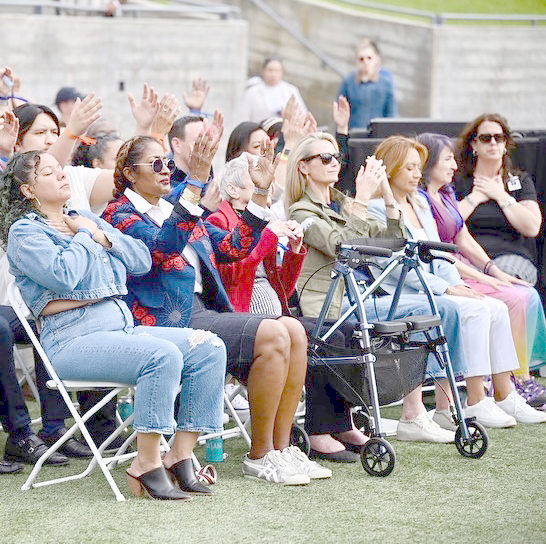
His remarks helped open the state’s California Love, California Strong event where families, educators, youth advocates and state leaders gathered during Mental Health Awareness Month to spotlight youth well-being and the growing demand for mental health support.
The event highlighted California’s multi-billion-dollar Children and Youth Behavioral Health Initiative, a statewide effort aimed at expanding mental health care, building a larger behavioral health workforce, and connecting young people with support through schools, nonprofits and community organizations.
But as state leaders celebrated new investments, lawmakers representing South Los Angeles said the real test will be whether families can actually access care.
Assemblywoman Sade Elhawary, whose district includes much of South Los Angeles, said communities across the area have already seen progress — from school wellness centers to certified wellness coaches and a growing willingness among young people to openly talk about mental health.
“There have been huge, huge gains,” Elhawary said.
Still, she said major barriers remain — especially for Black and Latino families trying to find culturally competent providers.
“South Central is mostly Black and Latino, and when we think about culturally competent providers, they aren’t always available,” Elhawary said. “In a community like ours, we’re still facing significant barriers — not only to health care services, but especially mental health services.”
Elhawary said families relying on Medi-Cal often face long wait times, insurance hurdles and difficulty finding providers who understand the lived experiences of working-class communities. Some young people, she added, are increasingly turning to artificial intelligencce-based chat tools and digital companions while waiting for human support.
During a brief interview, Jennifer Siebel Newsom, wife of Gov. Gavin Newsom, said one of the state’s biggest challenges is making sure families know the resources already exist.

“There’s so much noise in the world right now that people don’t know everything California is providing to families for free,” she said.
State officials said more than 70,000 behavioral health workers have entered California’s workforce, while over 500,000 children and families have accessed digital mental health platforms such as Soluna.
For Jeria Barkley, a psychology graduate who struggled to break into the field after college, the initiative offered a pathway into youth mentorship and behavioral health training.
Elhawary said the next phase of accountability will depend on better data collection, shorter wait times, and making sure South Los Angeles receives long-term investments — not just one-day events.
“We have to make sure our young people aren’t just hearing that help exists,” Elhawary said. “They have to be able to actually access it.”
Stephen Oduntan is a freelance writer for Wave Newspapers.