By Luis Andres Henao
and Nicole Winfield
Contributing Writers
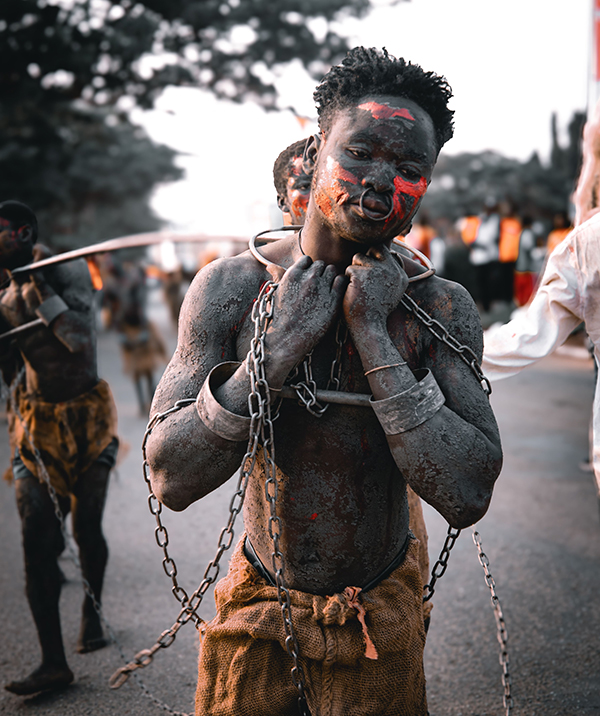
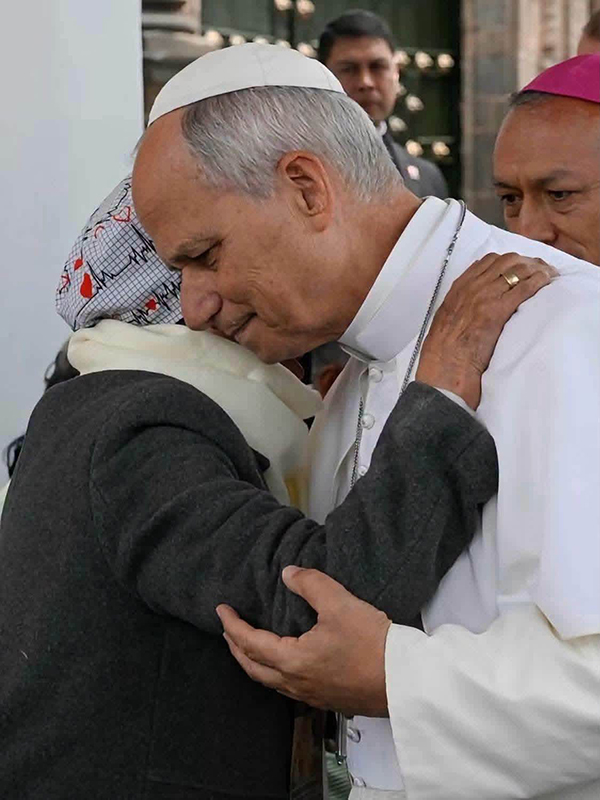
ZAÑA, Peru (AP) — Pope Leo XIV has denounced the “suffering and humiliation” endured by African enslaved people as he made a tangible show of remorse here following his historic apology for the Holy See’s own role in legitimizing the African slave trade in the Americas.
The U.S.-born Leo, whose own family tree includes both enslaved people and slave owners, delivered the remarks in the northern Peruvian city of Zaña, a UNESCO-recognized memorial site for slavery and a center of the Afro-Peruvian community today.
In remarks to the community Nov. 14, Leo said Zaña “preserves the memory of generations of Africans who were torn from their homes and subjected to slavery.”
“Many endured great suffering and humiliation. Dear brothers and sisters of African descent, today I want to express my affection and closeness to you,” Leo said Nov. 14 in the shadow of the Mogrovejo sanctuary.
“I know that many families in this region suffer because of crime, extortion and insecurity,” he added. “I am pained at the thought of those who live in fear, of people whose honest labor is under threat and of those who continue to experience discrimination. I hold you in my prayers and ask the Lord to grant you the peace you so deeply need.”
Pope Leo, considered the most widely recognized figure in the Christian faith, wields profound spiritual, moral, and diplomatic influence over 1.4 billion Catholics and beyond, making him one of the world’s most powerful figures inside and outside of religion.
In his first encyclical, “Magnificent Humanity,” Leo made a sweeping apology for the role of past popes in legitimizing slavery in the Americas and failing to condemn it for centuries. It was a reference to the series of 15th-century directives from the Vatican that authorized European sovereigns to conquer Africa and the Americas and enslave non-Christians.
“It is impossible not to feel deep sorrow when contemplating the immense suffering and humiliation endured by so many in stark contrast to their immeasurable dignity as persons infinitely loved by the Lord,” Leo wrote in the encyclical. “For this, in the name of the church, I sincerely ask for pardon.”
The estimated 100,000 African slaves brought to Peru after the arrival of Spanish conquistadores toiled in sugar plantations and silver mines, with some becoming urban artisans. At one point, they and their descendants were more than 40% of Lima’s population.
Black people now are a small fraction of Peru’s 35 million people. But they have struggled to advance in the more than 170 years since emancipation.
“Historically, the Afro-Peruvian community — much like other Afro-Latin American communities — has faced a twofold form of invisibility: the denial of its demographic and cultural weight in the nation’s formation, and the reduction of its contributions to mere folklore,” said Alejandro Frigerio, researcher at the National Council for Scientific Research of Argentina who focuses on Afro-American religions.
Omar Ali, Peruvian professor of history at the University of North Carolina at Greensboro and an expert on Afro-Latin America, called Leo’s words “deeply touching.”
“As with Black people across the Americas, Afro-Peruvians have faced social and economic marginalization rooted in the horrors of enslavement.”
The 2017 national census recorded 1,311 Zaña residents who identified as Afro-Peruvian, compared with 78,639 across the entire Lambayeque region. On Nov. 14, Leo addressed them, saying he was aware that many families in the region are suffering because of crime and extortion.
“I am pained at the thought of those who live in fear, of people whose honest labor is under threat and of those who continue to experience discrimination,” he said. “I hold you in my prayers and ask the Lord to grant you the peace you so deeply need.”
All four of Leo’s maternal great-grandparents were “free people of color” in 19th-century Louisiana census records. As part of the melting pot of French, Spanish, African and Native American cultures in Louisiana, the pope’s maternal ancestors would be considered Creole.
Zaña is home to an Afro-Peruvian museum, which features a rich collection of historical photographs, plantation carts and percussion musical instruments of African origin from Peru, Cuba and Brazil. It also holds records relating to enslaved people and some of the shackles used to restrain them.
One of its walls has photos of the Chicago-born Leo during visits to the town when he was bishop. There are also large, framed photographs of Barack Obama, the first Black U.S. president, and South African anti-apartheid leader Nelson Mandela.
“They show us how someone who is Black as we are in Zaña became a president and we’re proud because we all deserve the same rights,” said Gutierrez, wearing a Chicago Bulls shirt with Michael Jordan’s iconic No. 23 on the back.
Luis Andres Henao and Nicole Winfield write for the Associated Press. Wave staff contributed to this report.