By Emilie St. John
Contributing Writer
INGLEWOOD — Residents remain steadfast in their push for police accountability and transparency after the City Council unanimously approved a police technology package April 28 spearheaded by Mayor James Butts.
Butts presented his initiative at the April 28 City Council meeting that included approving the acceptance of the fiscal year 2026 counter-unmanned aircraft systems grant, amending the 2026 budget, approving a public safety technology package in an amount not to exceed $6 million plus and authorizing the city manager or his designee, to negotiate and execute an agreement with Axon Enterprise.
The funds will be spent on automated license plate readers, a comprehensive digital evidence management platform, augmented by unmanned aircraft systems, body-worn cameras, and in-car video systems.
The grant was provided under the federal Department of Homeland Security and, during a robust discussion, the mayor and members of the City Council stopped short of discussing whether data gathered under the program would be shared with federal agencies.
“The city has experienced a real long-term progress in terms of public safety, and we’ve had a tremendous decrease, since 1981, of our peak in violent crimes and homicides, but we have to continue to move to the future,” Butts said. “We are an international destination, and there is a real need to have drones and airborne security because people are using drones for all kinds of nefarious things.”
California was awarded $34 million from the counter unmanned aircraft systems grant program to monitor drone activity under FEMA’s FIFA World Cup grant program.
“We also need to increase our public safety technology package and modernize it, and the police department has been doing research, and in the last six months, we settled on a package,” Butts said.
Police Chief Mark Fronterotta presented the item to the public, stating it was an “honor” to put together the presentation, which he described as an “officer safety, public safety” technology package.
“What this does is absolutely enhances our crime-fighting ability, and we have had great success in our statistics, and this ability will put us on the cutting edge of crime fighting as a world community with all of the worldwide events coming here, special events that we staff on a weekly basis, and this technology piece is second to none,” Fronterotta said.
Fronterotta explained that Inglewood officers were sent across the region and the country to look at the best equipment the department could obtain.
Fronterotta said Butts took the lead on negotiating the contract terms with Axon Enterprises, which supplies the body-worn cameras, under a cooperative agreement between the company and the University of Nebraska.
“The mayor is a tough negotiator and got us a very good price on this. … He’s always looking out for the taxpayers’ dollars,” Fronterotta added.
The contract was exempt from a competitive bidding process under the Inglewood Municipal Code.
Some residents remained concerned that the city is not disclosing to the public how the data will be stored, how it will be used, and, more importantly, with whom it will be shared.
“For weeks now, the community has been asking for body cameras, and now we are suddenly being told that the city may spend around $6 million on body cameras, license plate readers, surveillance, and related technology,” said Yolanda Davidson, a longtime Inglewood resident and activist. “What is frustrating is that the mayor never said the city was already in talks with the company. His memo states these negotiations have been going on since August 2025. The mayor most certainly could have expressed this to the family of Bryan Bostic, the media, the residents, the taxpayers and small businesses of Inglewood.
“That is a serious problem. The public should not find out after the fact that these decisions were already moving forward behind closed doors,” Davidson said.
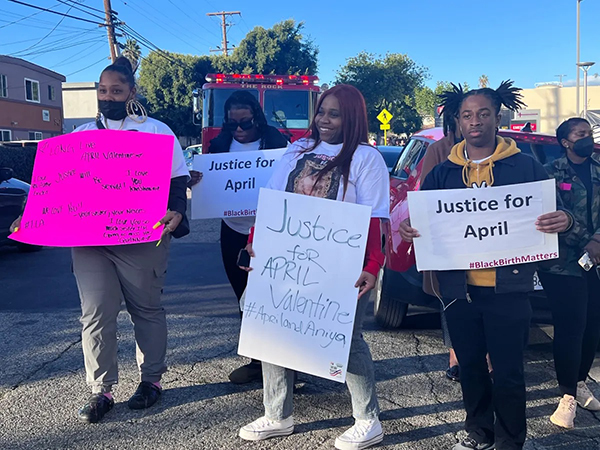
Activists have been demanding that the city resume its police oversight commission and outfit Inglewood officers with body cameras after Bryan Bostic died in police custody during a traffic stop in March. The family has filed a claim against the city, which is the legal precursor to a lawsuit.
The new policy raises more questions than answers, said Najee Ali, senior organizer with the National Action Network.
“There are still too many unanswered questions concerning public input and questions on policy concerning the body-worn camera initiative,” Ali. said “The community should be just as concerned with the restoration of the Inglewood Police Oversight Commission, which hasn’t met in nearly nine years.”
The city created the Citizen Police Oversight Commission in 2004, after the 2002 videotaped beating of Donovan Jackson.
According to a June 15, 2004 staff report, “The new ordinance created the oversight commission and companion resolutions also directed that video cameras and audio recording devices be installed in all police rolling stock … and that all sworn officers undergo additional continuing education to include physical/psychological examinations at specified periods.”
The audio and video cameras were never installed in any Inglewood Police Department’s vehicles.
The city suspended the oversight commission after the 2016 shooting deaths of Marquintin Sandlin and Kisha Michael. Five officers were relieved of duty; however, one of them was quietly paid a $350,000 settlement on April 17, which was shielded from public scrutiny.
The primary duty of the commission is to receive allegations of police misconduct, which includes the use of force.
According to the Inglewood Municipal Code, the commission is to have “11 members who shall broadly represent the racial, ethnic, religious, age, gender, sexual orientation and disabled members of the general public. Members shall reside or be owners/operators of a business in the city of Inglewood.”
The code also states: “A copy of any complaint against the Police Department or any employee of the department shall be conveyed by the commission to the chief of police or his designee, within 24 hours (or sooner if practicable) of its receipt by any commission member or its staff. A copy of any complaint filed with the Police Department shall be conveyed to the commission within 48 hours.”
With the suspension of the police oversight commission, the public does not have the opportunity to hear matters surrounding police misconduct, but is tasked with footing the legal fees and settlements attached to them.
Inglewood officials weighed in on the proposed technology, with all of them in agreement that the package was needed.

“Are we able to use some of the funding that maybe isn’t used for some of the other expenses in the police department to offset this going forward, and you mentioned that this is the best that we can get? Councilman Eloy Morales Jr. asked. “Is this particular technology adaptable to what’s coming in the future, and are we ready for that?
“In-house here, do we have someone that we can rely on that really understands how this can be managed?” he added.
Fronterotta responded yes to all of his questions; however, the staff report indicated otherwise.
According to the staff report, the 2026 unmanned aircraft systems agreement, for $2,782,208, will support a separate public safety initiative and is not being used to fund the proposed officer safety technology package, which includes the body cameras.
According to the funding agreement, the $4 million will be spent on acquiring 200 body-worn cameras and tasers.
Activists continue to press for answers on how the audio and video footage will be used after it wasn’t addressed by any city officials.
“There are no guarantees that body camera footage will be released,” Dallas Fowler said. “No independent oversight. No clear rules about who controls the data or how it will be used. You cannot expand surveillance without expanding accountability.”
Mayor Butts addressed the financing of the package, saying: “As far as the financing, it is a five-year package and the first year is only $800,000.
Councilman Alex Padilla, s former Santa Monica police officer, had no questions about the package.
Councilwoman Gloria Gray said “Upgrading our public safety infrastructure, including body-worn cameras, is a very positive step, but technology alone does not create public trust. Trust is built on transparency, accountability, strong data protection and meaningful public input and oversight.
“What are the next steps in this process and what is the anticipated timeline for implementation?” Gray asked.
“Hopefully as soon as possible, but that timeline can be anywhere from 2-3 months for some of these components, not all of it, up until the end of the year,” Fronterotta answered.
Neither the chief nor members of the City Council specifically addressed the resumption of the police commission meetings, where those policies should be formally discussed with the public.
Chief Fronterotta provided no clear timeline on when the new equipment would be purchased and begin being used by his department.
Emilie St. John is a freelance journalist covering the areas of Carson, Compton, Inglewood and Willowbrook. Send tips to her at emiliesaintjohn@gmail.com.