By Earl Ofari Hutchinson
Contributing Columnist
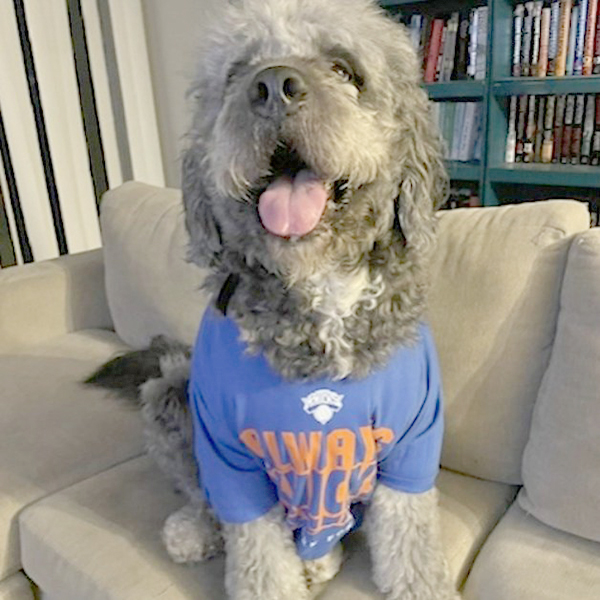
The Los Angeles Police Department slaying of a family dog named Jameson following the New York Knicks NBA championship win June 13 touched off a flurry of anger and indignation. The slaying of a pet that an LAPD body cam video decisively showed posed no threat to the officers who responded to the call sparked public anger and calls for tough disciplinary action against the officers involved in the slaying.
But lost in the furor over the slaying is yet another issue which in some ways is just as disturbing. That’s the number of LAPD officers that turned up at the scene.
The blunt fact is there were way too many police there. And that in far too many other instances where the LAPD repeatedly shows up in battalion force at even the most innocuous calls often guarantees there will be an incident that more often than not involves the overuse of deadly force.
I’ve seen this scene many times in South L.A. A throng of cops surrounds a young Black or Hispanic man in cuffs. I have yet to see anything remotely like this scene — an arrest, with multiple officers standing around — in West L.A., Westwood, or Sherman Oaks.
How do you explain the quasi-military overkill of hordes of cops at the scene for no heavy-duty violent or major crime in evidence as was the case with the fateful call that brought a squadron of LAPD officers to the apartment where Jameson was slain? Is it a case of too many cops with too much time on their hands, who use every arrest, no matter how routine and picayune, as an excuse to socialize with other officers?
The Vera Institute, a criminal justice think tank, provided one answer to that question. A 2022 study, “911 Analysis Our Overreliance on Police by the Numbers,” examined police responses to mostly non-threatening situations in nine cities. It noted two critical problems.
One, police are almost always the first responders to any situation that remotely resembles a crime. The second is that in many of these situations the responders should not be police, but civilian responders trained in mediation and mental health skills.
The study concluded, “At present, police are tasked with responding to far too many behavioral health crises and safety issues, even as police cause serious harm and the public demands more non-police responses.” That certainly was the case with the slaying of Jameson.
The ancient complaint is that in South L.A., as all other poor, Black and Hispanic inner-city neighborhoods, it is vastly overpoliced. And the LAPD, like other police departments in similar neighborhoods, operate as something akin to a big, aggressive, standing army in South L.A.
The long-buzzed words with the LAPD brass in relation to policing in South L.A is a partnership and community policing, neaning that the LAPD no longer operates as an occupying, almost paramilitary, army. The old us versus them has been the ancient knock against the LAPD. Partnership supposedly puts prime emphasis on dialogue with Black leaders, activists and community residents, and acting as a service agency; all done with a kinder, gentler face.

Yet, compare the dual standard of policing routinely reserved for low-income Black and Hispanic inner-city neighborhoods versus that for middle- and upper-income white suburbs. In one, the police procedure is massive shows of force, dubious stops, searches, racial profiling and gruff commands and orders.
In the other (unless the person stopped, searched, and profiled happens to be a young African American walking or driving through those neighborhoods), the police procedure is Mr. Rogers-type courtesy, friendly dialogue with emphasis always on protecting citizens, safeguarding their rights and providing full public service.
The standard retort is that South L.A. and other poor Black neighborhoods have higher crime rates. And residents scream for more, not fewer, police. The problem with both assertions is that claiming more crime among Blacks is both a numbers game and a self-fulfilling prophecy.
You put more cops in a neighborhood; the result is not the revelation of the ages. You’re going to have more arrests and thus a skewed picture by the numbers solely of more crime. As for Blacks demanding more police, the demand is not for vast armies of cops prowling the streets, but policing that stresses providing service, assistance and a sensitive response when there is need.
Since Rodney King, the LAPD has revamped many of its policies and procedures on everything from the use of deadly force to racial profiling. A major effort has been made to make the department look like the citizens it polices in L.A.
Those changes are much needed and welcome. However, the LAPD’s gross overreaction to the many scenes in South L.A. stands in stark contrast to what I see when police make stops in other areas. Nowhere was this contrast more horrifying than in the unnecessary battalion of officers’ response to a call to an apartment in Canoga Park. It resulted in a death just as unnecessary.
Earl Ofari Hutchinson is an author and political analyst. His forthcoming book is “Trump’s Obama Obsession” (Amazon ebook and Middle Passage Press). He also hosts the weekly news and issues commentary radio show “The Hutchinson Report” Wednesdays at 6 p.m. at ktymgospel.net and Facebook Livestreamed at facebook.com/earl.o.hutchinson.