By Corey Williams
Contributing Writer
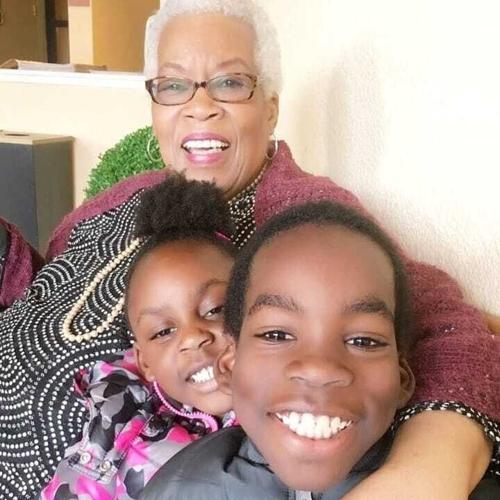
LOS ANGELES (AP) — Black journalist Marlene Louise Johnson, whose lawsuit against the Associated Press for race and gender discrimination led to affirmative action plans to encourage the hiring of Black and female journalists, has died at 89.
Johnson died May 9 in a Los Angeles-area care facility after being released from a hospital. She had been suffering from dementia, according to her daughter, Morenike Joela Evans.
Born in Rochester, New York, Johnson earned an associate’s degree from the University of Buffalo and a bachelor’s degree at Wayne State University in Detroit. In 1972, she was hired as a general assignment reporter in the AP’s Detroit bureau, and later sued the global news organization for race and gender discrimination the year after she joined.
“What the suit was about originally was racism,” Johnson said in a 2013 interview with History Makers, a nonprofit research and educational institution that keeps an online oral history of both well-known and unsung Black Americans.
“I was filing copy, and there was nothing wrong with the copy,” Johnson said. “And so, like nine months in, the boss decides that he’s going to retire, and he’s going to dump me. And I said ‘oh, my gosh.’ And so, I was very upset.”
Johnson said the Newspaper Guild helped her file the suit, which later became a class-action claim involving several other female minority journalists. Johnson then took a leave of absence in June 1975, according to AP records.
“It was a scary thing for her to do,” Evans said about her mother’s discrimination claim against the AP. Much later, “she ended up getting like $700. I remember her being very upset over that — it kind of got taken away from her getting justice.”
The Newspaper Guild’s sex and race discrimination class-action lawsuit against the AP was settled about a decade later in 1983 for more than $1 million. Johnson was not listed as one of the plaintiffs. Under the agreement, which involved the U.S. Equal Employment Opportunity Commission, the AP was required to establish affirmative action plans for female journalists, as well as Black and Hispanic journalists.
“The suit turned from all Black and one white (plaintiff), to all white and one Black (plaintiff),” Johnson recalled in the interview with History Makers. “And the one Black — the one that went to the civil suit — they took my name off and put another woman’s name on it. A Black woman who I had never heard of before.”
The seven women listed as plaintiffs shared $83,120, according to a 2019 NewsGuild International article. Part of the settlement agreement included provisions for training and bonuses for AP’s minority and female journalists.

“I wasn’t in it for the money,” Johnson said, also noting that she couldn’t find jobs in the journalism industry for some time after filing her lawsuit.
Veteran journalist Vincent McCraw, who worked with Johnson later in her career at the Washington Times, said minority and female journalists everywhere owe a debt of gratitude to Johnson.
“We should be grateful that someone like Marlene, a Black woman in the 1970s at a major news organization who had the courage,” he said. “Whether she, willingly or not, knew there would be a sacrifice, she took it.”
Johnson moved to Los Angeles about 10 years ago to be closer to her family, said Evans, who added that her mother was diagnosed in 2023 with dementia.
“She loved being a reporter, a journalist,” her daughter said. “She was really an advocate for people and telling the truth.”
Corey Williams writes for the Associated Press.