By Darlene Donloe
Contributing Writer
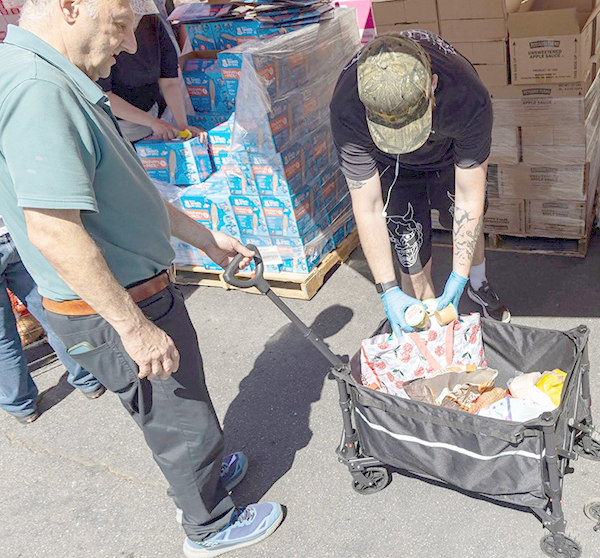
LOS ANGELES — CalFresh Awareness Month, a state Department of Social Services initiative, returns this May, shining a spotlight on the program that helps low-income Californians put food on the table.
CalFresh is a lifeline for low-income individuals and households throughout the state, providing essential food assistance to those who need it most.
Throughout CalFresh Awareness Month, a campaign originally launched in May 2011, organizers will work to boost public understanding of CalFresh’s critical role in fighting food insecurity and promoting healthy communities.
This year’s CalFresh Awareness Month, with the theme, “Still Reaching. Still Feeding,” will zero in on vulnerable populations disproportionately affected by food insecurity, including non-citizens, seniors, single parents, veterans, the unhoused and communities of color.
“L.A. County residents are encouraged to support this year’s outreach efforts by following the county Department of Public Social Services on social media and sharing information with individuals and families in their communities who may benefit from CalFresh,” the department said in a statement.
Outreach efforts will highlight application pathways and provide crucial information on impending federal eligibility changes.
The campaign targets media, stakeholders and the broader public, highlighting how CalFresh provides essential assistance to vulnerable populations.
The Department of Social Services is keeping eligible Californians connected to CalFresh amid statewide eligibility changes. The organization wants to help participants and would-be participants navigate the updates.
The 2026 campaign theme, “Still Reaching. Still Feeding,” focuses on maintaining access to nutrition assistance among eligible Californians while significant federal changes to CalFresh, including CalFresh eligibility, are implemented across the state.
It also will spotlight federal policy changes implemented on Jan. 1, impacting CalFresh eligibility for certain non-citizens, including refugees, people seeking asylum, parolees and those with withheld deportation status. Those individuals may lose CalFresh benefits.
The initiative focuses on promoting and increasing enrollment in CalFresh, California’s version of the federal Supplemental Nutrition Assistance Program.
This year’s campaign emphasizes understanding policy changes from the U.S. House of Representatives 1 bill (called One Big Beautiful Bill), which became law last July 4, impacting eligibility, reporting and renewal requirements.
As of April 1, certain non-citizens are no longer eligible to receive CalFresh benefits. However, they may be eligible for CalFresh if their immigration status changed to legal permanent resident and they meet all other eligibility requirements. If a non-citizen is currently receiving CalFresh benefits, they will continue to receive benefits until their renewals, if they meet all other eligibility criteria.
Key changes include potential ineligibility for certain non-citizens and new work requirements starting June 1. Adults 18-64 without dependents under 14 must complete 20 hours a week or 80 hours a month of approved work or training to maintain benefits.
Approximately 1.5 million L.A. County residents are currently enrolled in CalFresh, but over 320,000 more residents may be eligible and aren’t receiving benefits.
“We want to reach the 320,000 residents who are eligible for CalFresh but are not receiving it,” said James Bolden, senior public information specialist, for the county Department of Public Social Services. “Some people are not applying because of fear, especially if they’re immigrants. They’re too afraid. There is also the stigma of not wanting your friend to see you in a line getting public assistance.”
Bolden said the county encourages people not to worry about being seen because they have earned the benefits.
“You worked your whole life, and now you’re running into a hard time,” he said. “You’ve earned those benefits. It’s nothing to be ashamed of.”
Bolden said before the pandemic, the department would participate in 100 events throughout the community. In recent years, they’ve seen a significant drop in participation for various reasons.
“The events aren’t as popular anymore,” he said. “I’m telling you, we have to check the temperature out in the community. Our outreach team is out there going to events, and not as many people are coming to sign up like they used to in the past. They’re a little worried about coming out.”

Bolden said applying is easier than ever. Interested parties can call, apply online, or join online workshops in multiple languages.
“You don’t have to wait in line anymore,” he said. “Get all the info you need on how to apply, keep, and protect your benefits. Watch out for scams, though. Our site has a ‘Keep Your Benefits’ section, which is helpful.”
A 16-year veteran of the department, Bolden is clear on what defines success for CalFresh Awareness Month: “The more people who have the information, the better.”
He says tracking the campaign’s impact is straightforward — it’s all about spreading the word. He also said applying for CalFresh is not a long drawn-out process.
According to information on the department’s website, CalFresh applications are processed within 30 calendar days. In emergencies, a low-income household may receive CalFresh benefits within three days from the date of their CalFresh application. It is the department’s policy to issue expedited CalFresh benefits on the day of application, whenever possible.
Last November, the state implemented a change in who would receive the state utility assistance subsidy in order to receive the standard utility allowance deduction. The change may have reduced or terminated some households’ CalFresh benefits.
The Department of Public Social Services will collaborate with the Department of Public Health, the Department of Children and Family Services, and long-time community and faith-based organizations to implement the CalFresh Awareness 2026 campaign.
Other partners include the county Departments of Consumer and Business Affairs/Office of Immigrant Affairs, Economic Opportunity, Military & Veteran Affairs, Aging and Disabilities, LA Youth Commission, the Women, Infants and Children program, local municipalities and local community colleges and universities.
The Department of Public Social Services encourages residents to stay informed and share information with those who may benefit. For details on exemptions and approved activities, visit the department’s Keep Your Benefits webpage.
To apply, call the Customer Service Center at 866 613-3777, visit any Department of Public Social Services office, mail in an application, or go online at www.benefitscal.com.
Darlene Donloe is a freelance reporter for Wave Newspapers who covers South Los Angeles. She can be reached at ddonloe@gmail.com.