THE HUTCHINSON REPORT: Plenty of LAPD abuse complaints with little or no action

By Earl Ofari Hutchinson
Contributing Columnist
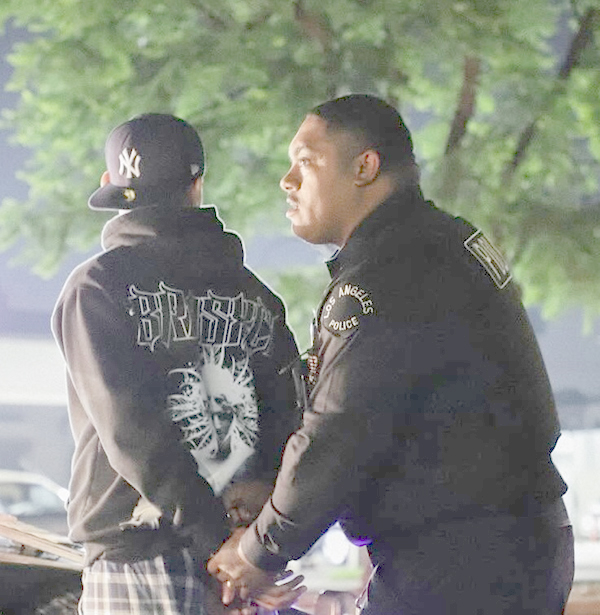
Imagine your frustration when you make what you consider a legitimate complaint about an abuse or problem and nothing is said or done about it. That’s the exact feeling that thousands of people have had after filing a complaint against the Los Angeles Police Department for various and sundry problems, actions, encounters, but especially abuse.
The problem is compounded by the fact that the overwhelming majority of the non-acted on complaints are by Blacks and Hispanics. Many of those complaints concern alleged officer abuse and misconduct.
Researchers cited one internal LAPD investigation as typical. It found an “overwhelming pattern of intentional policy violations.” They also found countless numbers of stops in which there was little or no documentation.
In a number of those stops, officers either turned on their body cams and dashboard cameras late, or worse, never bothered to turn them on at all.
The California Department of Justice, in a separate study, found that nearly 5,000 bias complaints were lodged against the LAPD between 2016 and 2025. A grand total of three were upheld.
There was no indication what, if any, action was taken against the officer or officers that were found in violation of department regulations on the handling of stops.
The real issue is the age-old problem that has bedeviled the LAPD for decades. That is the issue of racial profiling, the target almost exclusively being African Americans or Hispanics, but especially African Americans.
The alleged profiling almost always involves a traffic stop. In 2025, more than one-third of those stopped under dubious circumstances were African Americans, even though African Americans make up less than 10% of the city’s population. Hispanic motorists likewise are subject to a disproportionate number of questionable stops. In almost all cases, LAPD officers do not find guns, drugs or any other criminal offense.
The issue of racial profiling, stop and frisk, and dubious detention in street stops of Blacks and Hispanics burst into national debate when then-President George W. Bush, in an address to a joint session of Congress in 2001, blasted racial profiling. “It’s wrong and we will end it in America,” he said. As the report on complaints and abuse in Los Angeles has amply shown, it hasn’t ended.
In the past decade, Los Angeles, New York, Chicago, Miami and other big and small cities have repeatedly been called on the carpet for alleged racial profiling.
The refusal to admit that racial profiling exists by many public officials and many in law enforcement has done much to torpedo nearly every effort by local and national civil rights and civil liberties groups to get law enforcement and federal agencies not only to admit that racial profiling happens but to do something about it.
A perennial federal bill served up by House Democrats to get federal agencies to collect stats and do reports on racial profiling hasn’t gotten to first base. California legislators have done better. They mandate that law enforcement agencies compile racial stats on traffic stops. Nationally, more than 40 states collect data either voluntarily or compelled by state law on unwarranted pedestrian contacts and traffic stops.
Police officials loudly contend that good police work is about the business of catching criminals and reducing crime, not about profiling Blacks and Latinos. If more Black and Latino men are stopped, it’s not because they’re Black or Latino but because they commit more crimes.
The even more problematic tact used to debunk racial profiling is the few statistics that have been compiled on unwarranted stops. In this case not by police agencies but based on citizen responses.
In two surveys, the Federal Bureau of Justice Statistics took a hard, quantified look at racial profiling using information that it got from citizens. Both times, the agency found that while whites are stopped, searched and arrested far less than Blacks or Latinos, there was no hard proof that the stops had anything to do with race.
This has done even more to damp down a public outcry to get police agencies and legislators to admit that racial profiling is a fact on many city streets and highways and then to take firm action to eliminate it.
For their part, LAPD officials have pushed back against the demand for more transparency, accountability and, most importantly, action on the high volume of unacted upon complaints. The standard fallback retort is that the ease of the complaint filing process virtually invites citizens to file frivolous claims that have no basis in fact.
Therefore, it’s almost a waste of time and resources to fully vet these claims. Officials also contend that in almost all cases, they fully investigate and likewise there is no basis to sustain the complaints.
This is an issue that screams for attention and action by Police Chief Jim McDonnell and the Los Angeles Police Commission. The action is simply to ensure that every complaint filed alleging abuse or misconduct be fully investigated on a thorough and timely basis. And that the results be publicly disclosed.
Anything less just ensures that the LAPD regards a citizen’s complaint as just a complaint and nothing more
Earl Ofari Hutchinson is an author and political analyst. His forthcoming book is “Trump’s Obama Obsession” (Middle Passage Press).