Wave Wire Services
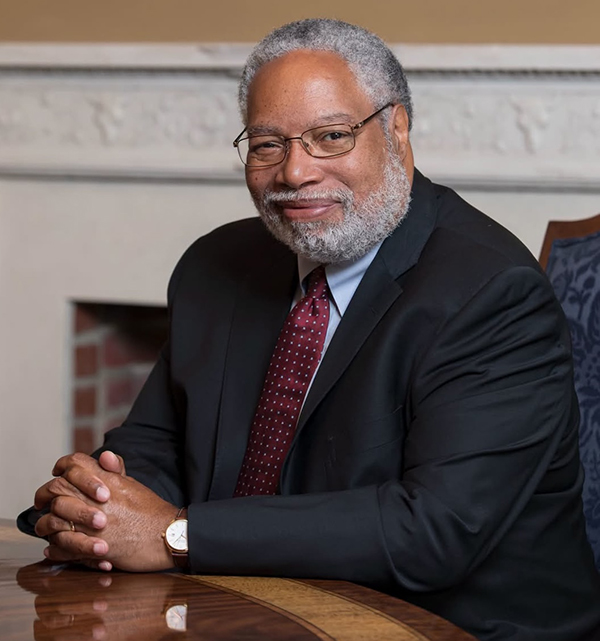
LOS ANGELES — Mayor Karen Bass issued a statement Sept. 11 celebrating the legacy of Lonnie G. Bunch, the first Black person and first historian to lead the Smithsonian Institution.
Bunch announced his retirement Sept. 8 at age 73 after serving as the institution’s secretary since 2019, overseeing 19 museums, the National Zoo, numerous libraries and research centers, and several education units and centers.
His decision to retire came amid the Trump administration’s increased scrutiny and pressure on the Smithsonian museums to do more to reflect the unity and enduring values of America’s history.
In a statement released by the institution, Bunch said “It is with very mixed emotions and heartfelt gratitude that I announce my retirement from the Smithsonian.
“I have spent nearly half of my life working at being part of the Smithsonian family, and what a privilege it has been,” Bunch added.
The Trump administration placed unprecedented limits on the institution by challenging how American history is presented and rolling back diversity, equity and inclusion efforts.
On July 4, the day of the nation’s 250th birthday, the White House released a 162-page report titled “Saving America’s Story.” The report accused Smithsonian leadership of “extreme political activism” and erasing American history.
President Donald Trump later signed an executive order mandating that signs be established outside the Smithsonian’s National Museum of American History warning visitors about “inaccurate information” at the facility.
Bass said Bunch’s leadership and vision has shaped how generations of Americans understand the nation’s history and culture.
“For roughly 100 years, there were efforts to create a national museum dedicated to African American history and culture,” Bass said. “It took persistent advocacy, vision and determination before Dr. Lonnie G. Bunch III successfully turned that dream into a reality.
“The powers that be had doubted whether it could be done,” Bass added. “Then they gave him the responsibility of doing it — and he defied all the odds against him,” Bass added.
“Congressman John Lewis led the effort in Congress to win approval and the funding to build the National Museum of African American History and Culture, and Dr. Bunch was selected to accomplish what so many before him attempted to do,” the mayor continued. “The impact of the museum has preserved crucial truths, filled major gaps left by mainstream institutions, and showed that Black history is an essential part of the fabric of America.
“Dr. Bunch has devoted his career to making sure that America’s story is told with honesty, complexity and dignity,” Bass said. “He led the effort to fight against attempts to erase African American history.
“He did not sugarcoat our history or make it more comfortable for those who would rather look away. Instead, he told the full truth — the painful parts, the triumphant parts and everything in between.”
Bunch received bachelor’s and, master’s degrees and a doctorate in American and African American history from American University in Washington, D.C. He started at the Smithsonian in 1978, holding curatorial and leadership positions at the National Air and Space Museum and the National Museum of American History.
Bunch was the curator of history and program manager for the California African American Museum in Exposition Park from 1983 to 1989. He later served as president of the Chicago Historical Society, and returned to the Smithsonian in 2005 to establish the National Museum of African American History and Culture.
Bunch will leave his post by the end of the year, Franklin D. Raines, Smithsonian Board of Regents chair, said.
“In due course, the board will announce an acting secretary and begin a national search for his successor,” Raines said in a statement.
A detailed plan on when a successor will be appointed was not announced.
“Dr. Bunch’s legacy should remind us that history is not something to be feared,” Bass said. “It is something to be understood, protected and passed on. I hope Dr. Bunch knows that his work has mattered. It has mattered deeply. And the work of telling the full American story must continue.”