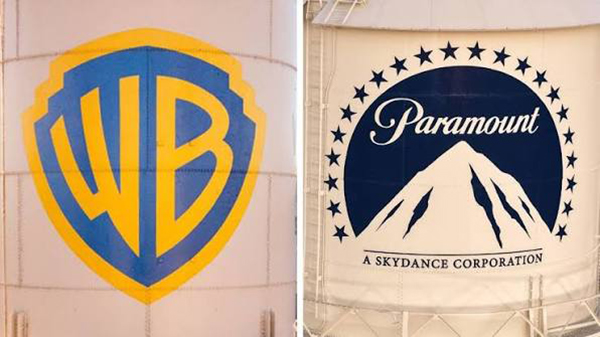
Wave Wire Services
LOS ANGELES — A federal judge approved Paramount’s settlement with California and 11 other state attorneys general Sept. 30, clearing the way for the studio’s $110 billion merger with Warner Bros. Discovery.
The merger will unite two of Hollywood’s largest movie studios, the HBO Max and Paramount+ streaming services and TV businesses including CBS, CNN, MTV, TBS, Comedy Central, Food Network and more.
Under the terms of the settlement, Paramount has agreed to a minimum investment of $300 million per year for five years in U.S. film and TV production, amounting to a total of $1.5 billion. The company will also release at least 30 films per year theatrically in the first two years of the deal and 32 films per year in the three years after that.
“(T)he court finds the proposed consent decree represents a reasonable factual and legal resolution of the dispute,” U.S. District Judge Araceli Martinez-Olguin wrote in her order.
The companies will maintain their respective studio lots, honor collective bargaining agreements with Hollywood’s unions and make community investments. The investments include a $5 million-per-year contribution to an independent films fund and $9.5 million annually for film and TV career training and development programs to benefit qualified educational institutions and community arts organizations.
Paramount CEO David Ellison has said the merger is expected to close two weeks after reaching the settlement, or in early October.
California Attorney General Rob Bonta said Sept. 21 that a deal had been reached. Bonta said the settlement does not mean he supports the merger, but it will ensure that when the deal is finalized it will include protections for workers and mandate a substantial increase in domestic film production.
According to Bonta, Paramount agreed as part of the settlement to produce 30 movies in each of the first two years of the deal, then 32 in the ensuing three years. The deal also will require the firm to invest $300 million per year for five years to increase domestic production of films, noting that the company currently produces only 5% of its movies in the United States. That investment will add up to $1.5 billion over five years, he said.
Bonta also said that if Congress passes a federal film tax credit, Paramount will have to increase its domestic film production from 5% to 20% for two years, then to 30% for the next three years. If California or New York approves an “uncapped” state film tax incentive, Paramount will have to increase domestic production to at least 40%.
Bonta said the deal amounts to “massive increases in domestic production.” He said he was committed to pushing for passage of an uncapped film credit in California during the coming legislative session.
The deal also includes a guarantee that news organizations included in the deal — CBS News and CNN — will continue to have independent editorial boards. That provision comes amid fears that the organizations’ journalistic integrity might be compromised under pressure from President Donald Trump in exchange for his support of the merger.
Bonta said Paramount will also invest $9.5 million per year on industry workforce development, and the company will also boost its support of independent films.
Paramount CEO David Ellison said in a statement he was grateful to Bonta and other parties to the litigation for reaching “a resolution that serves all parties.”
“Our shared aim was an outcome that best serves consumers, workers and — most importantly — the creative community so vital to the art of visual storytelling,” Ellison said. “We’re confident this agreement does exactly that, memorializing a series of commitments that include 30-plus films annually and expanded U.S. film production to help revitalize our industry here at home.
“Our goal has always been to build a stronger Hollywood — one with more stories told, greater choice for consumers and stronger competition,” he said. “Having now addressed the state attorneys general and (Writers Guild of America’s) concerns, we have complete clearance for this merger and look forward to putting these commitments into action. Bringing Paramount and Warner Bros. Discovery together will build that stronger Hollywood, creating expanded opportunity for our people and even more great entertainment for audiences around the world.”
The WGA joined the states’ lawsuit, contending the merger would hurt jobs for Hollywood writers. In a statement to its members, the union said it continues to oppose the merger, but in light of the settlement reached by the states, it consented to the deal because it was faced with the prospect of “forging ahead alone in a lawsuit that would cost millions of dollars through trial.”
News of the settlement came after weeks of acrimony between Paramount and Bonta over the proposed combination of two of Hollywood’s largest studios.
Bonta led a coalition of 12 state attorneys general in filing the antitrust lawsuit in July seeking to block the deal, arguing that combining Paramount and Warner Bros. would reduce competition in the movie and television industries.
Paramount has disputed those claims and argued the merger would give the combined company the scale to compete with larger technology and entertainment companies.
The companies subsequently agreed not to complete the merger until June 1, 2027, or until after a court ruling on the states’ claims, whichever comes first. Previously, the two sides agreed to participate in court-ordered settlement talks Oct. 14 and 15.
A previous effort to hold settlement discussions collapsed in August when Bonta canceled a planned session and accused Paramount of leaking information from confidential discussions and “playing games.” Paramount denied being the source of the leaks.
Ellison had additional financial incentive to resolve the dispute before Oct. 1. Under the terms of the planned merger, Paramount would be required to pay Warner Bros. Discovery shareholders an additional $7 million a day beginning Oct. 1 on top of the $81 billion it has agreed to pay them if the lawsuit was not resolved.
Paramount had also increased pressure on state and local officials in recent weeks by threatening to move the company out of California if the legal fight continues. The possibility has raised concerns among officials seeking to stem the loss of film and television production jobs from the Los Angeles area.
The merger has received regulatory approvals in more than 65 nations.
The Federal Communications Commission has also approved a foreign ownership structure for the proposed combined company.
A federal trial on the states’ antitrust challenge was scheduled for March, but that would be vacated if the settlement is approved.