By Robert Ito
Contributing Writer
LOS ANGELES — In January, park rangers removed 34 interpretive panels from a slavery exhibit at Independence National Historical Park in Philadelphia. The signs, which described the lives of the nine people George Washington enslaved at the presidential residence there, were unceremoniously taken down — in some cases leaving the dried glue in place — to comply with President Donald Trump’s Executive Order 14253, titled “Restoring Truth and Sanity to American History.”
The order calls for the removal of signs that “inappropriately disparage Americans past or living” from the country’s national parks. Apparently, telling visitors about our first president’s slaves ran afoul of that.
When Trump issued the order in March 2025, Molly Blake, a social sciences librarian at the University of Minnesota, worried about the information that might be lost as a result. She began talking with colleagues at the university, including Jenny McBurney, a government publications librarian, about what they could do.
Even if they couldn’t stop park rangers from tearing down the signs, maybe they could archive them for posterity. Within a few months, they would launch Save Our Signs, a nationwide effort to preserve what the government was trying to erase.
Blake and McBurney couldn’t go to all 63 national parks, of course, let alone the hundreds of historic monuments and sites overseen by the National Park Service.
“We knew we had to get the public involved,” Blake said, so they invited park visitors to photograph signs to be recorded in an online archive. The response has been overwhelming.
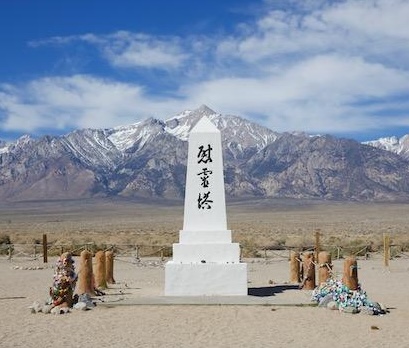
To date, members of the public have sent Save Our Signs more than 17,000 photos shot at 428 sites, from Ellis Island and the Japanese American internment camp at Manzanar to monuments dedicated to the memory of Emmett Till, whose killing helped spark the civil rights movement. They’ve also sent reports and photos from parks where the signs have already been removed, which become part of the archive’s “Censorship Tracker.”
“The folks that we hear from are saying things like they love our parks, they support our parks, they want to maintain the really high-quality educational materials they’re seeing there,” McBurney said. “They want us to remember our history, the good and the bad.”
Even for the combined forces of the American public, however, there are a lot of parks and land to cover: more than 85 million acres across 50 states. And nobody knows where the government might strike next.
“They’re not hiding it,” said Alan Spears, senior director of cultural resources at the National Parks Conservation Association. “They’re also probably not putting out press releases saying that this stuff has happened. You can just show up on Monday or Tuesday of this past week, [and] the signs are gone.”
Because of the uncertainty, Save Our Signs encourages park visitors to photograph everything.
“One of the signs that was removed just noted that it’s a good idea to refill your water bottle because it’s better for the environment than using plastic,” Blake said. “I wouldn’t have guessed that that would have been targeted, but it was.”
Since the order was issued, park employees have removed or modified more than 100 signs at 41 National Park Service sites, from California’s Muir Woods National Monument (for mentioning climate change and the park founders’ connections to anti-immigrant policies) to Wyoming’s Grand Teton National Park (for calling attention to explorer Gustavus Cheyney Doane’s participation in a massacre of more than 150 Indigenous people).
Monitoring all those signs is as daunting for the Interior Department, which includes the Park Service, as it is for Save Our Signs. The department relies on park rangers and other employees at each site, instructing them to look for signs that might not be doing an acceptable job of reminding park visitors of this country’s “unmatched record of advancing liberty, prosperity, and human flourishing,” as Trump’s order puts it. Park staff are expected to remove or alter such signs within 120 days of the executive order.
A confidential Park Service database, leaked in March and containing internal communications among park staffers, showed rangers wrestling with difficult questions about what exactly the order requires. Did signage about the return of California condors from near-extinction disparage hunters, one ranger asked. Another wondered whether signs about graffiti at Utah’s Arches National Park violated the directive to emphasize the park’s “natural beauty.”
For Save Our Signs, the leak provided a list of parks that might be targeted for sign removals if they hadn’t been already.
“Right now, we have on our website a map of parks that, based on the leaked dataset of what might be targeted, are parks that are priorities for us,” Blake said. “It was called out on this leaked spreadsheet as a place that there might be censorship happening. We really want more photos there.”
One of the challenges for Save Our Signs is the ambiguity of Trump’s order as well as Secretarial Order 3431, which Interior Secretary Doug Burgum issued to implement the executive order. Consider the orders’ ban on “inappropriate disparagement” of Americans.
Is it OK for signage at a Till site to disparage the men who tortured and lynched him? Can park signs at civil rights monuments in Birmingham, Alabama, and Little Rock, Arkansas, disparage the white supremacists who opposed the civil rights movement?
“Inappropriate disparagement” of Americans is “a really confusing turn of phrase,” McBurney said. “Especially in the early days, nobody knew what that meant.”
The secretarial order also requires parks to post notices telling visitors how to report supposed violations, an effort that has largely been a bust. The QR-code-enabled notices, prescribed in a section of Burgum’s order titled “Encouraging Public Participation,” were soon dubbed “snitch signs” by detractors, thousands of whom submitted sarcastic comments and jabs at the Trump administration.
“There are some people who reported, ‘I think there needs to be more about indigenous history here,’” Blake said.
The watchdog group Public Employees for Environmental Responsibility (PEER) filed a Freedom of Information Act request last year to find out how the executive order was being implemented. The Interior Department never responded, so the group sued to get the records in June.
Tony Irish, a longtime Interior attorney who left the department last year and joined PEER in May, said, “There’s a number of terms [in the order] that, even for me, with my background in Interior programs, isn’t clear.”
He wonders how these orders might run afoul of federal law, including the National Park Service Organic Act of 1916, which created the service, and the National Historic Preservation Act of 1966.
“There’s other sites, particularly ones like Little Big Horn, where Congress has specifically directed the agency to provide a viewpoint from the Native American tribes that were impacted by the events there,” Irish said.

It’s not just Park Service signs that are being removed and altered. Trump’s order calls for the removal of offending signs throughout all 500 million acres of Interior Department lands, comprising roughly one-fifth of the country.
Park Service sites are getting most of the attention because Americans are more inclined to visit them, Irish said, but the Fish and Wildlife Service and Bureau of Land Management oversee even more acreage. PEER is suing the department for information about the order’s impact on those lands too.
There have been impacts on wildlife refuges and the Bureau of Land Management, Irish said.
“Part of why we want to get these records is to see just to what extent,” he added.
Little is known about the fate of many of the lost signs. When a district court judge told the Trump administration to provide an inventory of removed materials, the partial list from the Interior Department included 18 items that had been “discarded.”
Few parks employees are inclined to talk about where the old signs might be, let alone which others are slated for removal, Irish said.
“We’ve seen … circumstances where employees have made their personal feelings known that have led to swift reactions from the department,” he said. “So I would suspect there is some fear of being open about that.”
Some of the replacement signs sanitize or dilute the history laid out in the originals in ways that aren’t immediately obvious.
“These are really insidious,” said Save Our Signs’ Blake. “The differences are really subtle. In one case, a sign about Black soldiers during the Civil War, a reference to the fact that the military remained segregated until after World War II, that sentence was quietly taken out. So you could read something like that and not realize this has been censored.”
This whitewashing of history at park sites reverses decades of progress at the national parks, Spears said.
“We spent the last 30 years trying to raise up some of these untold stories so that we can have a better understanding of the contributions that all of us have made,” she said. Spears called the current shift “disheartening and anger-inducing.”
Save Our Signs continues to document the loss as signs across the country continue to come down. Blake said the effort is capturing an important moment in our history when an accurate telling of our past is itself under attack.
“Best-case scenario, the signs that have been censored will go back up, and this will be a way to study what happened,” she said. “Worst-case scenario, if this censorship continues, we want to be documenting it so that people can see what has been changed.”
Robert Ito writes for Capital & Main, a Los Angeles-based nonprofit publication focused on inequality. It is published here with permission.