By Antonio Ray Harvey
Contributing Writer
SACRAMENTO — Gov. Gavin Newsom signed legislation on Aug. 22 designed to protect immigration service providers and humanitarian volunteers from targeted harassment, doxxing and violence.
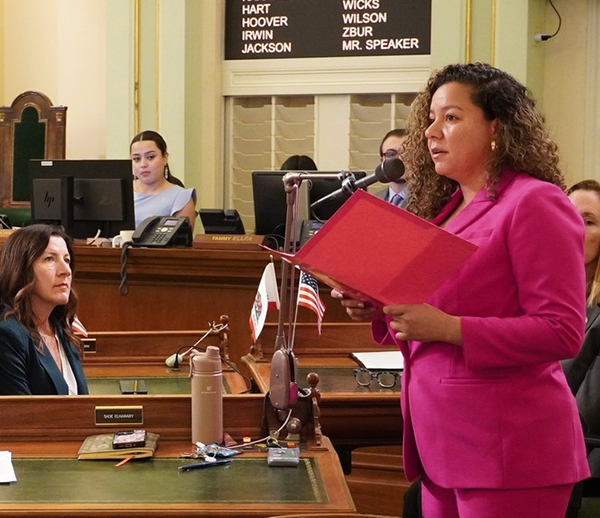
Authored by Assemblywoman Mia Bonta, D-Oakland, Assembly Bill 2624, the Privacy for Immigration Support Services Providers Act, establishes an address confidentiality program modeled after California’s Safe at Home program.
“AB 2624 is fundamentally about freedom — the freedom from fear that lets our immigrant service providers do their jobs, and the freedom of the press to do their jobs without ever being conflated with the doxxing this bill actually targets,” Bonta said. “Those two freedoms were never in tension. Right now, our immigrant service providers are living in fear because of extremists looking to demonize the work that they do and the populations they serve.”
Bonta and other proponents of the law say an increase in death threats, online abuse and anti-immigrant vigilante activity has made address confidentiality essential to protecting aid workers.
Beginning Oct. 1, 2027, eligible immigration service providers, employees and volunteers who face documented threats will be able to apply through Secretary of State Shirley N. Weber’s office to use a substitute address.
The law also provides legal remedies against individuals or groups that publish protected workers’ personal information online with the specific intent to incite imminent serious bodily harm or place them in reasonable fear for their safety.
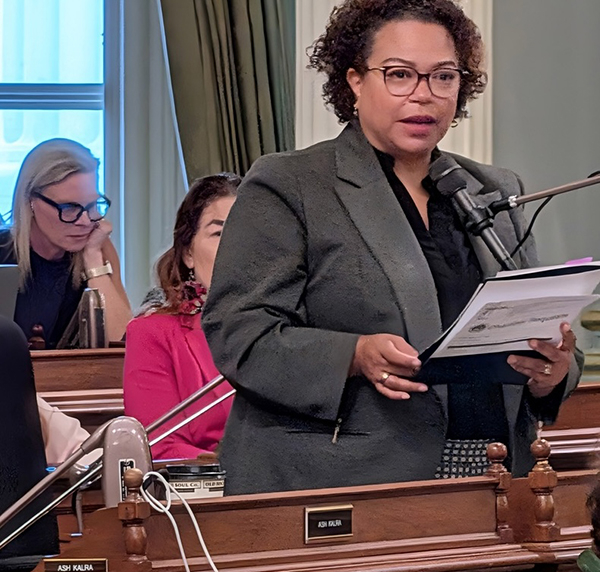
Doxing, the act of publicly revealing someone’s private or identifying personal information online without their consent, has also affected state lawmakers. In August 2024, Assemblywoman Lori D. Wilson, D-Suisun City, a member of the California Legislative Black Caucus, had private information published online without her permission.
“I’m proud that with the signing of this bill, California is rejecting that, even when people try to make us feel that the political cost of supporting immigrant communities is too high,” Bonta stated.
State Sen. Tony Strickland, R-Huntington Beach, opposed the legislation, calling it the “Stop Nick Shirley Act.” Strickland said he is concerned the law violates the First Amendment and could chill free speech, investigative reporting and public accountability.
Shirley is a conservative YouTube content creator, social media influencer and self-described independent journalist.
After Newsom signed the measure, Strickland argued that it threatens citizens and independent journalists seeking to expose government waste and fraud.
“I spoke out against it earlier this week,” Strickland posted on X the day Newsom signed the bill. “I’m concerned it could have a chilling effect on investigative journalism and protected speech. The law allows at least $4,000 in damages for certain violations.
“We need to protect people from genuine threats, but we must also protect journalists and citizens who investigate government programs, expose waste and fraud involving taxpayers’ dollars, and hold government accountable.”
Established in 1998, California’s Safe at Home program protects survivors of domestic violence, sexual assault, stalking, human trafficking, child abduction and elder or dependent adult abuse. It has since been expanded to cover reproductive health care and gender-affirming care providers.

Bonta said AB 2624 extends a similar framework to another group of Californians facing comparable threats.
Earlier versions of the bill directly referenced Evidence Code Section 1070, California’s journalist shield law. That citation was removed in Senate amendments adopted in July 2026. Bonta’s office said the change eliminated legal redundancy and clarified that the bill does not apply to legitimate journalism intended to hold the government accountable.
“AB 2624 does not restrict filming in public, does not prohibit investigative journalism, does not modify public records law for organizations, and does not apply to anyone who hasn’t voluntarily enrolled in and been certified by the Safe at Home program,” Bonta’s office said in an Aug. 18 statement. “It extends a 28-year-old, court-tested confidentiality program to people who are being followed home and threatened for helping their neighbors.”
Under the law, knowingly publishing, displaying, disclosing or distributing the personal information or image of an immigration service provider, employee or volunteer with the specific intent to incite imminent great bodily harm or cause reasonable fear can result in civil liability. Courts may award injunctions, legal costs, reasonable attorney’s fees and monetary damages of up to three times the actual damages, but no less than $4,000.
The law also makes it a crime to post such information with the specific intent that another person use it imminently to commit violence or threaten violence.
According to Bonta’s office, the legislation was introduced in response to a documented escalation of threats against immigration service workers across California.
Angelica Salas, executive director of the Coalition for Humane Immigrant Rights, testified before the Assembly Privacy and Consumer Protection Committee about her experience being doxxed.
“It happened to me and happened to a family member,” Salas said. “They were looking for me and ended up in my mother’s home. There are so many of my colleagues where individuals have shown up to their homes, who have been threatened, and this is not just our organization, but many others.”
Antonio Ray Harvey writes for California Black Media.