Wave Wire Services
LOS ANGELES (CNS) – An independent report on the Palisades and Eaton wildfires has found that outcomes were shaped by “multiple interlinked systems rather than any single factor or failure,” though certain findings are sure to reignite criticism of Los Angeles County agencies that have been slammed for their response to the deadly 2025 disasters.
Gov. Gavin Newsom ordered the report shortly after the fires, and selected UL Research Institutes’ Fire Safety Research Institute to conduct the analysis. The group issued the second of its reports Oct. 2.
It stated that wildfires in California have grown more deadly and destructive over the last decade, and the state has “demonstrated national leadership in wildfire policy, risk assessment, and investment. However, the outcomes of the Palisades and Eaton Fires highlight a critical disconnect between policy intent and on-the-ground implementation.”
The report detailed the extensive warnings issued by the National Weather Service for days prior to the historic wind event that helped spread the fires. Los Angeles Mayor Karen Bass, who was out of town on a diplomatic trip to Africa when the fires erupted, had initially said that she wasn’t fully aware of the danger prior to Jan. 7, when the fires broke out.
However, the report cited “warning fatigue,” which occurs when people receive frequent watches, warnings or advisory messages over time and begin to perceive them as routine or less urgent, which can reduce responsiveness to future alerts.
California and local jurisdictions had established numerous prevention, preparedness, and response programs prior to the fires, including defensible space inspection programs, fuel reduction efforts, community preparedness initiatives, evacuation systems, mutual aid agreements, and extensive fire suppression resources.
“However, the speed, scale, and complexity of the Palisades and Eaton Fires exceeded many assumptions underlying these systems,” the report said.
One area of intense public criticism in the months after the fires has centered on evacuation efforts, and accusations that minority and lower-income areas of Altadena did not receive the same level of care and service as higher-income areas nearby and the posh Pacific Palisades.
The report stated that the public alert and warning process is overly complex involving multiple organizations both public and private, with overlapping and interdependent authorities, and some personnel lacked familiarity with key systems.
The authors said the Watch Duty app often relayed information more rapidly than official notification systems.
“At the time of the Eaton Fire, Los Angeles County (LACoFD, LASD, and OEM) agencies’ policies and procedures supporting evacuation notifications and population movement did not fully address the processes and tasks needed for effective execution,” the report said. Agencies listed in the report were the Los Angeles County Fore Department, Sheriff’s Department and the Office of Emergency Management.
Also, the evacuation order for areas west of Lake Avenue was issued as fire conditions were already impacting the area, reducing the time available for residents to self-evacuate.
In both fires, a large portion of the decedents were older adults, and “early evacuation planning did not adequately account for vulnerable populations.”
The report said that while both the city and county fire departments had pre-fire plans for the Palisades and Eaton Fire areas, they “were outdated and reportedly not used.”
The report also said secondary searches were not conducted as the fire progressed, “limiting rescue opportunities, while significant post-fire hazards and a lack of appropriate [personal protective equipment] prevented responders from safely conducting these operations.”
Further, “As the Eaton Fire burned into hours of darkness and backed into narrow canyons, personnel were not in a position to be able to visualize active areas of the fire, causing command and operational personnel to lose situational awareness,” the report stated.
The fires “revealed longstanding gaps in law enforcement preparedness for rapidly evolving wildland-urban interface fires.”
The group Altadena for Accountability seized on the report to assail Los Angeles County agencies, charging that the findings showed how officials “failed the historically redlined community of West Altadena the night of the Eaton Fire.”
“This report is absolutely astounding for those of us who have spent nearly two years documenting what happened in West Altadena,” fire survivor Shawna Dawson Beer said. “We knew our town was left to burn and that our neighbors were left without warnings, resources and, in too many cases, without a chance to escape, and to die in their homes.”
The group said it would continue to follow California Attorney General Rob Bonta’s civil rights investigation to determine why West Altadena allegedly experienced a different response than other communities.
Among the other issues cited in the report were:
• The absence of a single entity responsible for coordinating and ensuring landscape-scale wildfire mitigation contributed to fragmented implementation across jurisdictional and ownership boundaries.
• In preparation for the January 2025 fires, all inservice water storage systems were filled to capacity. In addition, water utilities that had backup power supply generators reported … that they were ready for service at the time of the fire. All utilities … confirmed that operations staff were either on-call or mobilized for emergency operations during the lead up to the fire.
• However, when the initial request for the Los Angeles Department of Water and Power water tenders by the Los Angeles Fire Department came through at 10 p.m. and the DWP responded by staffing 23 trucks, “drivers came from their homes (from many different areas) to the Sun Valley facility and other locations to retrieve their assigned tender, do a safety check, fuel up, and then respond to the incident. This process took several hours. Arrival times into the Palisades Fire operational area are unknown.” —
• The Santa Ynez Reservoir was empty, and although it is not required to meet daily service needs, it could have provided additional water supply for fire suppression.
• Some water utility structures burned, particularly tanks with wooden roofs.
• Fire hydrants lost pressure in several locations in both the Palisades and Eaton fires due to pressure and water loss in the distribution systems.
• Drinking water was contaminated during the fires and persisted post-fire.
• The DWP did not increase pre-event staff in preparation for the extreme fire weather forecast, and a “lack of training was observed for extreme water-usage events … for all participants.”
• Los Angeles County Sheriff’s Department patrol staffing remained the same on Jan. 7, 2025, as on a normal day, “with no broader pre-positioning or increased operational staffing in preparation for the extreme fire risk.”
• Both the city and county emergency management systems were called under-resourced and understaffed.
• At the time of the January 2025 fires, local jurisdictions were operating under fire hazard maps developed in 2007, while updated hazard classifications identifying additional moderate and high hazard areas were not issued until after the fires.
• Key materials around preparedness, evacuation planning, assistance programs, and rebuilding information were often distributed to residents via multiple agencies and organizations, making information difficult for residents to locate before and after the fires. These challenges were particularly pronounced for renters, vulnerable populations (limited mobility, vision/hearing-impaired, etc.) and non-English-speaking residents.
• Palisades and Eaton Fire communications systems (radio, cellular, dispatch) were quickly overwhelmed.
• The Los Angeles Fire Department was criticized for not holding over personnel about to leave work for the day, despite the already-present heavy wind and fire danger conditions. Additionally, the recall of all off-duty fire personnel within the first hour of the Palisades Fire “was complicated by the city’s issuance of an emergency message using local television and radio media to announce the recall. While the recall was intended to involve only LAFD personnel, the media message was miscommunicated broadly to include “anyone with firefighting experience.”
• Off-duty LAFD personnel did start to return to their normally assigned work stations on an ad hoc basis, but no means or plan for rapid utilization had been prearranged.
• The Los Angeles County Fire Department did decide to hold over all off-going shifts on the morning of Jan. 7, which increased its staffing from around 1,500 firefighters to nearly 3,000 to battle the Eaton Fire.

• Transient near-home combustibles, such as vehicles and garbage/recycling receptacles, contributed to fire spread and structure damage and are an under-recognized contributor to fire spread to and between structures.
• In high-density neighborhoods, structural collapse contributed to structure-to-structure fire spread and damage by bringing burning materials closer to neighboring structures.
The report also found issues with “defensible space regulations,” which it said are primarily structured around parcel-level compliance, while wildfire risk increasingly reflects fuel continuity across parcels and into interconnected built environments. Defensible space is also constrained at the private-public land interface, where landowners may lack authority to treat fuels beyond parcel boundaries and environmental and permitting regulations add another layer of challenge.
Additionally, fragmented regulatory frameworks, distributed authority, jurisdictional boundaries, conflicting mandates and limited local implementation capacity create inconsistent wildfire mitigation actions, accountability gaps and coordination challenges.
Overall, the report said implementation of wildfire resilience measures remains “uneven” throughout Los Angeles city and county, and wildfire exposure exceeds the reach of existing programs.
The authors say the disasters showed that a new approach to preventing and fighting wildfires is needed across the board.
“The fires in Southern California and in communities across the U.S. demonstrate that we are entering a new era of modern conflagration. This report underscores how prevention, preparedness, infrastructure, evacuation, emergency response, incident management and the built environment collectively shaped wildfire outcomes during the 2025 fires,” said Steve Kerber, vice president and executive director for the research institute.
“The findings and recommendations identified in this report extend well beyond California and demonstrate that meaningful wildfire resilience depends on strengthening the entire system, not any single program, policy, or organization,” he added.
Priority recommendations included:
• Strengthening community-scale risk reduction.
• Enhancing preparedness for large, wind-driven community conflagrations.
• Improving situational awareness and operational intelligence.
• Expanding wildfire-resistant construction and community preparedness programs.
• Strengthening evacuation and interoperability systems.
• Improving infrastructure resilience and
• Establishing standardized, post-suppression procedures.
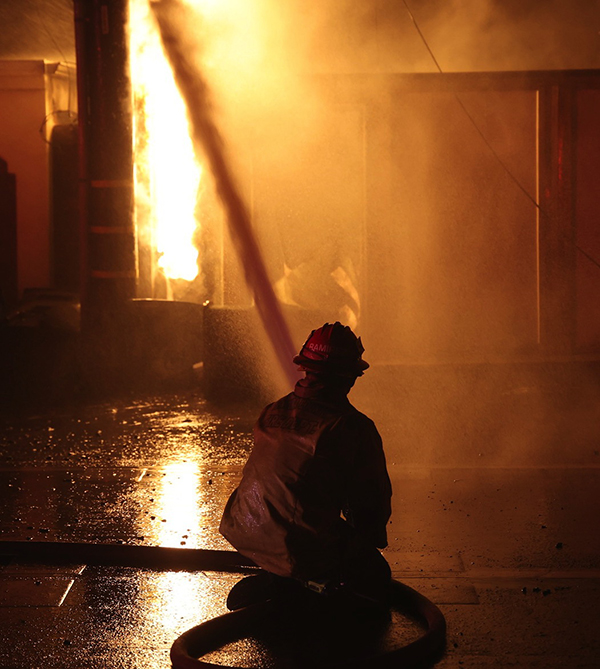
The Eaton Fire killed 19 people and destroyed over 9,000 structures. The Palisades Fire killed 12 people and destroyed 6,837 structures.
Together, they represent the most expensive fires in U.S. history, with estimated losses of approximately $6 billion.
The first UL Research report was issued in November 2025. Both reports can be found at fsri.org/research-update/southern-california-fires-incident-analysis-report-released.