By Erin Aubry Kaplan
Contributing Writer
The ultimate meaning of the midterms is still unfolding, but one thing’s for sure: It was a hell of a moment for Black representation.
ANALYSIS
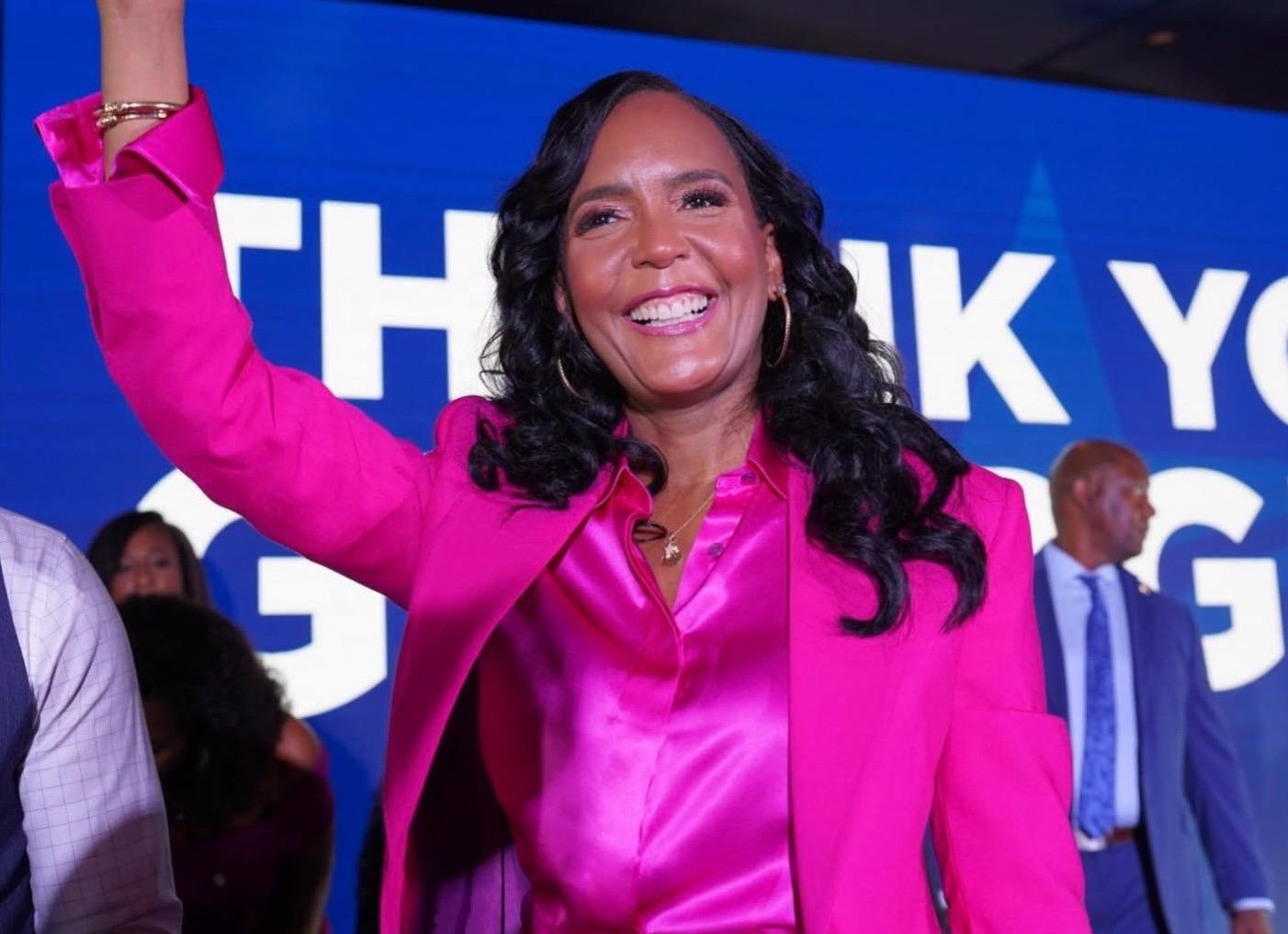
After all the obstacles the GOP threw in the path of Black voting in the South, from stringent voter ID laws to stacked election boards, when the dust had settled the seemingly impossible had happened: Black women had won multiple statewide seats in Georgia, including governor; five Black people were elected governor, a historic high; and Scott Colom took a Senate seat in Mississippi, the first time a Black man has been elected senator in Mississippi since Reconstruction.
Black voting surged after organizers and leaders across the country, from Black Votes Matter to the NAACP, worked furiously to increase turnout. Donald Trump may still be in charge but the message across the country is clear: politically, Black is back.
But not in L.A.
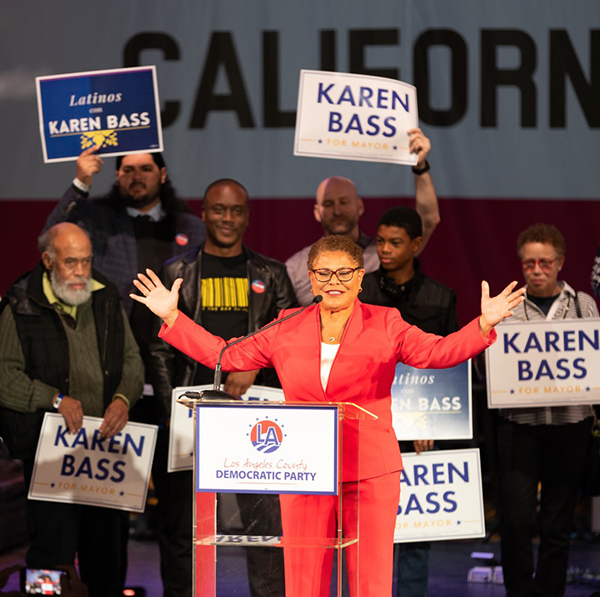
Karen Bass, the city’s first Black female mayor, lost to Councilwoman Nithya Raman. It was quite a reversal of fortune: After being hailed as a history maker and purveyor of progressive change in 2022, Bass, 73, was rejected by voters this time around as inept and too establishment.
That rejection was certainly part of a national embrace of big change that didn’t favor incumbents — as Bass said in her own analysis of her loss. But for some people in L.A. it marks something else: a low point in Black political power and presence in civic life.
When the new mayor and City Council is sworn in next month, L.A. will see its number of Black elected officials cut in half, from four to two.
Dermot Givens, a longtime campaign consultant who’s worked with generations of candidates, including Bass, said the loss of Black representation isn’t only in elected office, but also in leadership on the ground, where it all starts.
“The midterm results were very exciting elsewhere in the country, especially the South,” Givens said. “Really positive. But it’s over for Black folks in L.A.”
That sounds jarring. Despite a declining Black population, which stands at about 8% today, and ongoing racial disparities, L.A. is still viewed by many as the city of possibilities, long home to the largest Black middle class in the West.
But that’s optics. Black community leaders with real constituencies who have traditionally been the bridge to political power — leaders with what Givens calls “gravitas” — are all but gone, he said. And he sees Bass’ failure as proof.
“Ninety-nine percent of the Black establishment backed Karen and she still lost,” said Givens, referring to Black elected officials and other political figures who supported Bass’ reelection. “That speaks to the fact the people weren’t connected to the establishment. They weren’t motivated.”
It’s true that the energy that powered Bass’ bid for mayor in 2022 simply was not there in 2026. One thing that helped four years ago was that her opponent was Rick Caruso, a white, wealthy developer and former Republican.
The contrast between them gave voters a stark political choice; this year’s contest between Raman, a woman of color and a progressive Democrat like Bass, was less about politics and more about personal competence and who could best lead the city. It was also about exciting voters. Even among the Black voters who supported Bass, there was an enthusiasm problem.
Of course, there were voters who were genuinely excited about Bass.
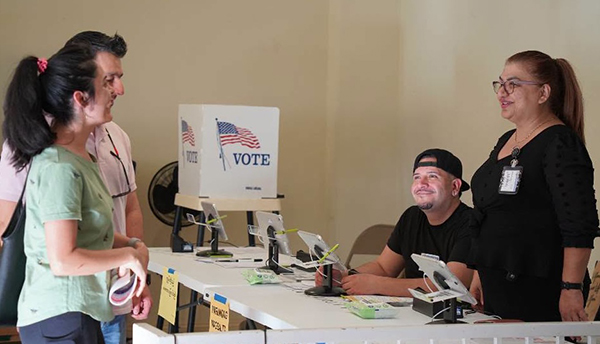
Stephen Townsend, 56, said the reason he went to the polls at all on Nov. 3 was to reelect her.
“I’ve met her before in person, and I got a feeling she’s a decent, genuine person,” said Townsend, who lives in Leimert Park and manages video game production at Amazon. Noting her deep roots as a community organizer, he said that “she’s been a big part of the community for so long. She’s not pretending to be here. And she’s still trying to do the right thing.”
Bass’ defeat speaks to the dearth of Black leaders who can rally the community around a candidate or issue, Givens said — a pastor like the civic-minded Cecil Murray of First A.M.E. Church or a politician like Mark Ridley-Thomas whose South L.A. Empowerment Congress prefigured neighborhood councils. (Murray died in 2024 and Ridley-Thomas was convicted in 2023 of federal conspiracy and bribery charges).
But he said those efforts have fallen off as Black leadership over the years has become more personality-driven and less focused on building Black solidarity that could be sustained into the future.
“Nithya Raman is an immigrant who stood up for immigrants in being against the current police chief because of LAPD’s involvement with ICE. But Karen didn’t stand up for Black people that way,” Givens said. “She just didn’t.”
Givens thinks Black solidarity in L.A. has been ebbing since the ’70s, the golden age of Black politics that officially launched when Tom Bradley was elected the city’s first Black mayor in 1973. He served for the next 20 years.
“We had everything going in L.A. then” — including a Black population that peaked at about 18% in 1970 — “but it never expanded,” Givens said. “It turns out that it wasn’t about building anything. Black people got complacent. We thought white people would take care of us.”
Now, he said, with Bass on the way out and no up-and-coming Black candidates in sight, “There’s zero political future here.” He added: “And politically, other groups in power, they don’t need us.”
None of this means Black people in L.A. have disappeared, or don’t have urgent concerns that can and should be addressed by the incoming mayor and City Council. Raman is a member of the Democratic Socialists of America, an organization whose ranks are well represented on the city council. Its agenda overlaps with much of what Black folks want, from increasing affordable housing to expanding the social safety net to achieving real racial equality.
In the final week of the campaign, Raman released a Black agenda. Among the pledges she makes are to address renters’ concerns, grow Black businesses and “center Black voices at City Hall.”
It’s a promise of inclusion that, ironically, reminds us of just how diminished those voices have become. After next month, only two Black council members will remain: Heather Hutt and Marqueece Harris-Dawson, the council president, who is facing a recall campaign generated in part by irate Black constituents who say he has failed them. And a Latino will represent Council District 9 in South Central, which had Black representation since 1963.
Latino voters helped Bass prevail in the primary, but their dramatic shift to Raman in the general election proved decisive. For many Black Angelenos, the memory of how Latino politicians and power brokers tossed around racist insults during a backroom discussion in 2022 while casually speculating on Black people’s political demise is still fresh.
And while those responsible paid the price — Kevin de León, one of those brokers, was voted off the City Council — still unanswered was the question about how Black people will fare in a city where their numbers and political influence have declined. Bass’ election that year answered the question, for a while. Her exit makes it urgent again.
Yet Bass deserves some credit. Whatever she failed to do as mayor, as the city’s first woman of color to be elected to the position, she broke through a wall that Raman stepped through easily. Like Bradley, she will be remembered as a barrier breaker.
But both of them left office with Black communities in crisis, or at serious inflection points — Bradley after the massive unrest of 1992, Bass in the midst of a crushing affordable housing crisis driving gentrification and homelessness that’s disproportionately impacting Black residents and their sense of a stake in a future here.
Givens said the only way forward is for Black Angelenos to organize themselves and hold Raman accountable to an agenda of their own. Without the leadership infrastructure of old, it won’t be easy. But not impossible.
Townsend, for his part, is optimistic.
“I don’t think the Black representation fall-off is going to be permanent,” he said. “I’m concerned about it, but not in a major way. I grew up with Tom Bradley, thinking having a Black mayor is normal.”
“We may not have significant Black leaders for a time, but they will come back,” he added. “There’s just been a shift.”
Erin Aubry Kaplan examines the persistent barriers to racial justice and opportunities for progress in an era of receding Black presence in Los Angeles and California for Capital & Main, a nonprofit publication focused on inequality. It is published here with permission.