By Stephen Oduntan
Contributing Writer
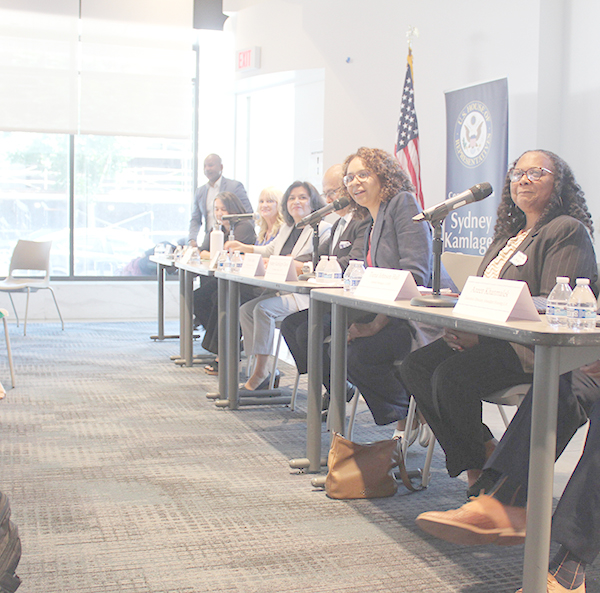
LOS ANGELES — While much of the national housing debate focuses on building more affordable homes, housing leaders gathered in Los Angeles July 28 argued that one of the most important provisions of a newly enacted bipartisan federal law could help preserve the homes and communities that already exist.
The discussion, hosted by Rep. Sydney Kamlager-Dove, D-Los Angeles, examined the recently enacted 21st Century Road to Housing Act, a bipartisan package developed under the leadership of House Financial Services Committee Ranking Member Rep. Maxine Waters, D Los Angeles, that authorizes new federal housing programs aimed at expanding affordable housing, preserving existing homes and modernizing public housing nationwide.
Panelists said the legislation extends beyond new construction by promoting home preservation, encouraging innovative housing development and giving communities new tools to address California’s housing shortage.
Erin Rank, president and chief executive officer of Habitat for Humanity of Greater Los Angeles, said preserving existing homes deserves as much attention as building new ones.
“One thing I would say that people who are watching this legislation should think of is existing home preservation,” Rank said.
She pointed to the bill’s Whole-Home Repairs Act, which would help low-income homeowners, seniors and people with disabilities pay for critical home repairs and accessibility improvements so they can remain safely in their homes, age in place and avoid displacement.
Rank also said provisions streamlining environmental reviews, reducing regulatory barriers and improving coordination among government agencies could help affordable housing developments move from planning to construction more quickly. She added that grant funding authorized under the legislation could encourage cities to remove local barriers that often delay housing projects.
While Rank emphasized preserving existing housing, other panelists argued that addressing California’s housing shortage will also require building more homes and embracing new approaches to development.
Azeen Khanmalek, executive director of Abundant Housing LA, said adaptive reuse of underused buildings, modular construction and pre-approved building plans could reduce construction costs while bringing more housing to neighborhoods that need it most.
“We need to change our collective conversation around what housing can do for our communities,” Khanmalek said.
Rather than viewing new housing as a burden, he said communities should recognize that additional housing creates opportunities for teachers, service workers and other essential employees to live closer to where they work while supporting neighborhood businesses, reducing long commutes and creating more walkable neighborhoods. He also highlighted the potential to convert underused office buildings into housing, particularly in downtown Los Angeles, where many commercial properties remain underutilized following the shift toward hybrid and remote work.
Emilio Salas, executive director of the Los Angeles County Development Authority, said the legislation also creates new opportunities to modernize public housing, expand rental assistance and strengthen partnerships among housing agencies, nonprofit organizations and local governments. But he cautioned that authorizing new programs is only the first step and that sustained congressional appropriations will determine how much of the law’s promise becomes reality.
Closing the forum, Kamlager-Dove said the legislation demonstrates what can be accomplished through bipartisan cooperation but emphasized that its success will ultimately depend on how effectively communities put its provisions into practice.
“My hope is that we can continue to lean into community ownership,” she said. “This is a time when we should be making sure that we are owning the decisions about our communities … and reimagine wealth disparity by using things like housing and wealth creation.”
“A bill doesn’t mean anything if we are not executing it on the ground,” Kamlager-Dove said.
Stephen Oduntan is a freelance writer for Wave Newspapers.