By Earl Ofari Hutchinson
Contributing Columnist
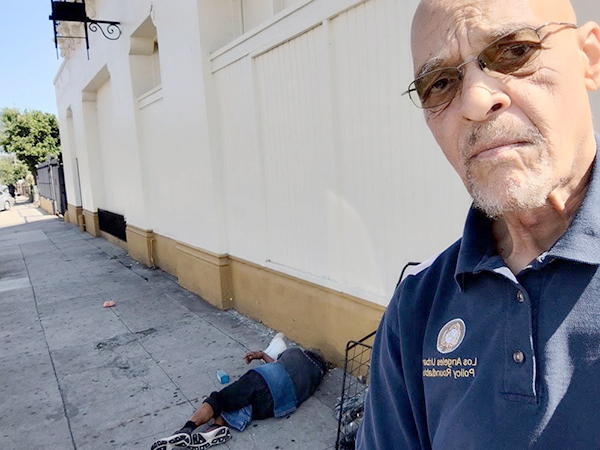
There are two especially appalling things in Los Angeles’s chronic homeless crisis. One is that despite a marginal drop in 2025 in the number of homeless dead swept from L.A. streets daily, the number is still shockingly high. In 2025, more than 2,000 homeless died on L.A. streets.
The second appalling thing is that a disproportionate number of those who die nightly on the city’s streets are Blacks, primarily males. Their death rate is near double that of non-Blacks. Overall, the unhoused street death rate is four times greater than the general population in the city.
Worse still, the marginal drop in the homeless street death rate could surge upwards again. The cuts in state and federal aid for homeless placement and services has dropped and could plunge even further.
The mounting number of homeless people dead on the streets for several years has been the public tragic face of the homeless crisis. And it’s a problem that city and county officials have wrung their hands over without really any firm answer as to why so many are dying and what can be done about it.
The search for answers has been intense. The search for solutions is even more so.
First the causes. The overwhelming majority of the deaths on the streets were categorized as “accidental.” That is a catch-all designation that could relate to many causes other than homicide. But homicides did figure prominently as a major cause of death. They accounted for more than 10% of the deaths.
The tragedy of homeless deaths due to murder was underscored by the fact that the unhoused accounted for barely 1% of the city’s population. There was little surprise that African Americans made up a disproportionate number of the homeless deaths even though they make up less than 10% of the city’s population.
The checklist of causes of deaths in addition to murder ranges all over the map. Drug overdoses, pedestrian and vehicle accidents, the full range of untreated diseases, heat and cold exposure, lack of vital medicines, and just plain old-fashioned neglect were the causes. Studies of homeless deaths in other cities show a similar pattern and a similar sharp uptick in the number of homeless deaths on the streets.
“People who die while experiencing homelessness are some of the most neglected in society,” said Matt Fowle, University of Washington researcher and co-creator of the organization Homeless Death Count. “These are folks who most need our help and are least likely to receive it.”
To date, there has been no systematic effort made by the federal government to track or count the number of homeless people that die on the nation’s streets. That grim task has been left to local coroners and medical examiners. In some places they don’t even keep the figures. That is left to local nonprofits who deal with the issue and the problems of the homeless.
A look at one of the major causes of homeless deaths also provides a window of understanding as well as an opportunity for public officials to deal with the root cause of the deaths. That’s drug addiction and mental health treatment. The often paucity of drug and mental health treatment facilities has been a chronic problem.
The tales of individuals turned away from the few centers that have been set up to treat these illnesses are legion. This virtually ensures that unhoused individuals who suffer these problems are prime candidates to wind up in a body bag on some lonely street corner or alley. One study confirmed this. It found that homeless people in L.A. were a staggering thirty-five times more likely to die of drug or alcohol overdose than the general population. In almost all cases few of them had adequate access to vital treatment services and programs.

The surface answer and need are to radically increase the availability of and access to the array of programs from drug, alcohol, mental health, accident prevention, and safety programs to aid those unhoused most at risk from death.
However, as all experts on the homeless crisis agree, the real answer is to solve the homeless crisis. That can only happen when there is a massive, concerted effort by local, state and federal officials to ensure adequate affordable housing, jobs, education and health services for all those who face life on the streets.
L.A. is the nation’s runaway leader in the number of dead found on L.A city streets. This is a crisis, and it must be treated as such. Los Angeles city officials must make curbing the number of dead a crisis priority. That demands crisis action.
There are lots of lives at stake in taking increased action on this hideous problem. And as the numbers show, many of them are Black lives.
Earl Ofari Hutchinson is an author and political analyst. His forthcoming book is “The Garbaging of America” (Amazon ebook and Middle Passage Press).